Showing posts sorted by relevance for query diapers. Sort by date Show all posts

Wednesday, 18 October 2023

A dip in diapers

Turns out that there are twice as many diapers on The Blob as there are nappies. One way of characterising The Blob is "his entire life in 2 millions words or 4,000 anecdotes" because whatever I'm reporting on, I try to come at it from my own experience rather than rechurning links I am delivered by Metafilter. And having raised three (3) childer to continence, I've had to deal with a lot of diapers: on dit que a child will go through 4,000 diaper changes before they stop having accidents and start using the jacks on the reg'lar. 

When I was a nipper, diapers were made of terrycloth cotton towelling. When soiled, the solids made it down the t'ilet, the nappies were dumped in a bucket of dilute bleach until wash-day when they were rinsed, washed and hung out to dry. Sunlight, and a fresh breeze helped sanitize the white cotton squares, so baby rearing was a lot easier in the Summer. Winter or wet-weather added a world of pain to the housework: pain in the arse actually because when washing diapers is so time-consuming the carer was surely tempted to let the baby steep in its own fluid for a little longer. 

Disposable nappies came on the market in 1976 or 77 at the tail end of The Boy's years of incontinence. As we chose to live in and out of a Citroën Dyane for the Summer of 1977, disposable diapers were The Biz! You need a real secure lid for the nappy-bucket. We started the Summer in terry-cloth and then discovered loss-leader new-product-push disposables in Yorkshire: game changer.

To Be Cont.

Monday, 23 October 2023

Diaper doo, nappy two

I started riffing on diapers, intending to write everything I knew, but I was caught short and launched a partial product prematurely. But nappies have been in the statistical news. In July 2023, More or Less looked closely [9min] at the assertion that more adult diapers are sold in Japan than those for babies. Because this chimes with a narrative about the aging population, and shy-breeding among 20- and 30-somethings, in that country, this 'fact' has been widely propagated.

Japanese diaper production (incl exports, hoarding etc.)

Year
Baby
Adult
2018
1.60bn
0.16bn
2022
0.70bn
0.17bn

So that gives some ball-park numbers to suggest that incontinent Japanese weans are holding their own against ditto elders in a ratio of about 1 : 10. But Dr Landfill wants to factor in that baby diapers weigh [dry!!] ~18g while adult ditto come in at ~90g or 1 : 5. Nappies can absorb 20x their weight in liquid! Source "A new approach for assessing the absorption of disposable baby diapers and superabsorbent polymers: A comparative study" by Bachra et al. (2020). That's still a hella lot of organics going to landfill where they will fossilize until it becomes economic to mine the tips for aluminium drinks cans..

In June 2023 Sliced Bread [as L with Greg Foot] had a piece [29min] on reusable vs disposable nappies. The conceit of the series is to ask whether such-a-commodity is the best thing since sliced bread = SB or mere marketing bullshit BS. Often the answer is "it's not black-and-white" or "it depends". Having spent 60 years trying to push parents towards disposables, now there is a growing market in re-usable nappies.

Even here, tech has moved in. Back in our day, a nappy was a terrycloth cotton square. Cotton is rather less absorbent than help or bamboo fibre but more so that microfibre. That's a trade-off because the less absorbent materials dry quicker after washing. 

For a comparison baseline you need to know that in the 2.5 year period of birth to potty, the average infant will need 4,500 changes. 

If you're going re-usable, you need to upfront about £100 for a set of cotton diapers + £30 for a nappy-bucket to steep t'buggers until wash-day and a waterproof bag to keep them safe if you are out and about. But you can spend >£400 on well-marketed = marked-up designer nappies. And you've got to factor in the cost of washing a batch of 12-16 nappies every couple of days: at 30p for electric + 20p for metered water +30p for detergent. The all-in-cost for each change of re-usable nappy tops out at 15p a go.

Disposable nappies otoh is all about consumables rather than capital. They start at maybe 5p for an Aldi own-brand newborn size rising to 40p to put a toddler into Pampers. I suppose you should factor in the bin-charges cost of sending the one-use nappies off to landfill, but Sliced Bread didn't bother. Bottom line: re-usable nappies are about half the cost of disposables averaged over that birth-to-potty life-time.

There is a market for "eco" disposables at top-flight designer prices. But the Sliced Bread experts hold these to be a load of green-washing. They are not really better for the planet than other re-usables. The latter half of the podcast has a lot more to say about various measures of greenity and conscience-smiting for those who care about those things. Cripes, though, my memory of those diaper days is that it was work enough dealing with "leakage", Sudocrem, wet-wipes, clothes-lines, weather-watching . . . let alone "tsunamis" and "arm-pit jobs".

Saturday, 21 March 2020

Dab it off

Today's Google Doodle celebrates Ignaz Semmelweis done to death by murderous guards for advocating hand-washing.
I got mortal frighty about hot air hand-driers because they concentrate the coliform aerosol endemic in public 'restrooms', heat 'em up to blood temperature and deliver the cocktial to your hands. For the last couple of years, therefore, I have brought a towelling 30x30cm 'face-cloth' to work as my personal hand-dryer. They retail at €1.60 [or less] for a pack of four - that's cheaper than 4 Kit-Kats and the towels are less addictive. I feel virtuous about this, although I suspect that Covid-19 will be rather too happy in the tufted, damp, mildly organic surface of the flannel.

I lived for 20 years with three female house-mates, until eventually the younger two reached voting age and moved on. It was astonishing, to a chap, how much toilet-paper was used (once, and thrown away). We were quick to respect the capacity of our standard septic-tank and tried to divert merely damp tissue away from the toilet bowl and to a burning bin for disposal by conflagration. We've never had a bin collection up the mountain and I can't remember what we did with diapers when the girls were young enough to need them. Disposable diapers are loaded with sodium polyacrylate and don't burn unless you soak them in petrol. The volume of dab-it-off TP was quite enough without diapers.

Although like Gladstone's Home Rule Bills being a bit too little too late, The Beloved has embraced reusable cotton 'wipes' to replace the couple of squares of paper used every tinkle. These have been cut to a convenient size from an old tea-towel which was too holey to be seen in the kitchen - imagine the shame if the neighbour came for tea and saw right through the tea-towels.
Q. Why too little too late?
A. Because we would have saved a true forest if we'd implemented these mini-towels when we had a full house.
Nevertheless: "Nobody made a greater mistake than he who did nothing because he could do only a little"

I wrote that all a week ago and two days later the same idea surfaced on MeFi, as a bandanna.

All this reminds me of the old days when we used to ⟳ wash, sterilise, use, repeat ⟳ squares of velvet for doing replica plating of microbial colonies. These are now damnably expensive. But in the 1970s they were made for £nothing-at-all by Mrs E., the departmental bottle-washer. She put out the word across her network that she would take any off-cuts or cast-offs of velvet and cut them into 15 x 15cm squares for use when researchers and students were doing some replica plating.

I must say that it has been in my mind to go up the hill every so often and bring down a small bag of sustainably produced Sphagnum moss for bathroom cleaning: it is clean, green, mildly antiseptic and recyclable. If it's good enough for WWI hospitals as a dressing, it's good enough for my arse. You think we have reached bottom here? Not yet: tomorrow's round up will have a link to the foolish use of newspaper for this purpose.

Friday, 29 December 2017

up to me oxters in shite

Christmastime generates a LOT of rubbish. The cases of champagne and cut-glass Waterford glass decanters have to be packed securely and unbreakably for transport; those shop-bought mince-pies have to be triple-wrapped.  All the packaging has to be disposed of somewhere.  We live really rural - you can't be further from a bus-stop and still be in Leinster. When we settled here 20+ years ago there was no bin collection in our townland.  In any case, we live 300m from the County road up a bumpy track with a1:10 slope: it would have been a schlep to have dumped all our trash into a wheelie-bin and lummock it down full and up (thankfully) empty. Accordingly, we were obsessively careful in sorting the rubbish into landfill, chicken-carcases, burning-bin and recycling. I single out chick carcases as more or less the only item of food waste because the kids were trained to polish their plates and we had (live) chooks to process all the off-cuts and peelings into fresh eggs,  Dau.II was still in diapers when we started rural life, so we had to be careful about them . . . and visit the grand-parents and their wheelie-bin regularly. About once every 15 months, our clean, sorted trash would be loaded into the back of the biggest car we could borrow and we'd tootle off to the landfill.  The price crept up and up but last time I went it cost €26.50 = half-a-dollar/week, which is about 10% of what folks in the system will be charged. But that's because we are super-careful and assiduous in dealing with our own ordures.

Between Xmas and NewYear we took our 3 generations down to visit Pat the Salt. Because Gdau.II is still a bit "Paris" [in continent, harharhar] we had accumulated a small bagful of teeny-tiny diapers for disposal: our rights-of-access to Pat's bin have been grandfathered in harharhar. The Beloved, being a little flustered, emptied the bag into the compost bin. Arrgh, the compost centre doesn't want to process a shovelful of baby-poo, so I [was] volunteered to fetch them out. The handiest thing would have been to empty it all out on the driveway, pick out the daiperlettes and shovel the rest back into the brown bin. L]. But inspection showed the pale blue parcels lying on a mish-mash of blue bread, banana-skins, and other furry stuff. Soooo, I did the leeeeean-in and hoiked the rogue rubbish out, one-by-one.

Later on I was driving along the Waterford Coast [a privilege and an enduring pleasure] and tuned the wireless to Newstalk FM.  Jonathan "Futureproof" McCrea was interviewing a recycling god and we-the-listeners were being hectored by proxy about the ever-changing rules and conventions about recycling. McCrea had been on extended visit to his dad with his children and had applied his own recycling habits on the old chap's system. That meant that a lot more went into composting than usual but the collection timetable remained the same. Accordingly, rather than cleaning out some twigs and grass-clippings, the old fellow had to deal with a bubbling soup of food-waste that was too thick to gloop out when the the bin had been briefly inverted over the truck. Dad asserted that it was the worst task he'd ever accomplished. This is problem is not unique old chaps like me and Mr. McCrea Snr. Compost-bins are the same height as regular bins because that's the way the trucks are built, which doesn't make them in any other way fit for purpose. Normal people generate so little waste that fits the stringent corset of fit-for-industrial-scale-compost that it takes a long time to fill the bin . . . by which time the bin is a fizzing, buzzing health hazard. Chicken-carcases, for example are not compostable.  Why not, suggested McCrea Jnr, make the goddam compost bin half as high?? That way it could be lifted more frequently and cleaned more easily.  Damn right.  There are other solutions.

Wednesday, 30 November 2016

Shit in a bucket

The EPA the Irish Environmental Protection Agency has just released its report on Urban Waste-water treatment round the country for 2015.  It is a sorry tale of non-compliance years after the EU determined and agreed that no swimming person and no pearl mussel should be subject to a warm bath of human effluent. The pearl mussel Margaritifera margaritifera is "a critically endangered species of mollusc that requires clean, fast flowing, well oxygenated rivers with little nutrient or organic content and a clean river bed". Apart from its own merits and intrinsic rights to an existence it serves as a key indicator species for water quality. Appendix F.3 of the report has a list of 16 places where improvements in waste-treatment were required to give the local mussels a chance.

As the report deals with Urban waste-water, many of the tables, findings and reports look at various elements of [non]-compliance in a list of 171 'large urban areas'. We're not talking São Paulo or Mumbai here but even so, you'd be hard pressed to find 171 'large urban areas' in Ireland: Dublin, Cork, Limerick, Galway, Waterford, hmmm Drogheda, Athlone, Clonmel ?, Ennis??, is Cobh separate from Cork? . . . I suspect that there are 'large urban areas' of which I've never heard. I think the cut-off is 2,000 p.e = person equivalents which a fudge-factor to include the chipboard factory and Summer visitors.

Talking of Summer visitors, I note that Duncannon, where we spent our holidays every year between 1955 and 1970, has no facilities for treating its sewage. None. That's 300 people with a p.e of about 1,200 who continue to poop-and-flush without a thought about the consequences. They join the plain people of Ballyhack and Arthurstown 5km upriver in contributing to the nutrients in Waterford Harbour and indirectly keeping the oyster farm [prev] across the estuary at Woodstown in business. One of the successes of 2015 was the installation of a reasonable sewage treatment plant at Dunmore East. Duncannon is scheduled to be similarly serviced next year in 2017 if Irish Water is still solvent and there hasn't been a Cryptosporidium crisis elsewhere in the country.

Did someone mention Irish Water? the uber-quango that was set up to manage all of Ireland's water supply and treatment and replace a raggle-taggle mess of micro-authorities who went through the motions and whose duplicative efforts were so inefficient? These shovel-leaners failed to embrace numerous large essential infrastructural projects hanging over since Victorian times: lead-pipes, cracked pipes, absent treatment plants. At least Irish Water is a charge of National regime which can prioritise projects across the country. Arthurstown's [pop 135] issues and discharges are less important than that fact that Roscommon's [pop 1700] drinking water is filled with Cryptosporidium.

If we-the-people employ a group of qualified and trustworthy people to manage the water quality why-oh-why do we-the-people need another set of qualified and trustworthy people at the EPA to oversee them? With so many layers of control and all those comfy salaries, we're still not able to clean up our act. Surely we should give a tax-credit to people like me who are so far from even a small urban area that an going-off-site sewage pipe is out of the question. But even we have flush-toilets which foul the drinking water which comes from our own bore-hole. We should forget about tax-credit and give folding money to families like Mr and Mrs Rissole who just drink their drinking water and shit in a bucket.  And don't get me started on disposable diapers, After Armageddon and our children start to mine the land-fills for all the useful stuff we threw over our shoulders, they are not going to be happy having to shift through filled diapers and unfinished take-aways. I shall die happy if I never have cause to regret food I wasted in the extravagant times.

Tuesday, 9 January 2018

The shiny stuff

For the last 20 years, aluminium has been selling at about $2,000/tonne. That's $2 a kilo: more expensive than potatoes but less than cheese. Of course it is silly to compare retail and wholesale. The price of wheat is about $180/tonne at the farmer's co-op or, more accurately, FOB at the Gulf of Mexico; but I'm paying €1.25 / kg for Strong White Flour in Tesco: a markup / processing cost of about 4x. It's more sensible to compare it to the other widely traded 'base metals':
  • Spot price US$ per tonne
    • Al 2244
    • Cu 7194
    • Pb 2508
    • Ni 12078
    • Sn 19734
    • Zn 3278
Yer standard 12oz = 330ml soda can weighs 15g so you need 67,000 of them to make a tonne: each one contributing about 3c. I often pick up 5c coins from the floor of The Institute which suggests that Millennials won't even bend down, let alone cross the street, for 3c. This played to my PhD mentor's advantage in the 1980s when Massachusetts introduce a 5c levy on soda cans and bottles to encourage people to recycle and reduce the landfill burden. Neil was working for home and on his daily trip to the Post Office would rummage through the trash bins fetching out about $1's worth of aluminium cash-back. Stop press: yesterday, first day back at The Institute, I recovered >! 55c !< from the floor of a student-teeming concourse. It helps that I spend much of the day wandering around looking at the floor and mumbling.

Aluminium is made from dirt and is dirt common - 8% of the earth's crust. Only certain types of bauxite will do but it's essentially dirt nonetheless. I gave an executive summary of the process in 2014. The difference in price between dirt and $2000+ per tonne is the Hall-Héroult process which uses 15,000 kWh per tonne. We pay about 20c / kWh but you can imagine aluminum smelters can negotiate a better deal from their suppliers. Once it's been reduced to bare metal, aluminium can be melted and pressed and hammered and re-purposed more or less indefinitely. As I said on New Year's Day it seems just bonkers to throw it back into landfill for our grandchildren to mine out of the feh of their own fossilised diapers.

As it happens, aluminium was one of the very first items which were conscientiously recycled. Guide Dogs for the Blind is a charity that breeds and trains seeing-eye dogs to enhance the mobility of the visually impaired. The training is nifty: a dog can easily walk under a dangling shop-awning but her owner can't, so the dog must be instructed to be aware of another's troubles - to develop a sense of empathy. In these islands, Guide Dogs have been A Thing since the 1930s but really took off after WWII. Someone had a cunning plan to get kids to gather the aluminium caps from milk-bottles which were delivered in glass bottles to every home back in those days. The bottles were re-used! Rinsed, collected, washed properly, steam sterilised and refilled with the white stuff. If aluminium is made from dirt, glass is more or less made from sand and the cost is in the melting, blowing and marking. This is why reducing glass bottles to cullet then remelting and reforming them is a fabulous waste of energy. Eventually, milk companies realised that they could skip the costly re-use cycle by off-setting the cost of container disposal on the tax-payer.  Tetrapak cost no more [except to the planet] than a multiple use glass bottle and the dairy's washing plant could be sold off for some other purpose.

In 1964, the whole Guide Dog thing took off when the project was flag-shipped by Blue Peter [presenter John Noakes R] the after-school children's TV programme. There were only 2 TV channels then, so it was watch Blue Peter or do your home-work. Kids were told to collect their milk tops and take them to school. Schools warehoused the tops until they had enough to be collected. I can't remember what the figures were but the concerted efforts of  8 million 6-16 y.o. children yielded . . . two guide dogs (Honey and Cindy). The mountains labored and brought forth a mouse indeed.  I know we had a slowly increasing ball of aluminium in the kitchen at home - aluminium kitchen foil was acceptable as well. There were no aluminium drinks cans in 1964 and take-way chicken vindaloo hadn't been invented yet. I've written with nostalgia about the Corona lorry which visited our estate every Summer week in 1963; exchanging an empty [rinsed please] bottle for a full one in a tooth-dissolving variety of colours and flavours.

Tuesday, 9 August 2016

Does size matter?

At the turn of the century I was hired, to my considerable surprise, to work in one of the first 10 labs funded lavishly by Science Foundation Ireland. I was not the smartest chap in the room but could make a contribution partly because I'd been on the planet longer than anyone else including The Gaffer. Native intelligence doesn't always do it; experience is also handy and general knowledge was also an asset.  Wikipedia was launched in the 2001 but took several years to get populated and finding stuff out required a trip to the library to read books and journals . . . with pages . . . of paper. If you knew things and were happy to share, nobody had to trek to the library to answer such questions as "Is a snake a vertebrate?".  I've written about how, by acting as a neutral sounding board, Bob the Scientist helped one of the really smart guys in the lab to solve a confounding puzzle.

About a year later, the same guy applied for a job in NUI Maynooth, was interviewed and offered the job. Shortly after that, he interviewed for another job back in , slightly more prestigious, TCD and got that two. He was flabbergasted, back home in Spain it would have inconceivable to secure either job without being somebody's mistress, nephew or graduate student. As he prepared to start his own lab, I gave him some advice: hire some people who are socially adept even if their CVs are not awash with awards or publications. In the lab where we worked together, at least half the team were well along on the spectrum and were hopeless in many social situations: unable to organise a piss-up in a brewery or make eye-contact or understand where their colleagues were coming from. They were also kind of helpless in explaining their brilliant ideas in ways that ordinary folk could understand. Such people are likely to get a tenured lecturing position solely on the basis of their research record and be desperate at the task of . . . lecturing.

I've just read an analysis of the optimum make-up for a successful science lab by Chris Woolston in Nature. It's all about the numbers. This attempts to quantify success [defined as # of publications or # of pubs in high-impact Nature / Science / Cell] as a function lab-size [defined as # post-grad students +/- # post-doc researchers]. Heck that's what science journalists do, they reduce the conundrum to things that you can count. Unquantifiable aspects of science are mere noises off stage in the analysis:
  • like people who don't on with each other; 
  • or senior males who get on all to well with younger female researchers; 
  • or the trying to integrate the school-run with a lab schedule; 
  • or making labs accessible to wheelchairs
What it comes down to is that size really does matter: larger labs generate more publications especially if the personnel include post-docs who are no longer learning the basics. But it also seems that the ground-breaking papers that we all aspire to are as likely to be driven by the younger graduate students. That's another thing that wasn't quantified in the article by Woolston: it may not be about people but rather about person-hours. If you're young and single and driven, you work all the hours that god sends and this graft may be enough to get to the interesting stuff quicker. Maybe post-docs are juggling other aspects their lives - diapers, elderly parents, tennis, theatre - and less committed to hacking at the frontier. In the end, it's partly a matter of preference: as a PI do you want to spend your days managing your people and the invoices or would you prefer to do more science with a smaller group. But it's also a matter of contingency, I was let go at the end of 2012 partly because the boss had a succession of unsuccessful grant applications and the lab was shrinking for want of funds.

What boggles the mind is that principal investigators, having been appointed to their established position on the basis of their capability as researchers are expected also to be competent teachers, effective human resources managers and be able to balance the accounts with an annual burn-rate of $500,000. About 10 years ago, UCD, the other Dublin University, appointed a super-dynamic new Dean of Research. He called a meeting of all the researchers to introduce himself and ask the workers at the coal-face how the University could most help them do better research. One point that came up multiple times was that good researchers knew they were not-so-good as managers.
IF they had even 1/3 of a person to
  • file the invoices, 
    • pay them on time, 
  • source the cheapest-best equipment, 
    • negotiate a better price with suppliers, 
  • know where Jill left the key to the prep-room before she went on maternity leave
  • provide continuity when the boss was on the conference circuit
THEN
they would be way less stressed and quite a bit more productive. But everyone in the room knew that appointing a class of lab-managers out of the University's existing budget was never going to happen, no matter how cost-effective that might be in the long run. It's not about the numbers, it's about individual quality in positions where their skills can be leveraged to best advantage.

Monday, 4 December 2023

Women are equal to everything.

Or, as I think she, and The Garter King of Arms, prefers it Omnia feminae aequissimae. That is the heraldic motto chosen by Brenda Hale, when she reached the top of the legal profession and was inducted as a Lord of Appeal in Ordinary as Baroness Hale of Richmond [Yorks, near where she was born-and-raised]. On the Kermit theme: “It’s an inside joke between us. My husband was my frog prince. Now people give us frogs.”. She clearly has a sense of humour, as well as facility in Latin. The Blob has acknowledged her coded messaging before as part of The Arachnidati.

I've just read an emphatic denial that sporting a spider-brooch while putting a stop to Boris Johnson's proroguing gallop in September 2019 was entirely coincidental. That is from the Horse's Mouth, but the source is her 2021 autobiography . . . called Spider Woman: a life! I guess she comes from a class and background that you can put one over on whomever you're talking to in such a elliptical way that you can deny intending any sort of offense. She was at one time a barrister whose profession allows them to make outrageous suggestions about the integrity of opposing barristers and go off to lunch together as soon as the judge gets hungry.

Lady Hale is about ten years older than me and reached the Very Top of her profession by being appointed Chair of the UK Supreme Court in 2017. When she graduated 50 years earlier (literally top of the class) from Cambridge in 1966, The Law was almost exclusively the domain of comfortable white patriarchs and vacancies were filled by "a tap on the shoulder", it having been established that the appointee was the right sort of chap [right pedigree, right school, right club, right sports-and-pastimes, right wife]. This complacent, incestuous background led to groupthink and pretty shabby endemic treatment of poor people, black people, women, children, foreign-johnnies including the Irish.

As in so many parallel ♀AFAB♀ lives, Hale had to be twice as good to progress half as far as most of the young men who graduated below her in 1966. She had an interesting career, being an academic lecturer, writing definitive books on the law w.r.t. family, women and mental health, barrister, judge. She is convinced that the breadth of her experience secured her several promotions to, eventually, the Supreme Court. She had also managed to, if not exactly schmooze the patriarchy, assure the Effective Lawyers that she wouldn't frighten the horses with her feminism and care for the dispossessed.

Having someone with empathy and compassion, as well as lawlerly rigid attention to the text at the foundation of the Supreme Court ensured that this new independent institution started with a bright future. Slapping down the grifty pretensions of the actual Prime Minister, when the Court was still in diapers bodes well for the future.

  • of course the discourse at Court would be recorded and live-streamed
  • of course the location of the new Court building would give it parity of esteem with the House of Commons on the other side of Parliament Square
  • of course the public are welcome inside the building
  • of course gowns, wigs and maces have been left in the dustbin of history*
  • of course the offices are designed for efficiency and to be a pleasant place to work
  • of course there's a youtube channel
  • of course the judgements are delivered at three levels of detail
    • The official report / finding / verdict handed down in detail in lawyer-speak
    • The 2-page-max Press Release setting out the findings in a way that can be absorbed [lifted and pasted] by journalist. A bit like the Abstract of a scientific paper
    • A much shorter piece similar to the Lay Summary which science funders have recently required us to include in grant applications

I gotta say, though, that not all the legal cases included in Lady Hale's book are set out with absolute clarity for the audience of the book. I suspect some curse of knowledge here: Hale has lived and breathed these cases for so long and so intensely that it is impossible for her to imagine that we-the-reader weren't at her side along for the journey. It's like me learning about additive genetic variance in population genetic class as an undergraduate through agricultural examples like back-fat thickness in pigs. It was never explained whether thick or thin was the desirable quality!

I recommend this book. I think it is an inspiring tale of a smart girl who did well by hard work, collegiality, ambition, stubbornness and luck - and yes, like my mother, she made her own luck. But I don't expect y'all to, like, read all 250pp of it. So here are some links

* Business suits for normal biz. For some of the ceremonial - like swearing in of new Justices - gold trimmed robes are worn by all. In the old cheap labour days, the cost of these would be borne by each Justice as part of taxes of the high office. Nowadays, it is customary to pass down the robes on retirement, to minimize the conspicuous consumption of bling. My family scraped together the money to send my father to the Britannia Royal Naval College at Dartmouth for Hood Term in 1931. As well as fees, their boy had to equip himself with various items uniform, a knife, a hussiff etc. On graduation, he was given a midshipman's dirk so he could board the enemy and stab the crew look the full shilling on parade. That small sword followed him around for the next 50 years. When it became clear that neither of his sons was going to follow him into the Service he went back to Dartmouth and gave his dirk to a [more-or-less random] young chap whose folks had neither 3,000 hectares of latifundia nor a seat on the board of Megacorp nor an enormous recent win on the Lotto.

Monday, 11 July 2022

Cherish

In the 00s, I spent a lot of time poring over the the text of Bunreacht na hÉireann / The Irish Constitution; especially Article 40 - Personal rights; Article 41 - The family; Article 42 - Education and children. My interest was pushed by our desire to educate our children at home a right which is, for complex 1930s Realpolitik reasons to do with the protestant middle class, specifically allowed by Article 42.

In my head, at such times, is the aspirational phrase  "cherish all the children of the nation equally" even those who are, in the widest sense of the word, different. The Blob has been hot-and-bothered about unequal treatment in cases of medical misadventure; the vulnerable; orphan drugs for rare diseases; the imprisoned. I'm not the only one who recognises the power of this ideal. Cherish was founded in 1972 to advocate for lone parents and their, then "illegitimate", children.

In a recent episode of hot-and-bothered, I searched the constitution for cherish and came up almost empty. Only mention is Article 2 "Furthermore, the Irish nation cherishes its special affinity with people of Irish ancestry living abroad who share its cultural identity and heritage" which is about Chicago policemen and the diaspora rather than small citizens in diapers.

Turns out the cherish phrase is from a much shorter, more shouty, earlier document The 1916 Proclamation:

The Republic guarantees religious and civil liberty, equal rights and equal opportunities to all its citizens, and declares its resolve to pursue the happiness and prosperity of the whole nation and of all its parts, cherishing all the children of the nation equally . . .

These children, no more than De Valera's Article 2 children, are not small humans below the voting age; they are rather mythic children which have sprung from the loins of Cathleen ni Houlihan or even Caitlín Ní Uallacháin the personification of Ireland. A bit like Athena being abstracted, fully formed and in armour for the fray, from the head of Zeus. The Proclamation Children are grown-arsed adults being required to wave the flag and ready to die on the barricades. Ireland, through us, summons her children to her flag and strikes for her freedom . . . supported by her exiled children in America and by gallant allies in Europe . . . and by the readiness of its children to sacrifice themselves for the common good

Full disclosure: the picture [L] is not Caitlín but rather the Madonna by Margarito d'Arrezzo; the oldest painting in the care of the National Gallery in London and recently restored to something nearer the artist's original intention.

My point is that for human rights, it's a cop out to refer to precedent or defer to authority. We have to fight for these rights for ourselves against a penny-pinching and complacent bureaucracy. But more important we have to fight for the rights of the dispossessed because, by definition, the ability to advocate for themselves in curtailed. To the barricades! To the picket lines!

Wednesday, 26 September 2018

Uncle Godfrey

Despite teaching on the Cert in Pharmacy Tech course, I really rarely need to visit any pharmacy. Which is a good thing because I don't particularly want my [ex-]students knowing about my rashes, weeping sores, and over-active bladder. (Doctor, doctor, I'm Paris; What do you mean, Paris?;  It's In Continent innit!). I might be tempted to buy some off -pharmacy remedy that worked and could be obtained without too much scrutiny or enquiry.

Anyone who has raised children will tell do that the sleep deficit is the real killer. When The Boy was born we were living in Dun Laoghaire in a garden flat. We had to make it up as we went along, being a long way from either of our mothers, and do the best we could. Hadn't a clue, me. I thought The Beloved had ruptured a kidney when she went into labour 1 week early, which meant she was in the wrong (local; Ob&Gyn-absent) hospital. It was a nightmare to raise an inter-hospital-transfer ambulance at 0200hrs, whereas a collect-labouring-mother-from-home ambulance would have been there in 20 minutes. The only thing I thought you could do with a crying baby was change its diaper.  We changed diapers seven times one night! Several of them bone-dry. But the child continued to grizzle or howl for hours.

Another solution would have been welcome. If we'd been managing the problem 100 years earlier, it is quite likely / just possible we would have tried Godfrey's Cordial. Which was well-known to put infants to sleep. . . and keep them in that state. I've written before about buying Dozol for G, when she lived in London - although it is sold as a painkiller [paracetamol] and anti-inflammatory [anti-histamine] the name and the label tell the World that babies will sleep in Dr Dozol's care. I was wrong to believe at the time that it was 4% alcohol: that's gripe-water. Even gripe-water, invented in 1851 by apothecary William Woodward, contains no alcohol in its modern formulation. As young parents all we needed was enough sleep each night to be able to function during the day-time. In the 19thC, some poor mothers had a rather different agenda: they needed to keep the child quiet while they went out to work: singling turnips, pulling carrots or making hay.
It's a bit like several species of African antelope where the dams, when their time of delivery approaches, find a quiet and secluded spot to drop the calf. There are two survival alternatives: either the newborn is up and ready to trot within a few minutes or it needs to be fattened up and continue its development. Secreters return to base once or twice a day, meanwhile making a living feeding themselves to replace the milky calories. The calves are programmed not to bleat for mammy and presumably some evolutionary changes have been made to how they [don't] smell.
The problem was that these opium-quieted babies often died, not so much from opium addiction or the direct effects of the booze; it was more likely that 'inanition' or 'failure to thrive' would appear on the death certificates. What this basically means is that the poor wean was too sleepy to feed and wound down in a spiral of unresponsiveness.

Lots of convincing sounding alternatives:
Units: 
1 apothecaries pound = 12 ounces = 370g
1 ounce = 8 drachms = 31g
1 drachm = 3 scruples = 4g
1 scruple = 20 grains = 1.3g
1 grain = 65mg

Tuesday, 19 November 2019

CCD Compassionate Crap Detector

It is not true to say that Dau.I and Dau.II never had a lesson in their lives. They both had a week in a Steiner school with their cousins in Cape Town in 1999. And, ten years later, Dau.I had a three week stint in the Hothouse for Harvard School . . . Be Your True Self Place . . . Centre for Talented Youth Ireland CTYI. Although she was sixteen, the CTYI experience was much like being a student . . . without the drink; but with the hoovering up of information; and the talking shite - politics, pleasure, philosophy - into the wee hours.
She is now a Librarian (her dream job since 6 y.o) but has just enrolled in a distance learning course in Psychology with Philosophy at DCU - incidentally the same place that hosted, and hosts, CTYI. She Skyped me up on Sunday afternoon and was clearly in bed. I laughed and said that she was clearly studenting if she was still in the scratcher, to use the mildly repulsive Dublin slang expression, while studying on a Sunday afternoon. Because she wasn't contacting me to stiff me for money, or for unconditional love, but because she wanted some feedback on her second assignment in PY101 - 1st Year Psychology. Her class had been requested and required to write 700 words, with citations and references, on The Discovery of Self In Infancy.

It's not obvious how you'd go about establishing this in pre-verbal children. Clearly asking them "And how are you feeling yourself?" is not going to elicit a more coherent answer than "With pleasure, thanks" perhaps especially if diapers are off. But psychologists are nothing if not ingeniously creative in designing experiments that begin to answer such existential questions. There is indeed an extensive literature on the idea, perhaps commencing with Jean Piaget's observations of his own and other children in the 1920s & 1930s. These early studies were strong on assertion and less strong on evidence, particularly with respect to replications and sample size. Earlier Dau.I had asked if I had legitimate access to a classic paper from 1972  Mirror self-image reactions before age two by Beulah Amsterdam from UNC, Chapel Hill. I hadn't, but Sci-Hub delivered anyway. In our Skype-to-fro later in the day, the key issue of sample size, and by extension, the credibility or reliability of any findings from small studies, was aired. I was delighted to see that at least one 1st Year science student in Ireland was critically evaluating the primary scientific literature rather than accepting the findings because they had appeared in print in a reputable journal.

Batting ideas back and forth we came up with the idea that as well as citing the source of information in a student paper, it would be really handy to include the sample size for any experimental results. Sample size being a pretty good surrogate marker for the data's reliability. The thing is that nobody thinks they have the time to follow up all the references cited in a paper and it would help to annotate an essay thus: an often-repeated test for the measurement of self-recognition and self-awareness (Amsterdam, B. 1972) [N = 88].  Which may be more valuable reading than (small children's brains seem to process self-awareness in a similar way to those of adults Filippetti M et al 2015) [N = 15], simply because the sample-size is 5x bigger. So that's the Crap-Detector; what's with the Compassion?

The compassion stems from an earlier to-fro with Dau.I regarding a Twitterstorm about Young Adult literature, its authors, readers, and critics. Being Twitter, the interactions soon degenerated into cross-patch vindictiveness which allowed a lot of other people to weigh in with their judgemental certainties. Someone was a little more forgiving and optimistic: One of the biggest backlashes was the vitriol with which everyone approached Twilight. It wasn't anything in the text that made it special or worse, it was that it was a series which teenage girls loved, and that meant that it was worth hating because nobody, including teenage girls, wants to be associated with teenage girls. But Twilight grew a generation of readers who will eventually find something else to love. My main issue is about the meritocracy of reading, we don't want kids reading comics, we don't like teen girls reading YA, or heaven forbid adults reading YA. But all these things when left alone build readers and maybe, hopefully critical thinkers. (Baldwin, E 2019) [N = 1] . . . because she is The One, CCD.

Thursday, 6 September 2018

crogging

Years ago when The Blob was still in diapers, I wrote about a friend who indignantly refused to act as a community trash-collector on a beach North of Boston. Insofar as we choose to take some exercise away from home, we generally choose not to plod across a land-fill; or something that looks like one. If a beach is really heaving with plastic we're likely to be strolling on our own: normal people are on a beach where the trash isn't disgustingly obvious. In 2013, I was of the opinion that no one person could make inroads into the 38 billion plastic bottles which are discarded every year in the USA alone.

But my math was wrong because that's only a couple of bottles every week [for each and every man woman trans and child]. Steven Moody is an Irish runner who set himself the goal of picking up a few items of street trash every time he went out jogging. Not enough to require a bin bag - if he saw a bottle in the gutter he'd pause long enough to pick it up and carry it to the next trash bin he passed. He considered that he could, in this way, make a visible difference along his regular route and make himself happier. I think he also subscribed to the broken window theory: that a clean street was harder to first-trash than one which was already awash. He was also delighted to have had an original idea. Turned out that plogging [jogging with plastic] had been a thing [plocka upp = pick up] for several years in Sweden; so his idea was a First For Ireland <huzzah!>. I heard Steven on the wireless a while back pushing a plogathon on Sandymount strand last Wednesday 22 Aug 2018. Many of the beaches round Ireland have now been owned by Tidy-Towns type people who go out regularly with a bin bag. The great thing about plastrash is that it packs light: you can carry a huge volume away with you if you bring a bag.

Okay, that's plogging! What the heck and tarnation is crogging as in the post-title. That's where you train crows to pick crap up in exchange for peanuts or Purina Cat Chow pellets. via Neatorama. Last year they trained crows to clear cigarette-butts. Now they are suggesting corvids as electrical component sorters, search and rescue, car-key finders. Instructions for making the exchange box for crows.

Finding things? We met up with Young Bolivar [multiprev] when we were down in Cork last month and he has just lashed out to buy himself a drone. He showed us some distant selfies taken with his new toy. Just the thing for finding our sheep which have gone awol on the mountainside. Would such drone-hunting be drogging? Ooops no, drogging is something else entirely.

Wednesday, 14 June 2017

Mental load

As you know, if you've been here before, I surf a corner of the blogosphere which starts at 8-10 jumping off points and then goes off down any rabbit-holes that there present. Even these same-wavelength places have quite long fallow periods where there is nothing that captures my imagination - heck, that might be me in one of my downers. Then there will be a flurry of stuff that calls [yoo-hoo, you!] to be followed up.  If we still had children at foot, or I was a proper farmer, or I rejigged my course notes every year at The Institute, then I wouldn't have time for butterfly hops about other men's flowers.  Then again, I didn't start bloggin' myself until I was furiously busy at a new job and only a week ahead of my students.  I wouldn't say something like "If you want something done, ask a busy person to do it." that was Lucille Ball, I just lived it.  aNNyway, one of those jump-stations is Metafilter aka The Blue and the other day I saw a piece about role-filling in heterosexual relationships; that in turn was citing an original source. That source is interesting because it helps builds my knowledge of contemporary colloquial French because the author Emma is a thirty-something cartoonist who writes in French Faillait demander but gets her stuff translated into English You Should've asked when it goes viral. Her bailiwick is "Politique, trucs pour réfléchir et intermèdes ludiques"; which is whatever is floating her boat this week.

When I worked in the zoo in Rotterdam in the late 1970s, we all mucked [literally a lot of the time] in together but joked [*] that some of the daily tasks were vrouwenplicht - women's duty - while others were for The Men. As the latest addition to the team, I did all the [vrouwenplicht!] cleaning and polishing of the front panes of all the aquariums as soon as i started work and before Jan Publiek was allowed in to grub them up with their poky, pointy finger prints.
*you could make such jokes in those days without
fear of being called up by an Offense Tribunal.

Emma's position is that, although modern chaps fondly believe [ahhh bless, 'em] that they carry half the sky around the house -
  • they change diapers nowadays, 
  • can wash dishes or or at least load the dish-washer
  • can clean a toilet and mop the bathroom floor
  • cook up a storm for eight on the weekend - esp if barbecue involved
  • as well as the [bizarrely: who makes these decisions?] manly stuff
    • take out the trash
    • mow the lawn
    • wash the car
    • fix light-fittings
in fact all the mental heavy lifting is carried out by women.  The extensive commentary on Metafilter seems to agree.

We live in changing times! My father never changed a diaper in his life. I could and did; both in the 1970s with The Boy and in the 1990s with Dau.I and Dau.II. I could also sew on a button, turn up a trouser-cuff, cook, bake flapjacks, wash dishes and saucepans and clean a bath. But I remember, when Dau.I was about 8 weeks old, I was tasked to look after her for several hours while The Beloved went to a business meeting in town. At the end of the afternoon, the child was clean, fed and uninjured BUT diaper bin hadn't been emptied; there were dishes in the sink; the laundry was one wash behind schedule; the bed was unmade; and I had no idea whether there was sufficient tea, sugar or eggs in the house. I sent a You Should've asked link to the family and got two responses.
  • One from The Boy pointing out that the French do less housework than any other civilised country.  Skeptix alert: that is published in a British newspaper; an average of 16hrs/wk in France compared to 19hrs/wk in UK and you may be sure that stacks of ménages français do more [and less] than the UK average - the data distribution is going to be heavy on the variation and low of the average.
  • One from The Boy's partner: "SO not true in our house!"
That tells me that, in one family [so anecdote not data!], over three generations, The Man is stepping up to the plate and not just stepping up with a plate waiting for it to be filled.

Wednesday, 6 November 2019

Smartie well water

SMARTIE [logo R] might lay claim to Ireland's most contrived acronym (Spatiotemporal multiscale Modelling of Antimicrobial Resistance in the Irish subsurface Environment). It is a project funded by co-funded by the Irish Centre for Research in Applied Geosciences (iCRAG) [never 'eard of it although I know several on the payroll] and the Geological Survey of Ireland (GSI) [which has been around for 175 years, so I have heard of that institution].  A couple of months ago, a colleague at work fowarded a flyer from the Smartie Project which offered to test my bore-hole and domestic plumbing for coliforms, pH, and some other impactors on drinking water quality. What could possibly go wrong? Always short of Blob-copy, it seemed a bit of an adventure and so Reader, I signed up. It was a bit cheeky that The Blurb for Smartie explained how for two separate site-visit water-tests "total service valued at over €300. It is important to note that the EPA recommends testing your well water at least twice a year". Without well-owners' participation there would be no Smartie, we don't need to be thrEPAtened'.

Two months after I submitted my application I found that we'd been selected! Smartie needed a) an adult present to b) give access to the well-head to test the depth of the water-table c) indicate the location of an outdoor tap to sample the water. When we sunk the bore-hole, our neighbours Doran of the Well got the contract. As tree-huggers, we asked if he was going to dowse the ley-lines to find the best place to try for water. He raised a quizzical eye-brow "There's no shortage of water in Ireland, where are you going to install the pump and pressure cylinder? . . . then let's set up the rig as close to that shed as we can - save on pipework".

And it was so. We struck water at about 5m, but the flow was deemed insufficient, so they went on down to 35m or 113ft in old money. The price in old money was £4/ft. The drilling went on for several hours; sometimes the drill shaft was motoring steadily downwards but then it would pause and seem to make no progress. Once the super-hard blue granite seam had been penetrated progress downwards went on apace. It was the most entertaining afternoon: much more interesting than TV. That was 23 years ago, Dau.II was in diapers.

This is now. Between the anouncement of selection by Smartie and Sunday's visit I had to find the well-head which I hadn't seen since the man-hole cover was put down in August 1996. It wasn't hard because I was there when the well was sunk but I had to tonk about with an iron bar until the ground sounded hollow. Then I had to shovel off at least 50kg of dirt and gravel . . . until taDAAAH! thar she blows [L, note shovel leaning u against  the door of the "water-shed]. When Smartie, and her co-pilot / navigator / assistant arrived, we had a) the cover off b) the kettle on. I was delighted to get this boot-up-the-bum to have a look at the well rather than assuming that it wasn't full of dead rats and/or taking water from the surface of the yard. It was also interesting to note that the water surface was only 1.2m below grade, that the septic tank was 35m away and the drain-field another 10m beyond that. The water is pH5.6 which explains why the copper pipes have all been eaten away and replaced by qualpex plastic. pH5.6 is about 25x more acidic than water - pH is measured on a logarithmic scale. In any case, Smartie has taken away several samples of water and will plate the water out on McConkey Agar to see if any coliforms or Pseudomonas are present. If she can get any such 'wild' colonies to grow, she will then see how susceptible / resistant they are to a variety of antibiotics. All good stuff. I hope her well-water data is less noisy than that of my old student, now Dr Lithium.

Wednesday, 28 February 2024

What is family?

In 1936, Éamon de Valera sat down with his wife Jane O'Flanagan Sinéad Ní Fhlannagáin of 26 years [together L] and conjured up a vision for Ireland as a New 1937 Constitution which would sever the final apron strings attaching the 26 counties to the United Kingdom. It's an interesting document because it sees certain 'truths' to be self-evident, which a majority of the citizenry today would give at least a bit of side-eye: "special position" of the Catholic Church Really?  But it was also pragmatic and did its best to be culturally inclusive. The reason Home Education was explicitly allowed in Article 42 was to not frighten the Protestant horses so much that they sent their middle-class chaps to boarding school in England . . . and they never came back to fill the ranks of the professions. In other ways Éamon and Sinéad endorsed frankly unhinged fantasies where what Ireland should be [comely maidens dancing at the cross-roads etc.] was at considerable odds with what Ireland actually be like [Angela's Ashes etc.]. 

In 1972, "special position" of the Catholic Church was put aside but we still have Article 44: "The State acknowledges that the homage of public worship is due to Almighty God. It shall hold His Name in reverence, and shall respect and honour religion". Only one god, though, and check the pronouns.

We're due to have another referendum on 8th March 2024 to unpack some more of Éamon and Sinéad's 1930s certainties and replace their words with something that acknowledges 2020s realities in the state we inhabit. This year its Article 41 and its ideas about the family.  The Family is Top Dog in É&S's Ireland: they decide on the children's education in Article 42, for example. The State just ponies up the resources for this to happen "provide other educational facilities or institutions with due regard, however, for the rights of parents". But the Family in the Ideal Ireland was 1 man married to 1 woman with innumerable children. Well we've dealt with part of that by freeing the Gays legalizing same-sex marriage in 2015. But there are so many edge cases yet. Families without children, families with only one parent, multi-generational households, co-habiting BFFs. 

So the First Q on the referendum is asking whether we want to add "The State recognises the Family, whether founded on marriage or on other durable relationships, yada yada". WTF? The durable relationships are neither defined, nor designated. Senior lawyers are gleefully rubbing their wigs together contemplating years of litigation to bed this woolly aspiration into case law. But I guess at least it opens the door to other models of families than were dreamed of in 1937. Tá, so? Married families are still given Top Dog status, though "The State pledges itself to guard with special care the institution of Marriage, on which the Family is founded, and to protect it against attack.” Some are more equal than others.

The second Q attempts to deal with one of the most egregious anachronisms left in the Constitution. Sinéad never had to go to work because, even when he was in gaol or fund-raising in the USA, there was enough money to allow her to deliver 7 children in 12 years, then feed them, clothe them, and teach them manners without having to take in someone else's laundry to make it possible. This part of the referendum seeks to delete

Article 41.2.1 “In particular, the State recognises that by her life within the home, woman gives to the State a support without which the common good cannot be achieved.”
Article 41.2.2 “The State shall, therefore, endeavour to ensure that mothers shall not be obliged by economic necessity to engage in labour to the neglect of their duties in the home.”

Hey hey bring it On! Only dinosaurs (TyrannoPatriarchus rex etc.) want to keep women bacon-and-cabbaging in the kitchen or reddening the front doorstep or changing diapers when they could be out fuelling the economy or fulfilling their dreams or inspiring us all to Citius, Altius, Fortius. But, the government has decided to simplify the É&S vision of  bosom-in-the-floral-pinnie to "one who cares" and replace 41.2.1 & 41.2.2 with this ghastly kludge:

The State recognises that the provision of care, by members of a family to one another by reason of the bonds that exist among them, gives to Society a support without which the common good cannot be achieved, and shall strive to support such provision.

Much steam has been blown off about the retreat from endeavour to ensure to strive to support but that's moot, because, since 1937, to the nearest whole number, zero money has been allocated to offset the reality of mothers being obliged by economic necessity to engage in labour outside then home. Unless you count child benefit at €140 / month / child - that's just over €4.50 a day.  The average family roof-over-head payments [not incl heat, food, transport, clothing, insurance fripperies] are currently €1,000 /month. 

And nobody troubled to ask those in need of care [not all of whom are inarticulate blobs to be patronized] what they wanted out of the process. Indeed, The Beloved had to bug out of a referendum-explainer zoom-call convened by The Carers of Ireland. Too many people moaning on about the crappy, ambiguous language that finished up on the ballot paper rather than making peace with the artificial Nil / binary and deciding how to vote.

Farming Bund the ICMSA won't be buying a pig-in-a-poke but seek clarity on "Durable relationships" in the context of farm succession. Guest v Guest dragged the issue to the UK Supreme Court [prev].

Saturday, 20 September 2014

Star Boks

Priscilla Fairfield grew up in Littleton, Massachusetts and went to college at my Alma Mater, Boston University.  She was mad about telescopes and stars and did some important early work with Harlow Shapley on RR Lyrae variable stars.  These had been discovered by Mina Fleming and were and are important "standard candles" for determining astronomical distance.  The hypothesis is that certain classes of stars will have the same actual luminosity, so their observed brightness will tell you how far away they are - dimmer = distant.  Damned clever, if you ask me; and hard work.  In 1928 at the age of 32, Priscilla went to the meeting of the International Astronomical Union's (IAU) Third General Assembly in Leiden, Nederland. By ship - 5 days there and 5 days back! The foreign guests were assigned a local minder, in Priscilla's case a Dutch graduate student called Bart Bok. Young Bart fell for this 'older woman' [by ten years] big time and pursued her across the Atlantic, abandonning his own PhD work to secure her hand in marriage.  He also managed to wangle a job with Shapley, which paid money.  Shapley was happy enough to have women work for him but not so willing to pay them a salary.

The couple had a couple of children and Priscilla was a stay-at-home-mom for the next 20 years but that didn't mean that her brain turned off or was subsumed by diapers and lemon cheesecake and making sure Bart's slippers were ready when he came home from work.  They were a single-salary two-minds team all through this time, described as "it is difficult and pointless to separate his achievements from hers". This is not dissimilar to the much more famous sibling astronomers William and Caroline Herschel Apart from numerous papers at the cutting edge, they also published a popular astronomy book called The Milky Way which ran through five sell-out editions. Collaborating on the book was a bit of a ding-dong process, with Priscilla holding the line for ordinary folk who didn't speak the arcane language of astronomers. Every author benefits from having a different head ruthlessly read and re-write their words.

Bart was appointed Director of the Mt Stromlo Observatory outside Canberra, Australia in 1957 and they spent ten years in this outback community of astronomers.  The whole complex was destroyed in January 2003 when the local forests went up in smoke in the Canberra Fire-Storm which swept through 70% of landscape, the region including 500 homes in suburban Canberra.  But that was long after the Boks had left Australia - indeed long after the Boks had left the planet.

After Priscilla and then Bart died, the Priscilla and Bart Bok Awards were instituted by the Astronomical Society of the Pacific ASP and the American Astronomical Society AAS at an annual science fair.  These prizes are really important for recognising, rewarding and encouraging young scientists.  Like our SciFest at The Institute. As we tentatively move out of the recession, smart young people will be seduced by other careers which are better rewarded financially but will never be as exciting scientifically.  In 2013, one of the Bok Prizes went to a high-school student from Bratislava called Michaela Brchnelova for her work on periodic fluctuations of distant X-ray emitters. It looks like Slovak names are as parsimonious with vowels as Irish names (Aoife etc.) are generous.  Michaela may be young but she is clever and sassy and works hard to make her science (and the most exciting scientific event this century) better understood although "my first language is R, C++ and Python". That attempt to broach the ivory tower is strongly in the tradition of the Boks and what all scientists should devote more time to: Joe Public pays our salaries and funds the equipment and consumables on which big science depends. Michaela is also gutsy and has a sense of humor: this year she applied for a prestigious internship at CERN for the second time around.  She composed her personal statement in rhyming couplets and found that the hard bitten scientists appreciated poetry. You are going to hear more of this woman and not just on The Blob.

Monday, 13 February 2023

Vergissmeinnicht

My continuing random walk through the non-fiction parts of Borrowbox turned up How to Forget by Kate Mulgrew. If you're a normal person, like, with a telly, you probably twigged Kate Mulgrew as a familiar / famous name; even if you failed to identify her as/with Captain Janeway in Star Trek: Voyager. Not me: although we're about the same age, I'd never 'eard of 'er. The book is my jam, however, because it concerns serial end-of-life issues: documenting the death of her father [cancer, quick], mother [dementia, s l o o o w] and teenaged kid sister Tessie [astrocytoma, aaarrrgh].

The Mulgrew family grew 6 children to adulthood (see above and an infant died as well) just outside of Dubuque, Iowa. The parents, like many parents in the 50s, allowed the kids considerable freedom of movement. The house came on a 40 acre lot which formed a backdrop for kids to be adventurous, resilient and self-sufficient. Nobody paid enough attention when Tessie started getting headaches - because Mulgrews toughed it out. So by the time she was obviously ailing, the tumour in her head was inoperably large and pervasive. Tough families internalize their grief and guilt.

Another jolting anachronism is The Dhrink. If you've seen Mad Men, you'll know that every 1960s executive had a bottle of bourbon in their filing cabinet. Middle class Dubuque was like that: the men would leave child-care to their wives and older daughters [like Kate] while they got 'lit' with their pals downtown after work. When sufficiently tanked to face diapers, TV and dinner they'd drive home in tank-sized sedans and only rarely kill anyone on the journey. 

Mrs Mulgrew developed Alzheimer's despite seeking a second opinion from a West Coast neurologist who confirmed the diagnosis, plain for all to see, of the family's regular Dubuque physician. Her trajectory [unsteadily downwards with some brief partial recovery] will be familiar to all families who live with dementia. The Dad continued to patriarch while the grown-up children responded in ways predictable from their role in the family dynamic - some 'better' than others; some with true kindness and compassion. At least some of these offspring had accumulated sufficient wealth to keep their mother at home and cared for almost until the end. Then it was possible for them to buy a smaller house nearer to emergency services to see out the old lady's final bed-ridden, incontinent, mindfree months.

At some point, Mrs Mulgrew refused even the tiny quantities of food she had been coaxed into eating. But she lasted at least 2 more weeks on ice-cubes and wet face-cloths. There is an unintentional funny [if you're agnostic] incident when an old friend comes to pay her last respects. This old friend is Mother Superior of some prestigious Catholic institution and comes in full regalia. The immediate family gather in the bedroom for her ministrations. The Religious bends to her dying friend's ear and gives her permission To Go. But the shell of Mrs Mulgrew won't take the hint and Mother Super has to return to her earthly duties before The End. After sharing rather too much intimate information about her still living family and friends, Kate draws a somewhat discrete veil over her mother's actual last breath; and I respect her for that. But the last statement of anyone near the beside is brother Joe's "A watched kettle never boils" which might, hopefully, indicate that Mrs. Mulgrew was able to depart when the room emptied a bit and quiet preceded quietus. In a way How to Forget is a reasonable guide for How To Die.

Vergissmeinnicht? Keith Douglas.

Wednesday, 6 August 2014

Embarras de richesse

Dau.II was back home on a flying weekend visit between work shifts and at tea-time on the Sunday she announced that we should clear out the attic over the red shed, because she's about to move house and needs some china plates. This had an element of déjà-vu because I did exactly the same thing back in April.  I didn't find much china but I did rescue 8 boxes of books which had been sitting in an attic which alternates between damp and broiling under the direct Summer sun and dripping icy cold in a Winter storm. That's a tribute to the printed book as a medium. None of my optical / electronic information has survived that long: the CDs, DVDs, magnetic tapes, floppy and 'stiffy' discs of the same vintage are all unreadable either because the medium is corrupted or because the machines to read it are long dead.  Print is better than that, indeed, because these books have only been under my cavalier 'care' for 16 years but many of them were printed more than 60 years ago when there were only 12 computers on the planet and they were about the size of the shed. My shame was great about how I had allowed these books to get close to the edge of oblivion rather than putting them back into circulation to be read by someone else. I don't own any crap books - they are all of some value; if rarely of financial value.

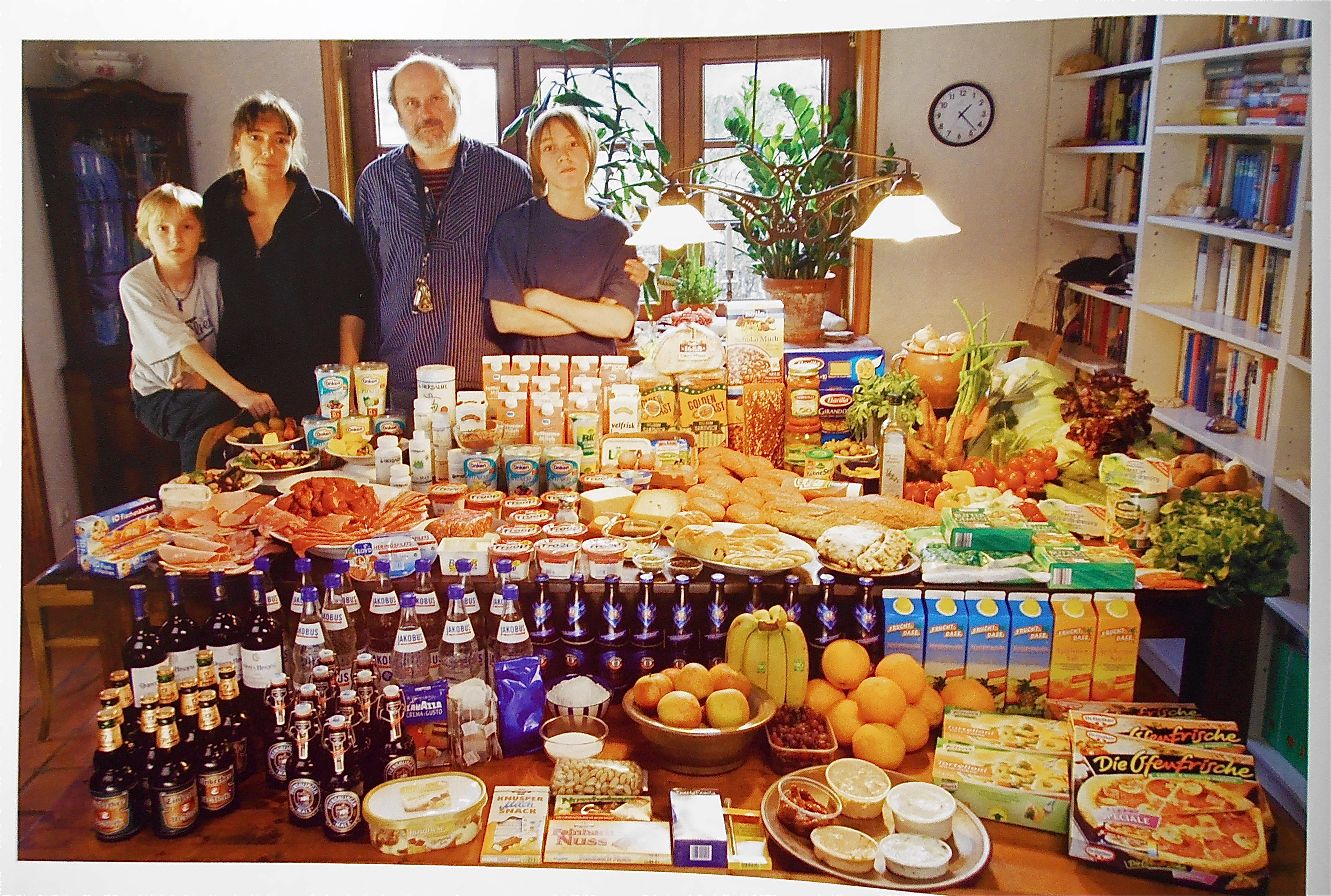
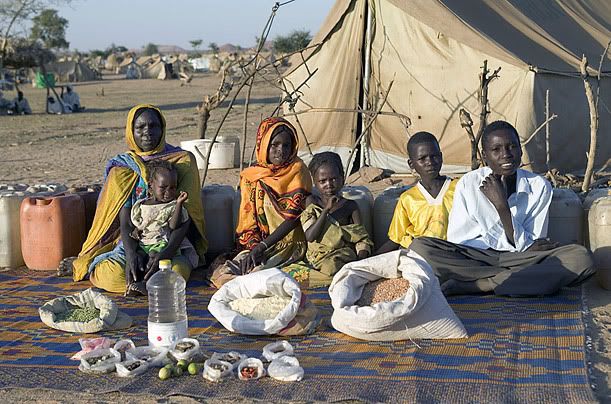
I was dismayed when under Dau.II's enterprise, we brought every golldarn box out of the attic and filled the yard with a small, and totally disregarded, section of our possessions.  It was like the contrast between the amount of food consumed weekly by a German family compared to that of a family from, say, Chad.  What are we like?  We have boxes of china which haven't seen the light of day since Dau.II was in diapers: dinky tea-sets ideal for teeny girls to host a dolls' tea-party with apple-juice and teeny-tiny sandwiches.  Ho-hum, I guess we've saved them for the next generation down.  I did, however, find the catering tea-pot which I had looked for every one of the 7 years when the girls hosted a summer camp for a couple of dozen of their friends. I'll have to invite a party of neighbourly crumblies to get that into use.  On the other hand, I did unearth an electric kettle vintage late 1980s which appeared to be in working order except that it leaks where the spout is brazed onto the body of the kettle.  It should / could have been throw on the dump years ago but now it can get a new lease of life when I patch up the joints with Sugru !! It needed materials science to make the break-through for that solution to emerge.

And red face, I found another six boxes of books!  I know where some of them can go.

Wednesday, 21 February 2024

Sprakkar

Because of a comment by Icelandophile Professor Batty, and subsequent to-fro, I've gone deep on Eliza Reid, who will cease being Forsetafrú = First Lady this summer after two terms. I've been reading her The Secrets of the Sprakkar: Iceland’s Extraordinary Women and How They Are Changing the World (1922). It's a deep dive into Europe's most equal society through the voices of not-men who have shaped and benefitted from that playing field - still bumpy but A Lot flatter than, say, Ireland's - let alone Iranland!  

Reid, who grew up in rural Ontario, apparently met her Icelandic husband Guðni Jóhannesson on a blind-date  . . . in Oxford, when they were both there as students. He came home and soon landed a faculty position in University of Iceland. He's a 20thC historian who had articulate and sensible things to say about The Cod Wars with UK and the Banking Collapse. When the long-term President finally retired in 2016 then fans-friends-and-relations urged Guðni to run for the office and he won the election quite convincingly. His bookish, entrepreneurial wife thus became First Lady and a reluctant fashion-icon - she didn't stop shopping in charity shops just because she had to attend state banquets around the World. She also famously penned an OpEd for the NYT basically saying "ég er ekki handtaska mannsins míns" = I am not my husband's handbag. In other words, the partner of the powerful [man] may be the power behind the throne and is, for sure, not a decorative cipher.

The book is Reid's homage to the women of her adopted country; and she carried out her research at farms, quaysides, C-suites and saunas. One of her informants shared an obscure word which appears six times in the eddas: Sprakki = an extraordinary woman; plural Sprakkar. It became a shoo-in to incorporate the word into the title of her book. Contrary to Reid's assertions in some of her many interviews and pieces-to-camera, Icelandic is not the only European language to have a respectful, slightly frightening, noun describing any class of woman. Irish has cailleach for starters. Jenni Nuttall has logged a long list of ♀-pejoratives in English. None of which I'll repeat here because there's quite enough slaggin' of women when they don't conform to door-mat.

Sprakkar has an essay about Cap'n Dóra Unnarsdóttir, [R - be very afraid] a fish-whisperer who conjures cod from the wild Atlantic. She sat her Ship Captain's exam in 2012 filling the sea-boots of her father and grandfather before her. She suffered through a period of ribbing by the other fishermen, but that was replaced by respeck when she reliably reached her quotas quicker than they did  . . . and slagged back when they teased her.

In the corridors of power, one force is the FKA Félag Kvenna í Atvinnulífinu (Association of Women Business Leaders). Which is still smaller than it should be. But one of Reid's informants shared that, a fortnight after the FKA had named her Business Woman of the Year, her company had finally made her EVP. Corporations can be shamed by irony?

As it happens The Blob has tribbed Vigdís Finnbogadóttir, the first elected female head of state. That Sprakki ᛋᛒᚱᛅᚴᚴᛁ was elected in 1980 and was re-elected as President 3 subsequent times. Setting a precedent for what women could do and what a whole country could do about gender equality. That election was the cake that had been baking for five years since the 1975 Women's Work Stoppage, which forced everyone to see that changing diapers, gutting fish, telling at banks, typing letters was a) not much fun b) essential. Men referred to that day later as L o n g Friday.

You may not have the dedication to read through Secrets of the Sprakkar but you can catch a flavour of Eliza Reid's voice in a 06 May 2022 talk at Seattle's National Nordic Museum or on 09 May 2023 at the Montclair Literary Festival. It is a significant meta-point that on these two different occasions she is thriftily wearing the same dress - HeadOfState WAGs please copy.  Natch she done a TEDx: in whc she TMIs the initial blind-date. And look out for Eliza Reid's new murder-mystery. And Iceland still means Grindavík in my sources of anxiety.

I mentioned at the top that The President of Iceland is stepping down this Summer and elections are set for the Spring. What next for the retiring head of state? Here is one possibility: hooking up with his twin brother separated at birth to do a two-hander called Some Geezer fed my Geyser: an investigation into the state of Icelandic gastronomy presented by Guðni Rosenthal and Phil Jóhannesson:

Thursday, 30 November 2017

Nous sommes désolés

The young and symmetrical Prime Minister of Canada Justin Trudeau has been apologising on behalf of the State for oppressing The Gays through the second half of the 20thC. Inclusivity is in the air, and Trudeau said sorry for how LGBTQ2 Canadians were treated before he himself reached adulthood - he was born in 1971. I am trying to keep track of the fragmentation of gender identity and got as far as LGBTQ last Tuesday. Super-trendy Trudeau has stolen a march on me with his ABCDE2.  It stands for Two-spirit which has been appropriated by some of the First Nations to describe their citizens who don't fit a M and F dichotomy. I gather that it would be an impertinence for white folks to so describe themselves because their white privilege prevents them from experiencing the oppression meted out on Native North Americans, let alone NNA2s. Heck m Canuck, I bet NNA is now no longer acceptable in polite company, in the same way as the demonym for dark Americans changes so often as to wrong-foot almost everybody. When first encountered by French trappers, two-spirit folk were called berdache but you want to be really careful using that term outside of historical anthropology texts. Tim Minchin on the language of prejudice for minorities.

You may be sure that whatever the state of Canadian Law, different people are subject still to all sorts of prejudice and discrimination across the provinces of Canada.  The first step is to sort out the current situation and Canada has not been behind-hand in legislating for equality. Apologising for the sins of our fathers only works if you absolutely believe in the sincerity of the person uttering the words. I think I believed Gordon Brown British Prime Minister when, in 2009, he uttered a similar apology for the shameful treatment of Alan Turing 50 years earlier when Brown himself was still in diapers. I would not have believed his predecessor Tony Blair who was far to conscious of the cameras. What stuck in my craw about Turing was several years of political grand-standing that eventually secured Turing a retrospective pardon for his crimes and misdemeanors. Rewriting history with its whiff of whitewash is not the same as a sincere apology. The pardon allowed for a preening smugness and a delusion that those who secured it for Turing would have behaved better than their ancestors at that place and time. An apology otoh looks forward and carries the intention, however poorly executed in reality to do better in future with living people.  There is even talk of a compensation package as if ruined lives and lost pension rights (it was mostly public servants who were directly financially affected). That could be unseemly: do the surviving dependents get a claim; how much can money heal emotional wounds etc.
Catching the wave of Canadian right-on-ness on Metafilter led me to another sorry-fest from young Trudeau just after he was elected the second youngest Canadian PM in 2015.  That was flagged on MeFi as "The real value in the apology lies in a re-examination" and was about the shabby treatment of a shipful of immigrants from India to Canada who, in 1914 aboard the Komogata Maru, were held in limbo in Vancouver for 2 months before being sent back to India. On arrival back in the Subcontinent, they expressed their dismay and dissatisfaction at being unable to travel within the British Empire. In the ensuing riot, 19 of the landed passengers were killed by security forces. Trudeau apologised for a too nice application of the Law as it stood back then and for the series of unfortunate consequences of that legal stance.
I liked very much that fact that Navdeep Bains, the Minister of Innovation, Science, and Economic Development, was sitting directly behind Trudeau in his trademark bright red turban. Doubtless Trudeau, who is very much Optics-aware, made sure of the seating arrangements. When CBC cameras cut to split-screen Trudeau's continuing bilingual apology with grainy monochrome footage of turbaned chaps on the Komogata Maru [see above for screen-scrape], there was Bains as the bright proof that Sikhs and other minorities and immigrants have a sky's-the-limit future in Canada. That should give hope to all the Syrian paediatricians who are living tents somewhere. That bright red slash of colour may remind you of another symbol of hope: The Girl in the Red Dress from Schindler's List.  If you haven't had enough already of Trudeau fils, you might check his 2000 eulogy for Trudeau père.