When Dau.I and Dau.II were 7 and 9 they played Stronghold, a real-time medieval strategy game, on the computer. Voices, in a variety exaggerated regional British accents, travelled through the house and "MORE wood is needed" became a family catch-phrase. Up until about 1970, wood was The engineering material across the world. Battens, beams, braces, chairs, floors, fascia, fences, gates, joists, lintels, props, purlins, rafters, sheds, shelves, sills, soffit, stakes, studs, table-legs, T&G flooring, trusses. Now we have a variety of other options for some of these uses in metal, plastic, and foam. But there is really nothing better for lightness, cost, ease-of-handling and strength than timber. Evolution has done some serious genetic engineering to make trees and their outspreading branches so wonderfully fit for function. With that-all in mind, let's wing off the other side of the World to Lord Howe Island, a sub-tropical paradise halfway between Sydney, NSW and Norfolk Island:
And, for gawd's sake pay particular attention ↗ to Wolf Rock, a tide-washed reef off the East coast of LHI. Zoom in:
In July 2002, HMS Nottingham, a Type-42 destroyer of the British navy, was en route from Oz to NZ when she paused at LHI to allow her crew some R&R on the beach and also to airlift a critically sick sailor to hospital. On the evening of 7th July, a Normal Accident unfolded which ripped a 50m gash in the starboard side, flooded several water-tight compartments and almost caused the vessel to sink. The Admiralty report, which assigns blame to almost all the officers and commendation to almost all the crew, reads like a thriller and reminds us all to focus on what matters: which is not necessarily what causes most anxiety. A Normal Accident [multiblobboprevs] is what happens when a series of events, each comparatively innocuous, pile up on top of each other to bring disaster.
The weather wasn't great, and the ship was trying to depart from the anchorage and secure her Lynx helicopter, at the same time, in the dark. The helicopter was being secured because it had just returned to the ship with the Captain who had been ashore on a courtesy call. With the Captain away, the remaining officers failed to delegate the several tasks needed to get the shop safely out to sea and, fatally, several assumptions were made about the involvement of other personnel in the cascade of tasks that needed to be executed. The Officer of the Watch was, for example, "petrified of damaging or losing the Lynx helicopter". For far too long, for any ship under weigh in an unfamiliar anchorage, nobody thought to consult the admiralty chart on the chart table at the back of the bridge to establish the shop's position w.r.t. known hazards like Wolf Rock; and nobody took any soundings to establish how much water was under the keel. These data were especially important as there was a 500m error of estimate in the location of this obstruction. It didn't help that the Navigation Officer had to swap between 1:150,000 and 1;25,000 scale charts and that someone had drawn a pencil line across the small scale chart obscuring the Wolf Rock hazard.
At the last minute, two of the deck officers spotted a patch of white right ahead of the moving ship and did other, seemingly important, things rather than take evasive action. Ten minutes after the Captain stepped down from the helicopter there was an ominous >!krunk!< and the ship was brought up all standing on the edge of Wolf Rock.
Whatever the deficiencies in experience, navigation and ship-handling by the officers, when disaster struck, the crew jumped out of their bunks to emergency stations and acted in consort to save the ship. "The HQ1 C2 team was calm and decisive throughout. Equipment and manpower resources were well managed and the Marine Engineering Officers' performance was particularly noteworthy as was that of several of the senior rates at FRPPs [Fire and Repair party Post]. Both CMEM(M)s [Chief Marine Engineering Mechanic (Mechanical) as opposed to CMEM(L) ditto ('Lectrical)] provided top quality advice and help with shoring. Many junior rates commented on that their presence, leadership and good humour provided re-assurance in a difficult and dangerous situation and confidence that the ship would survive".
As illustrated in the damage control video I flagged on Sunday, there are no modern technological solutions to deal with water fire-hosing into a ship through a gaping hole in the side. Timber, wedges, mattresses and tarpaulins are still the tools of choice. The first step is to stem the ingress of water from outside the hull; then the water inside the ship needs to be contained by water-tight bulkheads =walls]; simultaneously or asap the water needs to be pumped out until the water level is at least at a steady state. Water weighs in at 1 tonne per cu.m. and seamen wouldn't trust the integrity of the bulkheads against such a press of water, so they tend to shore them with baulks of timber wedged against something immovable. Type-42 ships are inventoried with 75m of shoring timber but this was hopelessly inadequate for such a major structural insult. The Royal Australian Navy was able to supply an additional 200m of timber immediately but even this was only about half the final tally (500 m!!) for holding the ship together and above the surface.
HMS Nottingham would have been beyond economic repair but for the fact that she had been refitted and upgraded just 18 months earlier. The Admiralty accordingly spent £39million to fix her up for another 6 years of useful life before she was decommissioned and sold for scrap in 2011.
Showing posts sorted by relevance for query normal accident. Sort by date Show all posts
Showing posts sorted by relevance for query normal accident. Sort by date Show all posts
Thursday, 27 June 2019

Friday, 30 December 2016
Normal accident
I'm interested in drugs:
As I mentioned in a related matter, a third of all deaths in the US [or any other country where they have doctors] are the result of medical error. I know of one non-fatal prescription error case. Father of a pal of mine elected to have back surgery, which didn't go so well: he finished up with persistent tooth-grinding debilitating pain. The meds to combat this were required so often that his practice team fitted him up with a catheter at his waist, so that he could give himself a jolt of pain-killer when he felt he needed it. Once a month the old chap had to travel up from the country to fill up the reservoir at the teaching hospital which had bungled his surgery. It took him all day with the travel and the waiting. One month, finally sorted, he set off towards the train station, felt a twinge as he crossed the hospital car-park, pushed the admin button and promptly collapsed. The doctor had mis-written his script so he got 50x the required dosage. If this is going to happen, just outside the doors of A&E is the best place . . . so he survived.
That was probably culpable negligence. Normal Accidents are when several small-small errors and misunderstandings, trivial and recoverable in themselves, accumulate towards a disaster. A small example might be when the doctor's hand-writing is so illegible that the local pharmacist wings it when interpreting the scrawl and gets the dose or the drug wrong. You can't ring up the bloody doctor for every script and of course the god-walking-this-earth doctor couldn't be prevailed upon to write clearly. Maybe this is dying away in the electronic world. Maybe that is not a good idea: if you have to work, even a little, then you'll think a little before you dash off the script.
These things are pervasive enough that Charles Perrow wrote a book about them in 1984: Normal Accidents: Living with High-Risk Technologies. This starts off with an analysis of the almost disaster of the Three Mile Island nuclear reactor accident. I was there! Or rather 600km downwind shortly after I arrived in Boston for my PhD in 1979. It is an interesting case study where a combination of equipment malfunctions, design-related problems and worker errors conspired to cause a partial melt-down.
Network Rail in the UK have put out a handy set of short training films, reconstructing events where something has gone wrong. Here's one where the three men involved in a SPAD - signal passed at danger - speak to camera regretting their actions, inactions and poor communication skills. I think it would be just bonzer to make a similar film with our PT students acting out a prescription error in our pretend-pharmacy lab at The Institute. And lest you think that Lost in Translation is always tragic here's one that's funny.
- as a tax-payer because of the mad amount of money given to MegaPharm Inc. to achieve a marginal benefit for an unfortunate sufferer of a rare disease [prev Morquio; Orkambi]
- as a philologist bemused by the truly daft and eye-crossing names which the developers choose to give their products: infliximab has been around a long time now and it kinda of trips off the tongue but some of the others just give me a stutterimabitis; daclizumab, solanezumab and aducanumab and adalimumab; . . . but tositumomab? that might stick especially if nausea is a likely side-effect - Toss ye tum, geddit?
- as a carer lurrying a handful of coloured pills every Sunday night into Pat the Salt my mildly demented father-in-law. They look a lot like sweets, luckily there are no small children to mistake the drugs for something to eat.
As I mentioned in a related matter, a third of all deaths in the US [or any other country where they have doctors] are the result of medical error. I know of one non-fatal prescription error case. Father of a pal of mine elected to have back surgery, which didn't go so well: he finished up with persistent tooth-grinding debilitating pain. The meds to combat this were required so often that his practice team fitted him up with a catheter at his waist, so that he could give himself a jolt of pain-killer when he felt he needed it. Once a month the old chap had to travel up from the country to fill up the reservoir at the teaching hospital which had bungled his surgery. It took him all day with the travel and the waiting. One month, finally sorted, he set off towards the train station, felt a twinge as he crossed the hospital car-park, pushed the admin button and promptly collapsed. The doctor had mis-written his script so he got 50x the required dosage. If this is going to happen, just outside the doors of A&E is the best place . . . so he survived.
That was probably culpable negligence. Normal Accidents are when several small-small errors and misunderstandings, trivial and recoverable in themselves, accumulate towards a disaster. A small example might be when the doctor's hand-writing is so illegible that the local pharmacist wings it when interpreting the scrawl and gets the dose or the drug wrong. You can't ring up the bloody doctor for every script and of course the god-walking-this-earth doctor couldn't be prevailed upon to write clearly. Maybe this is dying away in the electronic world. Maybe that is not a good idea: if you have to work, even a little, then you'll think a little before you dash off the script.
These things are pervasive enough that Charles Perrow wrote a book about them in 1984: Normal Accidents: Living with High-Risk Technologies. This starts off with an analysis of the almost disaster of the Three Mile Island nuclear reactor accident. I was there! Or rather 600km downwind shortly after I arrived in Boston for my PhD in 1979. It is an interesting case study where a combination of equipment malfunctions, design-related problems and worker errors conspired to cause a partial melt-down.
Network Rail in the UK have put out a handy set of short training films, reconstructing events where something has gone wrong. Here's one where the three men involved in a SPAD - signal passed at danger - speak to camera regretting their actions, inactions and poor communication skills. I think it would be just bonzer to make a similar film with our PT students acting out a prescription error in our pretend-pharmacy lab at The Institute. And lest you think that Lost in Translation is always tragic here's one that's funny.
Friday, 24 March 2017
Oroville Update
In January this year, after 5 years without rain there was a dramatic drought-break in Northern California. Suddenly there was more water than anyone new adequately how to deal with. I mentioned the story again a couple of week later by way of saying that Mr Trump's 'promise' of $1 trillion$ was probably not going to be enough to fix all the bridges, culverts, dams and road-pavement that was beyond their sell-by date. The cost of just cleaning up the mess at Oroville up till now is in excess of $100 million. Here's good footage showing water moving before, during and after the over-flow crisis at Oroville.
When we left Oroville on 13th February, the rain had eased off, if you can call 13in = 330mm in 4 days an easing off. The emergency spillway was still in danger of being utterly destroyed through under-cutting by the flowing water and the reg'lar spillway had a hole [see above, the yellow Lego figures are about 2m tall] big enough to bury my 'umble 'ome and another half-dozen houses of similar size. But the California department of water resources DWR were left with Hobson's Choice and had to let water out of the brimful lake down the compromised spillway. Without Hans Brinker the hero of Haarlem to stem the flow, the rushing water ate at the edges of the hole and then ate at the edges of the hill and than started scouring out the very bedrock. In about 20 days, 1.5 million cu.yds = 1.1 million cu.m had been stripped out and dumped into the Feather River below. Every day of that meant another ?$5million? in damage and erosion that would eventually have to be repaired. This what a million cu.m of crumbled concrete and bedrock looks like - mainly grey in the brown river:
You can see the almost white strip of remaining spillway near the top right of the picture. This is after they had scrabbled a channel through the debris field (you can see it flowing along the left edge of the heap of grey rock). They did that so that the level of the river could be lowered below the out-fall ports of the Hyatt power-station at the base of the dam - off-camera to the right. On an engineering side note, you can't run water through the plant unless you are taking electricity off the turbines - if they aren't engaged with the magnets they spin so fast they melt the bearings and explode. They couldn't run the electricity because the cables and pylons tracked off through the flood disaster zone and had to be removed! It was a fine old mess of a 'normal accident' or one dam thing after another. Here's a picture of before (normal spillway gush 2011), damage (7th Feb 2017) and after (27th Feb 2017):
When we left Oroville on 13th February, the rain had eased off, if you can call 13in = 330mm in 4 days an easing off. The emergency spillway was still in danger of being utterly destroyed through under-cutting by the flowing water and the reg'lar spillway had a hole [see above, the yellow Lego figures are about 2m tall] big enough to bury my 'umble 'ome and another half-dozen houses of similar size. But the California department of water resources DWR were left with Hobson's Choice and had to let water out of the brimful lake down the compromised spillway. Without Hans Brinker the hero of Haarlem to stem the flow, the rushing water ate at the edges of the hole and then ate at the edges of the hill and than started scouring out the very bedrock. In about 20 days, 1.5 million cu.yds = 1.1 million cu.m had been stripped out and dumped into the Feather River below. Every day of that meant another ?$5million? in damage and erosion that would eventually have to be repaired. This what a million cu.m of crumbled concrete and bedrock looks like - mainly grey in the brown river:
You can see the almost white strip of remaining spillway near the top right of the picture. This is after they had scrabbled a channel through the debris field (you can see it flowing along the left edge of the heap of grey rock). They did that so that the level of the river could be lowered below the out-fall ports of the Hyatt power-station at the base of the dam - off-camera to the right. On an engineering side note, you can't run water through the plant unless you are taking electricity off the turbines - if they aren't engaged with the magnets they spin so fast they melt the bearings and explode. They couldn't run the electricity because the cables and pylons tracked off through the flood disaster zone and had to be removed! It was a fine old mess of a 'normal accident' or one dam thing after another. Here's a picture of before (normal spillway gush 2011), damage (7th Feb 2017) and after (27th Feb 2017):
But the DWR hired every 20 tonne dump truck, every bull-dozer and every monster back-hoe in N California and contracted them to move that rock out of the river. One of these massive diggers costs maybe $50,000/mo to operate and the film footage shows dozens of them scurrying about the landscape. After 10 days of round the clock digging, they had cleared much of the spoil from the riverbed and the water was able to flow downriver. More importantly the power-plant was able to open ports and start to generate electricity again. This meant that anything up to 10,000 cfs (cu.ft/sec) that's about 1 million cu.m/hr which sound a lot but isn't going to make much of a dent when there are acre-ft of water the other side of the dam: it can lower the lake at about 1cm/hr. But snowmelt and rain is adding 5x as much, so it's a wee wee solution. Load-carrying helicopters have delivered new pylons and sackfuls of rock 'armouring' to fill the new canyons below the emergency spillway. These boulders have been glued together with thousands of tonnes of shotcrete - sprayed from concrete mixers through special hose-trucks. Some shotcrete has been judiciously added as 'pointing' to smooth out the ragged lip of the broken reg'lar spillway. It's been the most tremendous engineering project; a triumph of American can-do and steady nerves . . . and luck with the weather (all those Christians praying, I guess). But, being America, there has been a parallel load of bonkers negativity / paranoia:
- The rain came because of the
contrailschemtrails (of course); - the hole in the spillway was caused by a terr'ist bomb;
- the whole thing is god's judgement for fluoridating [bloboprev] the water;
- where is the rebar? I can't see any ferro in the concrete from my sofa in Arkansas it must have been left out as a contractor's scam.
- It's all a plot by Democrat Governor Jerry Brown to spill the precious fluids of god's own America
One final thought: nature is full of homeostatic balance and doesn't handle wild fluctuations very well. California's a Garden of Eden. Downstream from the dam are hundreds of hectares of vinyards, olive, almond and orange groves, orchards and market gardens. Those nearest the river are protected by levees - artificial embankments that are held together by inertia and vegetation. Letting the river level go up and down like a yo-yo is ungood: the levees saturate with water from the high water mark; if you allow the water to drain away too quickly the saturated earth slumps into the river taking away years of natural ground-cover and its mutually supporting root structure.
Juan Brown, a local airplane pilot, has been my touchstone for commentary. His channel is called blancolirio and this is a compendium of all 22 of his oroville videos.
Now some context. The $100 million is just staving off disaster, they are still soliciting opinions about the long-term solution and hoping to build it this Summer before the next rainy season.
Oroville may be the tallest dam in the US and the spillway may be 55m across and 2km long but it's not orders of magnitude bigger than other engineering projects that are in urgent need of attention across the USA.
- IF according to WaPo there are 130,000 such projects
- ANDIF Oroville has cost 1/10th of $1 billion
- ANDIF $1 trillion is 10,000x more than that
- THEN the Feds should be budgetting $10 trillion not $1
Wednesday, 8 January 2014
Surviving Kegworth
Just yesterday I was on about Angus Wallace who was able to carry out a bit of light thoracic surgery at 10,000m with a coat-hanger and some table cutlery. You'd like to ask what such a fellow did in his day job. Turns out that he was an orthopaedic surgeon at Nottingham. In his own theatre, with an anaesthetist and a full complement of kit, he was able to do a lot of good 25 years ago today. Earlier in the day, British Midland Flight BD 092 from Heathrow to Belfast lost a fan blade (metal-fatigue) in one of its engines which was damaged. The pilot and co-pilot contrived, through the classic set of circumstances typical of a 'normal accident', to shut down the wrong engine as they diverted to British Midland Airport. A key event was that, as the pilot went through a standard set of diagnostic checks to identify the nature of the emergency, he was interrupted by air-traffic control and never completed the protocol. Pilots are temperamentally so calm and in-control that they are quite unable to say "Shut-up, I'm concentrating", although that might have been the correct response there, then.
Howsoever, BD092 came down just short of the runway, having struck the far side of the embankment of the M1 motorway and hop-scotched over the roadway to land on the near-side embankment and break into three pieces. The plane didn't burst into flames and the motorway provided an additional handy access point for emergency services. Just as well that the plane didn't burn because a number of the survivors had broken legs and wouldn't have made it in a hurry for the emergency exits. In all, 39 people died on impact and a further 8 succumbed to their injuries later. The 79 survivors, 74 of whom were seriously injured provided data for a re-analysis of the brace position. This was carried out over the next few days by Mr Wallace and others and over the next many months by Hawtal Whiting Structures, an engineering consultancy, who put a large number of crash-test dummies through their paces. One key finding was that you should make sure that your feet and shins are braced under and behind the knees so they don't break against the underside of the seat in front of you. Also get your head right up against what it is going to impact with (the seat-back in front of you probably) rather that waiting for inertia to bring it forward at impact speed. The current details can be found on Wikipedia. So it's another hats off to Angus Wallace, who can not only think with his hands (and a coat hanger) but can also sort carefully and analytically through the data from an aftermath.
Now get this. If you're flying out of the UK with a lap-passenger (one under the age of 2 like The Wean last year), the hosties insist on providing you with a mini-seatbelt which threads through your own and prevents the bundle of joy flying out of your arms and down the aisle. Flying from the US, however, the FAA forbids this arrangement believing that the mini-belts increase the probability of injury to the infant. Clearly 'believes' in the operative word here because if there were any data there would be an agreed policy. There is a further belief that the brace-position is only required to ensure the availability of good dental records after The Event!
Risk assessment is interesting and worth spending some time on. You don't want to go to huge inconvenience and expense to avert an exceedingly rare event. So don't bother with an FAA approved child-seat: you're more likely to develop a melanoma from the bruises it will undoubtedly make on your shins as you lug it about. Steve Levitt the economist has demolished the argument that child car-seats are anything other than a boondoggle for Britax. I used to think, following runway conflagration of British Airtours Fl 28M, that it would be handy to pack a large (turkey sized) oven bag in a pocket of your carry-on. Pop it over your head while the flames whip through the cabin and you might make it to the door. The European Transport Safety Council ETSC dismisses this (PDF p24-28) as nonsense, but is defo worth reading for other survivability tips.
Howsoever, BD092 came down just short of the runway, having struck the far side of the embankment of the M1 motorway and hop-scotched over the roadway to land on the near-side embankment and break into three pieces. The plane didn't burst into flames and the motorway provided an additional handy access point for emergency services. Just as well that the plane didn't burn because a number of the survivors had broken legs and wouldn't have made it in a hurry for the emergency exits. In all, 39 people died on impact and a further 8 succumbed to their injuries later. The 79 survivors, 74 of whom were seriously injured provided data for a re-analysis of the brace position. This was carried out over the next few days by Mr Wallace and others and over the next many months by Hawtal Whiting Structures, an engineering consultancy, who put a large number of crash-test dummies through their paces. One key finding was that you should make sure that your feet and shins are braced under and behind the knees so they don't break against the underside of the seat in front of you. Also get your head right up against what it is going to impact with (the seat-back in front of you probably) rather that waiting for inertia to bring it forward at impact speed. The current details can be found on Wikipedia. So it's another hats off to Angus Wallace, who can not only think with his hands (and a coat hanger) but can also sort carefully and analytically through the data from an aftermath.
Now get this. If you're flying out of the UK with a lap-passenger (one under the age of 2 like The Wean last year), the hosties insist on providing you with a mini-seatbelt which threads through your own and prevents the bundle of joy flying out of your arms and down the aisle. Flying from the US, however, the FAA forbids this arrangement believing that the mini-belts increase the probability of injury to the infant. Clearly 'believes' in the operative word here because if there were any data there would be an agreed policy. There is a further belief that the brace-position is only required to ensure the availability of good dental records after The Event!
Risk assessment is interesting and worth spending some time on. You don't want to go to huge inconvenience and expense to avert an exceedingly rare event. So don't bother with an FAA approved child-seat: you're more likely to develop a melanoma from the bruises it will undoubtedly make on your shins as you lug it about. Steve Levitt the economist has demolished the argument that child car-seats are anything other than a boondoggle for Britax. I used to think, following runway conflagration of British Airtours Fl 28M, that it would be handy to pack a large (turkey sized) oven bag in a pocket of your carry-on. Pop it over your head while the flames whip through the cabin and you might make it to the door. The European Transport Safety Council ETSC dismisses this (PDF p24-28) as nonsense, but is defo worth reading for other survivability tips.
Saturday, 28 January 2017
Gus Grissom Gone
I wrote a brief obit for Eugene Cernan, the last man on the moon, a couple of weeks ago. I felt I could be brief because I'd given him a fulsome trib in December 2015. It cost a lot to get Cernan and the other eleven moon-walkers to the surface of the moon and back: so much that the Human Genome Project, which cost about $1billion, usually employed the US Space Program as the only comparable mega-science endeavour. There were costs along the way which are hard to dollarise and costs afterwards as two Space Shuttles came back to earth in small pieces.
I was reflecting on the costs because yesterday was the 50th anniversary of the Apollo I disaster when three astronauts were incinerated on the launch pad during a practice run on 27th Jan 1967. Of the three dead men, Gus Grissom, Ed White and Roger Chaffee, Grissom's name struck the memory bell loudest. He was Indiana's most famous son and a fighter pilot in the Korean War before he was picked to be a NASA astronaut: one of the Mercury Seven. As with Neil Armstrong and Eugene Cernan there was a lot of Harry Potter 'Eclipse first the rest nowhere" in Project Mercury . The first man in space, John Glenn, became a household name and eventually a US Senator and Presidential candidate. You have to have been around as a small geeky boy to remember the names of the others. Gus Grissom was the second man in space; in those days, the pilot got to name the ship, and Grissom plunked for Liberty Bell 7 [the pair see R]. He almost lost his life, not in a dramatic fireball like the Challenger or Columbia space shuttles but in a botched landing /pick-up after a successful mission. After splashdown the pilot was meant to sit tight until a chopper from the nearby aircraft carrier hooked on and lifted the spaceship to the flight-deck. In somewhat murky circumstances, the capsule door blew off while LB7 was still bobbing about on the ocean, waves slopped in and a lot of expensive kit sank into the depths. Grissom slithered out and nearly followed his command down when his space-suit started to take on water. His buoyancy wasn't helped by having smuggled 2 rolls of dimes onboard to sell as souvenirs afterwards. He ever afterwards denied triggering the explosive bolts, but not everyone believed him. A fellow who could bring half a pound [almost exactly the weight of 100 dimes] of unaccounted weight aboard such a delicately balanced project could have done pretty much any dopey thing. It's similar to the Apollo 8 astronaut who pressed the Don't Press This Button button and unravelled Margaret Hamilton's computer program. There was a tension between the NASA management who wanted the astronauts to be quiet passengers while they controlled everything from Houston and the astronauts, almost all previous test-pilots who wanted to be doing. Doing some daft things like Alan Shepard bringing a 6-iron and two golf balls to the moon and whacking one of them into the distance. NASA believed Grissom had not been tricking about with the door, let alone panicking to get relief from claustrophobia, and that's all the counted. He went up in Gemini 3, becoming the first man to do space twice but was still eclipsed in the public mind and history by John Glenn and Neil Armstrong.
Whatever you feel about the sinking of Liberty Bell 7, Apollo 1 was a good candidate for a Normal Accident: a cascade of small-small t'ings had to go wrong or go unnoticed. The inside of the capsule was pressurized a little above atmospheric with pure oxygen (!). A smoldering candle will burst into full flame in such an atmosphere. One of the ironies of the disaster was that the door was designed to open inwards - partly because of Grissom's earlier mishap with out-opening doorways. Another door shouldered some of the blame. An access port had, through repeated opening for inspection, stripped off the insulation of a silver-coated copper wire. The inspections were necessary because a tube transporting ethylene-glycol coolant was always leaking. With 20:20 hindsight it was revealed that silver had a positive electrolytic effect on ethylene-glycol and the ignition wouldn't have occurred with plain copper wire. One suspects that the silver coating was there to justify a fabulously inflated price for the material by NASA contractors North American and Grumman. They charged top dollar because they could, but their workmanship was often shoddy, the delivery time-keeping weak, and design-flaws manifold. We remove our shoes in the run up to all air-flights now because on 22 Dec 2001 Richard "Bat-shit bonkers" Reid smuggled a bomb aboard an American Airlines flight in his shoes. Likewise, the NASA contractors stopped using silver coated wire anywhere rather than thinking about the next potential hazard. If ethylene-glycol started the fire, there was plenty of flammable material in the cockpit to keep it going. The walls had been almost carpetted with Velcro which had been recently invented by George de Mestral; this allowed the astronauts to park pretty much everything while weightless but burned very well in pure oxygen . . . likewise the space-suits.
If you read Richard Feynman's story of the Challenger disaster and investigation, and you should, you'll get the feeling that NASA's managers were culpably negligent in heeding the concerns of their astronauts and terrestrial engineers about redundancy, safety, testing, and analysis of complex systems. Mean with the routine but necessary checks and balances, they were spend-thrift with contracts and were always cranking up the ante to make NASA more sexy and pioneering. It was as if they knew Congress would only buy into the idea of space-travel if the projects became increasingly complex and hard to fully comprehend. Feynman concluded that NASA management were almost ideologically incapable of grasping probability and risk-assessment.
In 1999, three decades after it sank, Liberty Bell 7 was recovered from the ocean floor. 52 more dimes were found loose in the capsule. It seems that Grissom wasn't the only one sending souvenirs into space - but he was the only man with the bottle to ride with the illicit payload.
I was reflecting on the costs because yesterday was the 50th anniversary of the Apollo I disaster when three astronauts were incinerated on the launch pad during a practice run on 27th Jan 1967. Of the three dead men, Gus Grissom, Ed White and Roger Chaffee, Grissom's name struck the memory bell loudest. He was Indiana's most famous son and a fighter pilot in the Korean War before he was picked to be a NASA astronaut: one of the Mercury Seven. As with Neil Armstrong and Eugene Cernan there was a lot of Harry Potter 'Eclipse first the rest nowhere" in Project Mercury . The first man in space, John Glenn, became a household name and eventually a US Senator and Presidential candidate. You have to have been around as a small geeky boy to remember the names of the others. Gus Grissom was the second man in space; in those days, the pilot got to name the ship, and Grissom plunked for Liberty Bell 7 [the pair see R]. He almost lost his life, not in a dramatic fireball like the Challenger or Columbia space shuttles but in a botched landing /pick-up after a successful mission. After splashdown the pilot was meant to sit tight until a chopper from the nearby aircraft carrier hooked on and lifted the spaceship to the flight-deck. In somewhat murky circumstances, the capsule door blew off while LB7 was still bobbing about on the ocean, waves slopped in and a lot of expensive kit sank into the depths. Grissom slithered out and nearly followed his command down when his space-suit started to take on water. His buoyancy wasn't helped by having smuggled 2 rolls of dimes onboard to sell as souvenirs afterwards. He ever afterwards denied triggering the explosive bolts, but not everyone believed him. A fellow who could bring half a pound [almost exactly the weight of 100 dimes] of unaccounted weight aboard such a delicately balanced project could have done pretty much any dopey thing. It's similar to the Apollo 8 astronaut who pressed the Don't Press This Button button and unravelled Margaret Hamilton's computer program. There was a tension between the NASA management who wanted the astronauts to be quiet passengers while they controlled everything from Houston and the astronauts, almost all previous test-pilots who wanted to be doing. Doing some daft things like Alan Shepard bringing a 6-iron and two golf balls to the moon and whacking one of them into the distance. NASA believed Grissom had not been tricking about with the door, let alone panicking to get relief from claustrophobia, and that's all the counted. He went up in Gemini 3, becoming the first man to do space twice but was still eclipsed in the public mind and history by John Glenn and Neil Armstrong.
Whatever you feel about the sinking of Liberty Bell 7, Apollo 1 was a good candidate for a Normal Accident: a cascade of small-small t'ings had to go wrong or go unnoticed. The inside of the capsule was pressurized a little above atmospheric with pure oxygen (!). A smoldering candle will burst into full flame in such an atmosphere. One of the ironies of the disaster was that the door was designed to open inwards - partly because of Grissom's earlier mishap with out-opening doorways. Another door shouldered some of the blame. An access port had, through repeated opening for inspection, stripped off the insulation of a silver-coated copper wire. The inspections were necessary because a tube transporting ethylene-glycol coolant was always leaking. With 20:20 hindsight it was revealed that silver had a positive electrolytic effect on ethylene-glycol and the ignition wouldn't have occurred with plain copper wire. One suspects that the silver coating was there to justify a fabulously inflated price for the material by NASA contractors North American and Grumman. They charged top dollar because they could, but their workmanship was often shoddy, the delivery time-keeping weak, and design-flaws manifold. We remove our shoes in the run up to all air-flights now because on 22 Dec 2001 Richard "Bat-shit bonkers" Reid smuggled a bomb aboard an American Airlines flight in his shoes. Likewise, the NASA contractors stopped using silver coated wire anywhere rather than thinking about the next potential hazard. If ethylene-glycol started the fire, there was plenty of flammable material in the cockpit to keep it going. The walls had been almost carpetted with Velcro which had been recently invented by George de Mestral; this allowed the astronauts to park pretty much everything while weightless but burned very well in pure oxygen . . . likewise the space-suits.
If you read Richard Feynman's story of the Challenger disaster and investigation, and you should, you'll get the feeling that NASA's managers were culpably negligent in heeding the concerns of their astronauts and terrestrial engineers about redundancy, safety, testing, and analysis of complex systems. Mean with the routine but necessary checks and balances, they were spend-thrift with contracts and were always cranking up the ante to make NASA more sexy and pioneering. It was as if they knew Congress would only buy into the idea of space-travel if the projects became increasingly complex and hard to fully comprehend. Feynman concluded that NASA management were almost ideologically incapable of grasping probability and risk-assessment.
In 1999, three decades after it sank, Liberty Bell 7 was recovered from the ocean floor. 52 more dimes were found loose in the capsule. It seems that Grissom wasn't the only one sending souvenirs into space - but he was the only man with the bottle to ride with the illicit payload.
Friday, 29 October 2021
A rough accounting
The Blob PageView Stats, wee hours 22 Oct 2021 = a week ago:

I was like that with The Blob. An earlier front-end of Blobspot made it easy to find how many people had read my deathless prose and so I reported, for example, the milestone of 100,000 PVs in 2015 about 3 years and 1,000 posts after the Birth of Blob. Then I gave up and with prejudice because of some frankly incredible fluctuations in these readership numbers. If Blogspot couldn't differentiate between human eyes-on-phone from a data scraping FAANG robot, the numbers offered no solace or feedback. Luckily for The Work, I didn't need to be thanked to continue to churn out my daily 700 words.
On the Write Front, I engineered things so that the millionth word I wrote was Zeugma. But the 2 millionth word passed several months ago without any sort of acknowledgement. According to the hive mind these are the best / most clickable Blobs with their rough PVs
- Stilt Walking Nonsense 15K a take-down of a meme on the molecular basis of happiness
- Mary Anning's Dog 4K a passable short bio of the famous fossilista
- Lack for Nothing 2.5K etymology of Waterford slang
- GCHQuiz clues and Answers 1K Ruminations on one 2016 Christmas Quiz
- Normal accident 1K a near death experience by medical error
- Castle Rackrent 1K an angry polemic about landlords and homelessness
- Bellos II 1K a reasonable explanation of how Benford's Law works
- Da Nags 1K a neat enough essay on the naming of race-horses
- Baltic Ace 1K an anniversary report of a fatal collision in the North Sea
- WASH 1K random ruminations on clean water
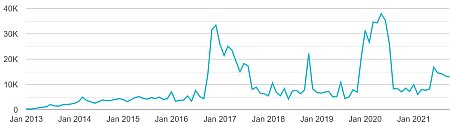

It is also a mystery what is happening at the beginning of 2017 and in the Spring of last year. Then, more than a thousand visitors a day were dropping by every day [as illustrated above] Or what happened on 19th October this year when more that 5,000 ppl/robots dropped into Blobland and hopped out again sharpish never to be seen or heard of again? Whatevs! If you're reading this sentence, it means you have stamina; I hope you use any residual energy this day to do your community some service.
Thursday, 6 March 2014
Zeebrugge
I've been thinking about my father a lot in the last tuthree days. Yesterday, Wikipedia's On This Day reported the anniversary of the Battle of Barossa (1811) an Anglo-Portuguese victory against a much larger force of French infantry in the Peninsula War. Since I was a boy, I've had a boy-like interest in the Napoleonic Wars possibly because of a namesake. Barossa rang a bell because it was one of the (successful) British battles that named a class of Royal Naval destroyers including Corunna, Agincourt and Alamein. Just after I was born, my father was appointed to HMS Barossa (D68), so the ship was for a while a fourth child in our family. His loyalty to his commands was almost absolute. In the school where my brother and I started our very expensive education, the boys (all boys natch) were assigned to a colour-coded 'house' named after a Hampshire river. The Brother in Beaulieu, self to Hamble. This was only really important at the annual summer sports day when small boys in white shorts were pitted against each other to amuse the parents. My father refused to support either of his sons' teams but rooted instead for Meon because HMS Meon was his current home-from-home. And yes, there is a coxennion with the Australian Barrosa Valley and its wine.
Today is the anniversary (1987) of the Zeebrugge disaster; not to be confused with the Zeebrugge raid (1918). The disaster reveals some interesting science as well as being a rather good example of a "for want of a shoe, the horse was lost" normal accident. MS Herald of Free Enterprise was designed to be a hyper-efficient RORO ferry serving the English Channel. We nowadays think that roll-on-roll-off ferries are the only conceivable way to transport cars across water. But I can remember my father driving up the quay in Fishguard until each wheel of the family car was settled in two enormously strong coir hammocks. The jalopy was then swung up into the air by a quayside crane and deposited on the deck of the Rosslare ferry. Clearly this method of loading becomes impossible if more than a handful of people had cars to bring with them on holiday. That might have been as late as the annual Irish family holiday 1961. Shortly after that RORO ferries became the standard.
The Herald was designed to work more efficiently than the competition. Efficiency could be passed on to passengers as competitive prices and Townsend-Thoresen, the owners, could sell more tickets. The ship was designed for Calais rather than Zeebrugge so she didn't really fit the loading ramps of the port, accordingly, on arrival in Belgium the forward ballast tanks were flooded so that the ship kneeled into the dock. The cars were herded on as quickly as possible - turn-around time is where efficiencies can be achieved as we all know from Ryanair. It was the habit of the crew to leave the bow doors open as the ship started off across the harbour to clear out the exhaust fumes of the busy loading process. The doors were to be closed before the ship went out past the breakwater into the open sea. The man responsible for closing the door was having a snooze in his cabin, the officer responsible for ensuring the door was closed made an assumption that the snoozer was doing his job, another senior crew member didn't act because it wasn't his job, the Captain couldn't see the doors so assumed they were closed and there was no warning light on the bridge designed to tell him otherwise. Oh, and they all forgot to adjust the trim so that the RORO ramp was back up to the requisite 1.5m above the water level. So the ship left the safety of the harbour exposed to the rough North Sea.
Four minutes later a wave slopped in through the doors and sloshed about the enormous free surface (20m x 120m) of the car desk. 10cm of water across that area is 240 tons which was probably less than the weight of the vehicles but they were stationary (and positioned to even up the ship's trim) while the water was moving with the least change in the heel of the ship. A slight list to port was pushed further by the tons of water which brought the left corner of the loading door nearer to the sea, more water rushed in and 90 seconds later the whole ship turned on its side and sank; providentially onto a sandbar so there were some survivors even though the water temperature was 3oC. 193 people died. Many people behaved in a heroic manner: one man made himself a human bridge between two sections of a stairway and allowed people (complete strangers) to scramble over him to safety. Various ships in the vicinity put themselves at grave risk to pick off survivors before they froze and drowned. As the tide rose in the dark, the rescue workers reluctantly stopped work; when they returned at first light everyone on the ship was definitely dead from hypothermia and exposure. In the SS Estonia, a more dramatic RORO disaster in the Baltic in 1994, the survivors were much more skewed as to their age, sex and fitness profile.
The free surface effect is most exaggerated when water, which is heavy and the opposite of viscous, is involved but the shift in the centre of gravity which is the core of the problem can occur with any unsecured load especially in containers only partly full: fuel-oil, coal, wheat, fish on trawler decks. In the days of sail, storm damage might break internal bulkheads to cause the load to shift and the crew were put to back-breaking labor in atrocious conditions to shift cargo and restabilise it. That's when they earned their tot and lobscouse.
My father, a sea-captain himself, was quite uncompromising in his assessment of the responsibilities of the officers and particularly the Captain of the Herald. In his book, the buck stopped with the Captain, it being his job to make sure that systems are in place that prevent accidents happening and if something goes wrong that there are plans in place to minimise the damage. You can't blame your officers, let alone the men at the work-face; you can't look to your owners let alone the share-holders. "It would have been better for Captain Lewry if he had gone down with the ship" was The Da's assessment from behind the Daily Telegraph as he read reports the following day.
Today is the anniversary (1987) of the Zeebrugge disaster; not to be confused with the Zeebrugge raid (1918). The disaster reveals some interesting science as well as being a rather good example of a "for want of a shoe, the horse was lost" normal accident. MS Herald of Free Enterprise was designed to be a hyper-efficient RORO ferry serving the English Channel. We nowadays think that roll-on-roll-off ferries are the only conceivable way to transport cars across water. But I can remember my father driving up the quay in Fishguard until each wheel of the family car was settled in two enormously strong coir hammocks. The jalopy was then swung up into the air by a quayside crane and deposited on the deck of the Rosslare ferry. Clearly this method of loading becomes impossible if more than a handful of people had cars to bring with them on holiday. That might have been as late as the annual Irish family holiday 1961. Shortly after that RORO ferries became the standard.
The Herald was designed to work more efficiently than the competition. Efficiency could be passed on to passengers as competitive prices and Townsend-Thoresen, the owners, could sell more tickets. The ship was designed for Calais rather than Zeebrugge so she didn't really fit the loading ramps of the port, accordingly, on arrival in Belgium the forward ballast tanks were flooded so that the ship kneeled into the dock. The cars were herded on as quickly as possible - turn-around time is where efficiencies can be achieved as we all know from Ryanair. It was the habit of the crew to leave the bow doors open as the ship started off across the harbour to clear out the exhaust fumes of the busy loading process. The doors were to be closed before the ship went out past the breakwater into the open sea. The man responsible for closing the door was having a snooze in his cabin, the officer responsible for ensuring the door was closed made an assumption that the snoozer was doing his job, another senior crew member didn't act because it wasn't his job, the Captain couldn't see the doors so assumed they were closed and there was no warning light on the bridge designed to tell him otherwise. Oh, and they all forgot to adjust the trim so that the RORO ramp was back up to the requisite 1.5m above the water level. So the ship left the safety of the harbour exposed to the rough North Sea.
Four minutes later a wave slopped in through the doors and sloshed about the enormous free surface (20m x 120m) of the car desk. 10cm of water across that area is 240 tons which was probably less than the weight of the vehicles but they were stationary (and positioned to even up the ship's trim) while the water was moving with the least change in the heel of the ship. A slight list to port was pushed further by the tons of water which brought the left corner of the loading door nearer to the sea, more water rushed in and 90 seconds later the whole ship turned on its side and sank; providentially onto a sandbar so there were some survivors even though the water temperature was 3oC. 193 people died. Many people behaved in a heroic manner: one man made himself a human bridge between two sections of a stairway and allowed people (complete strangers) to scramble over him to safety. Various ships in the vicinity put themselves at grave risk to pick off survivors before they froze and drowned. As the tide rose in the dark, the rescue workers reluctantly stopped work; when they returned at first light everyone on the ship was definitely dead from hypothermia and exposure. In the SS Estonia, a more dramatic RORO disaster in the Baltic in 1994, the survivors were much more skewed as to their age, sex and fitness profile.
The free surface effect is most exaggerated when water, which is heavy and the opposite of viscous, is involved but the shift in the centre of gravity which is the core of the problem can occur with any unsecured load especially in containers only partly full: fuel-oil, coal, wheat, fish on trawler decks. In the days of sail, storm damage might break internal bulkheads to cause the load to shift and the crew were put to back-breaking labor in atrocious conditions to shift cargo and restabilise it. That's when they earned their tot and lobscouse.
My father, a sea-captain himself, was quite uncompromising in his assessment of the responsibilities of the officers and particularly the Captain of the Herald. In his book, the buck stopped with the Captain, it being his job to make sure that systems are in place that prevent accidents happening and if something goes wrong that there are plans in place to minimise the damage. You can't blame your officers, let alone the men at the work-face; you can't look to your owners let alone the share-holders. "It would have been better for Captain Lewry if he had gone down with the ship" was The Da's assessment from behind the Daily Telegraph as he read reports the following day.
Friday, 11 October 2013
Winds of Windscale
Yesterday, I was bloggin' on about the 66th anniversary of the fateful (and less directly fatal) fire at the Windscale atomic pile in Cumbria. The UK Government of the day was pursuing its delusions of grandeur, and the senior managers were pursuing their careers, which left the more junior people who put out the fire to shoulder the blame for everything that went wrong. Pretty shabby, but I don't think that other governments and other managers would behave a whole lot better in similar circumstances. The accident was serious enough but nobody died in the immediate aftermath although a recent study has suggested 240 excess cancer death are attributable to the whooomph of Iodine-131, Caesium-137 and Xenon-133 into the atmosphere.
Meanwhile across the Irish sea in late 1957 lots of girls were starting another academic year in St Louis Secondary School in Dundalk, Co Louth. That generation started their families quite a bit later than their mothers but in the early 1980s, 6 young Co Louth women, who were in St Louis in 1957, gave birth to children with trisomy-21 Down's Syndrome. The normal incidence of Down's syndrome in The West for women under the age of 35 is about 1/1200 live births, although it is significantly higher among older mothers. 6 Down's birth out of the 400 births to St Louis alumnae is a rate 18x higher! There was a lot of controversy about this at the time. It was obvious-to-all-thinking-people that something horrible had been transmitted to Dundalk from Windscale. In 1984, two geneticists from TCD published an analysis of the data. The rhetoric was beyond analysis. Sharp and McConnell found that there was indeed an unexpected clustering of Down's syndrome; they calculated that the chance of 6 babies being born with such a rare anomaly was about 1 in 60 million. Those are Lotto odds and only someone who expects to Win Big on Saturday Night should think that the births are coincidental. But Sharp and McConnell asked two pertinent additional questions a) did the cloud come anywhere near Co Louth? and b) was there any independent evidence that radioactive dust caused abnormalities in chromosome count?
The answer to Q.a is a convincing No. The prevailing wind over the relevant period was, as normal, from West to East, so any ill-effects would be over the rest of England and to a diminishing extent continental Europe. Readings from smog-filters in Dublin showed no spike of I-131. A more recent study by the Irish Health Research Board in 2000, By Dean et al. et O'Sullivan couldn't find an excess of Downs in the rest of Co Louth or in surrounding counties including County Down (no relation) immediately north of the border. Radioactive material may fall from the sky but it doesn't fall on one field and not on the next. Q.b. about the causation also gets a clear No. Sharp and McConnell's reading of the definitive book Aneuploidy by Bond and Chaundley (1983) showed that that radioactive wind has never been shown to change the chromosome count in mammals, including humans.
Blaming the Brits, for the deficiencies of the Irish economy, Irish culture, Irish land-holding and Irish beer was until recently the national sport in many sections of Irish society: 300-years of Tory misrule etc. To heap the Down's cluster on that bedraggled scape-goat was wrong but it was also stupid. It's like periodically lynching a black man for an assault on a white woman. An innocent man dies horribly and the perp (one of her own people) walks free. It's all in To Kill a Mockingbird. By doggedly pointing the finger at The Brits, British Nuclear Fuels, or the Conservative Party further research into the real cause is delayed or shelved. It was suggested at the time that a 'flu epidemic that swept through the region in last 1957 was also a possible cause the cluster. That also strikes me a red-herring but the very local nature of the data does suggest a local cause. Although the "local" can be exaggerated because, as the 2000 study shows, only 4 of the 6 mothers-of-Downs were ever in the school at the same time.
Nevertheless, to me, a virus seems a plausible cause; and because this is a blog and not a peer-reviewed scientific journal, I don't need data or analysis to kite the idea. Our genome is littered with the remains of previous viral attacks. Here's a paper suggesting that viral 'oncoproteins' cause cancer by interfering with normal cell division and wonking up the chromosome count, and here's another. Down's syndrome is an example of aneuploidy (chromosomal count anomaly) which doesn't cause cancer, that's true, but may. I suggest, be caused by a virus. Or may have been caused by a particular virus in a particular cohort of young Irish women. The external symptoms may have been trivial and transitory, like Rubella (Germany measles) is to adults, but internal effects could be pin-point devastating. Toxocara canis, a nematode widely found in dogs, its natural host, occasionally jumps the species barrier to set up home in human beings - almost always in the back of the eye. That's the place which, to that particular worm, looks most molecularly like a dog's lung. The assault of this putative Dundalk Aneuploidy Virus was so far removed in time from the first symptoms that it would be impossible to make the epidemiological connexions. It's like warming up a police cold-case years after the event. Were you spilling out a chip-shop in Castledermott in the early hours of 10th November 1995? Did you [hug that adorable puppy the girls found behind the bike-shed] or [get soaked by the same over-flowing gutter] or [buy sweets from that long-closed shop on the Castletown Road] in 1957?
Meanwhile across the Irish sea in late 1957 lots of girls were starting another academic year in St Louis Secondary School in Dundalk, Co Louth. That generation started their families quite a bit later than their mothers but in the early 1980s, 6 young Co Louth women, who were in St Louis in 1957, gave birth to children with trisomy-21 Down's Syndrome. The normal incidence of Down's syndrome in The West for women under the age of 35 is about 1/1200 live births, although it is significantly higher among older mothers. 6 Down's birth out of the 400 births to St Louis alumnae is a rate 18x higher! There was a lot of controversy about this at the time. It was obvious-to-all-thinking-people that something horrible had been transmitted to Dundalk from Windscale. In 1984, two geneticists from TCD published an analysis of the data. The rhetoric was beyond analysis. Sharp and McConnell found that there was indeed an unexpected clustering of Down's syndrome; they calculated that the chance of 6 babies being born with such a rare anomaly was about 1 in 60 million. Those are Lotto odds and only someone who expects to Win Big on Saturday Night should think that the births are coincidental. But Sharp and McConnell asked two pertinent additional questions a) did the cloud come anywhere near Co Louth? and b) was there any independent evidence that radioactive dust caused abnormalities in chromosome count?
The answer to Q.a is a convincing No. The prevailing wind over the relevant period was, as normal, from West to East, so any ill-effects would be over the rest of England and to a diminishing extent continental Europe. Readings from smog-filters in Dublin showed no spike of I-131. A more recent study by the Irish Health Research Board in 2000, By Dean et al. et O'Sullivan couldn't find an excess of Downs in the rest of Co Louth or in surrounding counties including County Down (no relation) immediately north of the border. Radioactive material may fall from the sky but it doesn't fall on one field and not on the next. Q.b. about the causation also gets a clear No. Sharp and McConnell's reading of the definitive book Aneuploidy by Bond and Chaundley (1983) showed that that radioactive wind has never been shown to change the chromosome count in mammals, including humans.
Blaming the Brits, for the deficiencies of the Irish economy, Irish culture, Irish land-holding and Irish beer was until recently the national sport in many sections of Irish society: 300-years of Tory misrule etc. To heap the Down's cluster on that bedraggled scape-goat was wrong but it was also stupid. It's like periodically lynching a black man for an assault on a white woman. An innocent man dies horribly and the perp (one of her own people) walks free. It's all in To Kill a Mockingbird. By doggedly pointing the finger at The Brits, British Nuclear Fuels, or the Conservative Party further research into the real cause is delayed or shelved. It was suggested at the time that a 'flu epidemic that swept through the region in last 1957 was also a possible cause the cluster. That also strikes me a red-herring but the very local nature of the data does suggest a local cause. Although the "local" can be exaggerated because, as the 2000 study shows, only 4 of the 6 mothers-of-Downs were ever in the school at the same time.
Nevertheless, to me, a virus seems a plausible cause; and because this is a blog and not a peer-reviewed scientific journal, I don't need data or analysis to kite the idea. Our genome is littered with the remains of previous viral attacks. Here's a paper suggesting that viral 'oncoproteins' cause cancer by interfering with normal cell division and wonking up the chromosome count, and here's another. Down's syndrome is an example of aneuploidy (chromosomal count anomaly) which doesn't cause cancer, that's true, but may. I suggest, be caused by a virus. Or may have been caused by a particular virus in a particular cohort of young Irish women. The external symptoms may have been trivial and transitory, like Rubella (Germany measles) is to adults, but internal effects could be pin-point devastating. Toxocara canis, a nematode widely found in dogs, its natural host, occasionally jumps the species barrier to set up home in human beings - almost always in the back of the eye. That's the place which, to that particular worm, looks most molecularly like a dog's lung. The assault of this putative Dundalk Aneuploidy Virus was so far removed in time from the first symptoms that it would be impossible to make the epidemiological connexions. It's like warming up a police cold-case years after the event. Were you spilling out a chip-shop in Castledermott in the early hours of 10th November 1995? Did you [hug that adorable puppy the girls found behind the bike-shed] or [get soaked by the same over-flowing gutter] or [buy sweets from that long-closed shop on the Castletown Road] in 1957?
Thursday, 2 July 2015
Overtoast
Technology is wonderful but capitalism makes us unsatisfied. Is that a suitable definition of the economic system in which we find ourselves? We are induced to buy the next best thing by advertisements which make us feel inadequate or under-resourced. All too often our purchases are used once and then occupy space at the back of a cupboard until we move house and then they get thrown out. Have you ever bought something that turns out to be ill-considered or unfit for purpose? I stopped myself in time in having another disastrous plunge into consumerism on Sunday last.
Working at The Institute has lots going for it and one positive effect is that I have 12 busy hours a day off-site between leaving home and returning for dinner. The weekend is devoted to catching up on the farm: chopping water and carrying wood and chasing yellow-eyed monsters with a death-wish round the fields. And The Blob fills any nooks and crannies in my days. That means that I have been unable to contribute to the economy in any significant manner for the last two and a half years. Last Sunday we had to meet people in deepest Waterford and The Beloved suggested that we drop into the Harvey Norman emporium to see if they had anything on sale. Partly this was because HN had a Mammoth 20% Off Everything Sale which was due to wrap up that evening.
Mr Harvey and Mr Norman met while trying to sell vacuum-cleaners on the same street in Sydney NSW. They could sell sand to the Arabs but they couldn't sell aNNything to me . . . even at a 20% discount. The beds were bigger than our bedroom, the sofas were all covered in the skins of dead animals and I get vertigo on bar-stools, so the furniture wasn't getting any traction. I don't need a new computer and I go into a terminal apple-andoid-apple-andoid-apple-andoid dither when it comes to smaller electronic kit. The alternatives were to sit on a leather sofa scowling with folded arms near the entrance with all the other pissed-off-waiting-for-herself blokes OR wander into the kitchen appliance department . . .

With dropping jaw, I watched a video loop about a toaster. We all love toast: those Maillard reactions are what make food worth eating: we'd all die (of boredom) far earlier if we had to subsist on gruel and boiled spinach. But how difficult can it be? I've made toast on the end of a stick before an open fire, and under a grill and in a regular pop-up toaster which you buy for €25 from Argos. The KitchenAid Artisan 2-slice 5KMT2204BOB was calling to me but I was easily able to blank its importunities despite us both being Bobs. The appliance is full of those needless complications that are sold as features but turn out to be bugs - like electric windows in cars: when they fail you have replace the whole goddam door. Note the text on the still from the video [R]: who needs an engine to start the process off - the main advantage to timed kitchen gadgets (as with milking machines) is to have them switch off when finished. No amount of bragging "the Artisan Two delivers exceptional culinary results" about any toaster's normal function makes toasting bread an adventure.
 And just to show that having an over-specified choice of toasting colour is unreproducible, given the variety of bread, there is a button marked A Little Longer [L] which presumably has pale slices dip below the surface again for another blat of heat. Normal people, in contrast to HardlyNormal people, just push t'bugger down for another go-round and then press cancel. This A Little Longer feature is a solution to an unproblem. The key word in the advertising is "style" - the 5KMT2204BOB is essentially a €200 fashion accessory. Over-engineered, over-priced and over-there in the house across the valley which is flood-lit at night. And it weighs in at 5kg, so at least you can be confident that your cat is not going to bat it off the counter-top by accident. I know this is a real problem because youtube is filled with clips showing such accidents.
In the tuthree days since I did the research to write this piece, Amazon-ads for this danged toaster have popped up in the wildest places of my restless surfing of the interweb. You'll never take me on this one Amazon - I've made a toasting fork out of two coat-hangers and a bamboo stick.
Working at The Institute has lots going for it and one positive effect is that I have 12 busy hours a day off-site between leaving home and returning for dinner. The weekend is devoted to catching up on the farm: chopping water and carrying wood and chasing yellow-eyed monsters with a death-wish round the fields. And The Blob fills any nooks and crannies in my days. That means that I have been unable to contribute to the economy in any significant manner for the last two and a half years. Last Sunday we had to meet people in deepest Waterford and The Beloved suggested that we drop into the Harvey Norman emporium to see if they had anything on sale. Partly this was because HN had a Mammoth 20% Off Everything Sale which was due to wrap up that evening.
Mr Harvey and Mr Norman met while trying to sell vacuum-cleaners on the same street in Sydney NSW. They could sell sand to the Arabs but they couldn't sell aNNything to me . . . even at a 20% discount. The beds were bigger than our bedroom, the sofas were all covered in the skins of dead animals and I get vertigo on bar-stools, so the furniture wasn't getting any traction. I don't need a new computer and I go into a terminal apple-andoid-apple-andoid-apple-andoid dither when it comes to smaller electronic kit. The alternatives were to sit on a leather sofa scowling with folded arms near the entrance with all the other pissed-off-waiting-for-herself blokes OR wander into the kitchen appliance department . . .
With dropping jaw, I watched a video loop about a toaster. We all love toast: those Maillard reactions are what make food worth eating: we'd all die (of boredom) far earlier if we had to subsist on gruel and boiled spinach. But how difficult can it be? I've made toast on the end of a stick before an open fire, and under a grill and in a regular pop-up toaster which you buy for €25 from Argos. The KitchenAid Artisan 2-slice 5KMT2204BOB was calling to me but I was easily able to blank its importunities despite us both being Bobs. The appliance is full of those needless complications that are sold as features but turn out to be bugs - like electric windows in cars: when they fail you have replace the whole goddam door. Note the text on the still from the video [R]: who needs an engine to start the process off - the main advantage to timed kitchen gadgets (as with milking machines) is to have them switch off when finished. No amount of bragging "the Artisan Two delivers exceptional culinary results" about any toaster's normal function makes toasting bread an adventure.
In the tuthree days since I did the research to write this piece, Amazon-ads for this danged toaster have popped up in the wildest places of my restless surfing of the interweb. You'll never take me on this one Amazon - I've made a toasting fork out of two coat-hangers and a bamboo stick.
Friday, 19 April 2019
Exploit the water [again]
Free the water Part I.
Last Friday I was wandering about in Dublin waiting to have my toothy extracted at 1330hrs. As a navy brat, trained to expect lunch at 1pm ± 2 minutes, I got predictably hank marvin as I stepped of the DART to walk into deepest suburbia where the orthodontist has her practice. I had a sandwich to hand [forward planning, me] but had been planning to eat if after the event. I needed something to drink and popped into a convenient Tesco for a 500ml bottle of water. Well what a shower of bad bargains:
I get, as you see, rather exercised about the productification of water. The whole point of having Irish Water [and its predecessors] was to produce clean clear potable water from every tap in the country. More or less coincident with the final delivery of this dream - boiled water notices are no longer normal in Roscommon - is the widespread belief that Chateau Tap is unfit for human consumption. Almost certainly carried forward by the omnipresent marketing of minute quantities of water for fantastical prices. What, you can't afford bottled water? Ye'll never marry my son, y'trollop.
Bad as marketing something quite normal for inflated prices is, at least it is honest capitalosm. There is another crowd who are selling the stuff that falls from the sky but braying an ecoplanet message with their mark-up. They are called Ecofil and I first encountered them as a Youtube ad. Then I checked out their webpage. They provide water fountains [I think] Putting an Elkay ezH2O Bottle Filler in your school will provide:
But that's a good thing! One way of solving the world's runaway carbon footprint is to make lots of things out of polyethylene [86% carbon by weight], use them as long as you can and then pop 'em into nice big anaerobic landfills. It will be like recreating the Carboniferous coal-measures all over again.
Last Friday I was wandering about in Dublin waiting to have my toothy extracted at 1330hrs. As a navy brat, trained to expect lunch at 1pm ± 2 minutes, I got predictably hank marvin as I stepped of the DART to walk into deepest suburbia where the orthodontist has her practice. I had a sandwich to hand [forward planning, me] but had been planning to eat if after the event. I needed something to drink and popped into a convenient Tesco for a 500ml bottle of water. Well what a shower of bad bargains:
- €0.85 Tipperary 500ml
- €0.95 Ballygowan 500ml
- €1.09Volvic 500ml . . . up to
- €3.29 London Essence Orange And Elderflower Tonic Water !!
- €0.35 Tesco Sparkling Water Apple And Raspberry 1 Litre
- €1.59 Ballygowan Sports Still Water 1 Litre
- €1.59 Tesco Ironing Water Spring Petals 1 Litre
- €1.69 Tesco Prune Juice Water 1 Litre
- €2.09 San Pellegrino Sparkling Water 1 Litre
I get, as you see, rather exercised about the productification of water. The whole point of having Irish Water [and its predecessors] was to produce clean clear potable water from every tap in the country. More or less coincident with the final delivery of this dream - boiled water notices are no longer normal in Roscommon - is the widespread belief that Chateau Tap is unfit for human consumption. Almost certainly carried forward by the omnipresent marketing of minute quantities of water for fantastical prices. What, you can't afford bottled water? Ye'll never marry my son, y'trollop.
Bad as marketing something quite normal for inflated prices is, at least it is honest capitalosm. There is another crowd who are selling the stuff that falls from the sky but braying an ecoplanet message with their mark-up. They are called Ecofil and I first encountered them as a Youtube ad. Then I checked out their webpage. They provide water fountains [I think] Putting an Elkay ezH2O Bottle Filler in your school will provide:
- Ready access to drinking water and hydration.
- Elimination of Plastic bottles in the environment
- Filtration of Lead, chlorine and other impurities.
But that's a good thing! One way of solving the world's runaway carbon footprint is to make lots of things out of polyethylene [86% carbon by weight], use them as long as you can and then pop 'em into nice big anaerobic landfills. It will be like recreating the Carboniferous coal-measures all over again.
Wednesday, 6 December 2023
Shingaun shenanigans

Finally, many weeks after leaving the sunny south east for Dublin, the RSA found her a test date in Waterford in mid-December. She has been peppering the intervening time with a number of paid lessons with a Waterford-based instructor and as much practice time with her old man as her knees can stand. You can drive for hours [although twee uur rijden, kwart uur rust is better] under normal circumstances but repeated left-hand reverse turns, hill-starts and 3-point turns require significantly more delicate muscle control and repetitive strain so 'er legs start to go all trembly after an hour. And because we live remote, we have to drive for at least 15km to find a quiet residential development to practice, practice, practice.
Last Tuesday she stepped off the train in B'town in the afternoon and we drove about town until we found an older-model housing estate which has, like, roads at right-angles and off-road parking to clear the public roadway. We only mounted the sidewalk s l o w l y twice, so that's a win and a learning experience.
The next day we headed off in the opposite direction to E'town having done some Google Streetview research to locate suitable quiet roadways with suitably configured intersections. We turned off into a 00s-era estate called Shingán [drone-view above L] and didn't mount the sidewalk at all at all. So that's progress. The trouble with learning a new task - like a left-hand reverse turn - is that A Lot is going on. Once you've mastered the skill, it is impossible to imagine why it was so berluddy complicated at the beginning - see prev Curse of Knowledge. Let fall any one of the numerous steps in this simple task and you fail the test and have to wait for yonks again.
My sister and brother both failed the test first time round. Sis quietly mounted the pavement on the left-hand reverse and the tester kept telling her to "continue round the corner, please" until she snapped back that she'd have to go forward or she'd take out a lamp-post. They never recovered the relationship. The Brother's examiner came out of the Test-Centre in a neck-brace having been whip-lashed by a learner-boy-racer the previous week and was understandably quite the cross-patch.
A recent The Rest is Politics (Question Time) included a question from Sarah Jane Blakemore about limiting the number of passengers in cars driven by recently qualified drivers. It was in reaction to the case where 4 teenagers spun off a Welsh road and drowned. Ooof! We had a 4xdeath in Clonmel earlier this year. In Ireland, novices are required to swap L plates for N plates until they get their road-legs. Rory Stewart learned to drive and passed his test first time in Crieff - population 7000, no roundabouts or traffic lights. In celebration he drove his mother into Edinburgh and nearly lost her in several white-knuckle adventures in, like, traffic. Dr Blakemore is an expert on the adolescent (that's 14 to 24) brain.
Protocol. Stop by curb [30-60cm out?] - gears in neutral - hand-brake on - adjust mirror to see on-side rear wheel - take deep breath - check all round for moving objects - engage reverse gear - release handbrake while multitasking the clutch - when curb starts to veer away from rear-wheel start turning steering wheel (not too much) - quick check all round while moving backwards - ensure that rear-wheel maintains distance from curb - ignore what's happening to front-end of car: that will take care of itself - once round the corner continue in a straight line parallel to give the impression that the wild fish-tailing was all part of the protocol - re-adjust wing-mirror for normal driving - follow tester's instructions for next task. As I say, that's A Lot of processing.
Shingaun maybe from Siongán, a place abounding in ants or pismires. At least they named the estate after the Townland rather than giving it a bucolic English nonsense-name like Meadow Features or Valley View.
Tuesday, 21 July 2015
A spotlight on drowning
This time last year, I spent a long weekend with Dau.II (re)learning how to sail on Lough Derg. As an experience, it was, like the curate's egg "good in parts": the pedestrian aspects were the best. Having a pint in a bar before dinner and after a day in the fresh air. Getting a really tasty clam-chowder down my neck for lunch. Toasting the lake in ginger-beer from solid ground after we had wrapped up the whole experience without finishing up in the drink. Two things I didn't mention in my report last year because they were still raw.
After two days of instruction with a competent sailor, we allowed to take the company boat out on the lake on our own for the day. It started well, the wind was barely stroking the surface of the water, I told the office that we were heading off to the Clare shore again. When we got out on the open face of the lake the wind got up to a modest Force 4 and the boat started pick up speed and to heel over in the way it is designed to do. Suddenly the illusion of Cap'n and crew being in charge was rudely unsettled: jakers the floor wasn't even horizontal anymore. It would almost be true to say that there were a couple of puddles in the bilges of our craft that didn't come in over the side. Luckily Sailing 101 lessons had included instructions for turning the boat into the wind to take the speed off. We turned round before we were half-way to our intended destination and lurched and waltzed back across the lake to port. When we sat on a bench a couple of metres from the shore with a couple of bottles of ginger-beer, there was a sense of never-again.
When we went out on Sunday morning for our second day's instruction, we noticed that there was a police car on the other side of the marina, which was still there when we got back in the evening. The previous night, a retired couple who lived on one of the yachts had been returning home after a few drinks in the pub in the village. She missed her footing and plunged into the water between dock and home and had drowned; there was nothing effective that her husband could do about it. As one of the marina workers said cynically: that yacht will be for sale soon. All assurances from the same chap that it was impossible for us to tip out of the sail-boat of which we'd been give in charge were slightly less credible given the continued presence of the police-cruiser.
This all came back to me last week because of an ad on the wireless from the RNLI lifeboats which had the chilling sentence "Half the people who drowned last year didn't intend to get wet". A third of the coastal drownings occurred when the victims were "walking or running" for example; while only 10% involved people who were making a living on the sea. The sea can be both unpredictable and unforgiving but in absolute terms it is still less dangerous than cars. It is absolute numbers that the government should concentrate on when deciding how many tax-dollars should be spent on advice and propaganda. In 2014, in Ireland, 114 people drowned, compared to 190 dead on the roads in 2013 [most recent easily available data: 2013 RTA deaths was the first blip up after 5 years of steady decrease]. The drownings were highly skewed as to sex-ratio 80M:20F. Men dying more by accident (50%) than suicide (25%) and women more by suicide (50%) than accident (25%). Although because of the skewed sex-ratio the common cause of death by drowning is 'accidents happening to men'. Second in the list of 22 contributory factors is alcohol consumption; which has the ring of plausibility: young men drink too much and do silly things on the edge of the water. The sea may be unpredictable and unforgiving but, in general, you either die or you don't. If the RNLI or the lifeguard or one of your sober pals fish you out of the drink in time you're likely to make a full recovery. This is not so for drinking too much (or at all if current drink-driving rules are followed) and driving a car where there is a long grey desolate area between easeful death and walking away from the wreck: broken limbs, broken spine, broken hopes. The relative hazard of water vs cars is hard to quantify but I'm sure water will kill you more effectively if measured in person-contact hours. We all spend hours and hours on the road each year but only a few venture near or on the water with regularity. Me, for example [I'm normal!]: I spend 2.5% of my time [225 hrs] commuting to work by car - less than I spend preparing and eating food [500 hrs] or bloggin' [750 hrs]; but that's still far more than I spend at hazard from drowning . . . walking, or running near water.
Now here's some data that I am at a loss to explain, so I'll share it uninterpreted. UK data source. As in Ireland UK drownings disproportionately (75%) male.
In contrast to Seamus Heaney's assertion "Man to the hills, woman to the shore. (Gaelic proverb)" Irish men appear to have a dangerous, too often fatal, fascination with water.
After two days of instruction with a competent sailor, we allowed to take the company boat out on the lake on our own for the day. It started well, the wind was barely stroking the surface of the water, I told the office that we were heading off to the Clare shore again. When we got out on the open face of the lake the wind got up to a modest Force 4 and the boat started pick up speed and to heel over in the way it is designed to do. Suddenly the illusion of Cap'n and crew being in charge was rudely unsettled: jakers the floor wasn't even horizontal anymore. It would almost be true to say that there were a couple of puddles in the bilges of our craft that didn't come in over the side. Luckily Sailing 101 lessons had included instructions for turning the boat into the wind to take the speed off. We turned round before we were half-way to our intended destination and lurched and waltzed back across the lake to port. When we sat on a bench a couple of metres from the shore with a couple of bottles of ginger-beer, there was a sense of never-again.
When we went out on Sunday morning for our second day's instruction, we noticed that there was a police car on the other side of the marina, which was still there when we got back in the evening. The previous night, a retired couple who lived on one of the yachts had been returning home after a few drinks in the pub in the village. She missed her footing and plunged into the water between dock and home and had drowned; there was nothing effective that her husband could do about it. As one of the marina workers said cynically: that yacht will be for sale soon. All assurances from the same chap that it was impossible for us to tip out of the sail-boat of which we'd been give in charge were slightly less credible given the continued presence of the police-cruiser.
This all came back to me last week because of an ad on the wireless from the RNLI lifeboats which had the chilling sentence "Half the people who drowned last year didn't intend to get wet". A third of the coastal drownings occurred when the victims were "walking or running" for example; while only 10% involved people who were making a living on the sea. The sea can be both unpredictable and unforgiving but in absolute terms it is still less dangerous than cars. It is absolute numbers that the government should concentrate on when deciding how many tax-dollars should be spent on advice and propaganda. In 2014, in Ireland, 114 people drowned, compared to 190 dead on the roads in 2013 [most recent easily available data: 2013 RTA deaths was the first blip up after 5 years of steady decrease]. The drownings were highly skewed as to sex-ratio 80M:20F. Men dying more by accident (50%) than suicide (25%) and women more by suicide (50%) than accident (25%). Although because of the skewed sex-ratio the common cause of death by drowning is 'accidents happening to men'. Second in the list of 22 contributory factors is alcohol consumption; which has the ring of plausibility: young men drink too much and do silly things on the edge of the water. The sea may be unpredictable and unforgiving but, in general, you either die or you don't. If the RNLI or the lifeguard or one of your sober pals fish you out of the drink in time you're likely to make a full recovery. This is not so for drinking too much (or at all if current drink-driving rules are followed) and driving a car where there is a long grey desolate area between easeful death and walking away from the wreck: broken limbs, broken spine, broken hopes. The relative hazard of water vs cars is hard to quantify but I'm sure water will kill you more effectively if measured in person-contact hours. We all spend hours and hours on the road each year but only a few venture near or on the water with regularity. Me, for example [I'm normal!]: I spend 2.5% of my time [225 hrs] commuting to work by car - less than I spend preparing and eating food [500 hrs] or bloggin' [750 hrs]; but that's still far more than I spend at hazard from drowning . . . walking, or running near water.
Now here's some data that I am at a loss to explain, so I'll share it uninterpreted. UK data source. As in Ireland UK drownings disproportionately (75%) male.
| Ireland | UK | Ratio | |
| Total pop | 4.5m | 60m | 1:13 |
| RTA deaths | 162 (2012) | 1574 | 1:10 |
| Drowning | 150 | 218 | 1:1.5 |
Thursday, 10 October 2013
Windscale
I've written about how the mishaps at Fukushima, and Chernobyl, affected me at the time. I haven't really talked about being down wind from Three Mile Island in 1979, but I can remember a chilly breeze over my stiff upper lip knowing that I was a long way from home if I was going to be dusted with Becquerels. All too recently I was bloggin' about Kyshtym in the Urals and saying that we knew very little about it because the Soviets kept it a close secret. As the cold war hotted up into a thermonuclear arms race, it was important to the various governmental players (UK, USA, USSR) that they didn't lose scientific or political momentum. Just 11 days after Kyshtym , on 10th October 1957, the British suffered a serious set-back at their first ever atomic pile at Windscale. The Brits still had pretensions to being a major technological power deserving parity of esteem with the US and the USSR by raising Cain with a few ounces of Plutonium. The Windscale piles were designed to create radio-active isotopes of a number of different elements by bombarding precursors with neutrons: initially Plutonium and, after the Americans exploded their H-bomb, Tritium as well. Tritium is an unstable isotope of hydrogen (H for hydrogen; H for bomb). The pile was experimental, first of its kind, and air-cooled like the engine of my first car, a Citroen 2CV.
Making explodable matter was horrendously expensive. In the US in the 1950s 10% of the entire electricity grid was passed through Oak Ridge Tennessee, so that the Atomic Energy Commission could make a handful of Plutonium. That makes it a project proportionately as energy-intensive as The Cloud of Servers is now. Keeping all copies of all our photos, millions of identical copies of standard Justin Bieber songs, and every e-mail you've ever sent, now sucks up 10% of the electricity generated on the planet.
Construction of Windscale took 6 years, 6000 tons of graphite and a huge amount of concrete and steel. After 15 months of operation, they gathered up the harvest of plutonium and found 132g. Plutonium is dense at nearly 20g/cm^3, so this is about half a tablespoonful. In order to increase the quantity of product, the core temperature was increased. For normal functioning in an air-cooled reactor, when things heat up too much you switch the cooling fans on.The kiltotonnes of graphite absorb neutrons and thus control the activity of the pile. Every so often the molecular sheets of graphite used to buckle in a rather spotty pattern and start to heat up . . . or heat up and buckle. Nobody knew the direction of causation, just the appropriate fix. The solution to this problem was to heat the whole pile up a couple of hundred degrees which would enable the uneven surface to bed down again, it's called a Wigner Release. On the 8th of October they carried out a Wigner cycle and after the requisite amount of time turned on the cooling fans to get the pile down to operating temperature.
So far SOP (Standard Operating Procedure) but if there is an actual conflagration in there, this will not just fan the flames but start them roaring like a Bessemer blast-furnace. It took a while for the operators to realise, by careful analysis of the pattern of readings from the deeply embedded thermocouples, that normal had shifted to thermal. The graphite, which is pure carbon, wasn't quite burning but some of the Aluminium/Lithium/Magnesium/Uranium fuel rods were. By staying at their posts, thinking clearly, being prepared to try a few possible solutions and not losing their nerve, the engineers and scientists at that artificial coal-face averted a much greater disaster more than 50 years ago today. They were led by Tom Tuohy, Deputy General Manager, who was standing on top of the pile monitoring progress while waiting for the concrete underfoot to melt.
Last night I watched a documentary about the Fire by the BBC. One remarkable achievement is that the government appointed Sir William Penney, the chief of the atomic bomb programme and a top-notch physicist, to carry out an investigation of what had happened. He interviewed all the effectives over the next few days and had the finished report on the Prime Minister's desk on October 26th - 16 days!. Penney pointed to the enormous political pressure to blow up more and bigger bombs and the demand this put on supply as a major contributor to the disaster. Last night the Irish Health Information and Quality Authority HIQA finally released the report into the death of one woman at University Hospital Galway 345 days after the event. The British government was almost as good as the Soviets for covering up and covering their own backsides. The Prime Minister, Harold Macmillan, one the Macmillan publishing family, was experienced at editing such inconvenient prose as the Penney Report. All copies were recalled, most of them shredded and a White Paper released giving first place to "errors of judgment" with a minor role for "inadequacies of instrumentation". And rather like Stalinists airbrushing Trotsky out of all the Party photographs after he fell from grace, the British Government renamed Windscale as Sellafield - redolent of meadows and daisies. But a very short way from the Sellafield Business & Information Centre, the Windscale piles are still warm. Decommissioning won't be complete until 2037.
A year after everything cooled down, during a visit to Windscale from their US counterparts, all the Suits were congratulating each other on still having a nuclear programme and how they'd minimised the impact of the little accident (like a puppy making a puddle on the kitchen floor) that their underlings had caused. "I thought, what a shower of bastards", recalled Tom Tuohy for the BBC documentary.
Making explodable matter was horrendously expensive. In the US in the 1950s 10% of the entire electricity grid was passed through Oak Ridge Tennessee, so that the Atomic Energy Commission could make a handful of Plutonium. That makes it a project proportionately as energy-intensive as The Cloud of Servers is now. Keeping all copies of all our photos, millions of identical copies of standard Justin Bieber songs, and every e-mail you've ever sent, now sucks up 10% of the electricity generated on the planet.
Construction of Windscale took 6 years, 6000 tons of graphite and a huge amount of concrete and steel. After 15 months of operation, they gathered up the harvest of plutonium and found 132g. Plutonium is dense at nearly 20g/cm^3, so this is about half a tablespoonful. In order to increase the quantity of product, the core temperature was increased. For normal functioning in an air-cooled reactor, when things heat up too much you switch the cooling fans on.The kiltotonnes of graphite absorb neutrons and thus control the activity of the pile. Every so often the molecular sheets of graphite used to buckle in a rather spotty pattern and start to heat up . . . or heat up and buckle. Nobody knew the direction of causation, just the appropriate fix. The solution to this problem was to heat the whole pile up a couple of hundred degrees which would enable the uneven surface to bed down again, it's called a Wigner Release. On the 8th of October they carried out a Wigner cycle and after the requisite amount of time turned on the cooling fans to get the pile down to operating temperature.
So far SOP (Standard Operating Procedure) but if there is an actual conflagration in there, this will not just fan the flames but start them roaring like a Bessemer blast-furnace. It took a while for the operators to realise, by careful analysis of the pattern of readings from the deeply embedded thermocouples, that normal had shifted to thermal. The graphite, which is pure carbon, wasn't quite burning but some of the Aluminium/Lithium/Magnesium/Uranium fuel rods were. By staying at their posts, thinking clearly, being prepared to try a few possible solutions and not losing their nerve, the engineers and scientists at that artificial coal-face averted a much greater disaster more than 50 years ago today. They were led by Tom Tuohy, Deputy General Manager, who was standing on top of the pile monitoring progress while waiting for the concrete underfoot to melt.
Last night I watched a documentary about the Fire by the BBC. One remarkable achievement is that the government appointed Sir William Penney, the chief of the atomic bomb programme and a top-notch physicist, to carry out an investigation of what had happened. He interviewed all the effectives over the next few days and had the finished report on the Prime Minister's desk on October 26th - 16 days!. Penney pointed to the enormous political pressure to blow up more and bigger bombs and the demand this put on supply as a major contributor to the disaster. Last night the Irish Health Information and Quality Authority HIQA finally released the report into the death of one woman at University Hospital Galway 345 days after the event. The British government was almost as good as the Soviets for covering up and covering their own backsides. The Prime Minister, Harold Macmillan, one the Macmillan publishing family, was experienced at editing such inconvenient prose as the Penney Report. All copies were recalled, most of them shredded and a White Paper released giving first place to "errors of judgment" with a minor role for "inadequacies of instrumentation". And rather like Stalinists airbrushing Trotsky out of all the Party photographs after he fell from grace, the British Government renamed Windscale as Sellafield - redolent of meadows and daisies. But a very short way from the Sellafield Business & Information Centre, the Windscale piles are still warm. Decommissioning won't be complete until 2037.
A year after everything cooled down, during a visit to Windscale from their US counterparts, all the Suits were congratulating each other on still having a nuclear programme and how they'd minimised the impact of the little accident (like a puppy making a puddle on the kitchen floor) that their underlings had caused. "I thought, what a shower of bastards", recalled Tom Tuohy for the BBC documentary.
Tuesday, 1 October 2013
The comet falls to earth
A few days ago, I was on about metal-fatigue in early Liberty Ships. The hogging and sagging that ships go through out upon the ocean requires material of extraordinary strength and flexibility. One of the things that engineers understand is that structures that flex are often much stronger than those which are completely rigid. Often the problem comes down to a compromise between flexi-strong buildings and inhabitants feeling too sea-sick to work in them.
 The few catastrophic failures in the Liberty Ship fleet were due to metal fatigue propagating from stress points like hatch corners. The SS John P Gaines, for example, broke in half in 1943 and the stern section (containing the bridge, the crew's accommodation and 90% of the people aboard) stayed afloat for 33 hours which is a huge tribute to good design, redundant engineering, water-tight doors and excellent discipline.
Ten years after the end of WWII, there was a notorious spate of cases of fatal metal-fatigue, in a different medium - the atmosphere. The plane involved was the de Havilland Comet which had a habit of breaking up in mid-air and coming rapidly to earth - or in the case of BOAC Flight 781, rapidly to the Mediterranean Sea in January 1954. Like the SS John P Gaines, which eventually finished on the ocean floor off the Aleutian Islands, there wasn't a lot material from the 781 crash for forensic engineers to work on. It took several crashes, including another one leaving Rome 3 months later, and several dozens of deaths before it was realised that metal fatigue was the common factor in all the Comet disasters. The engineers had designed these rather swish square windows for the passengers to look out of. The de Havilland engineers, not completely ignorant about metal fatigue, had designed all windows to be glued into place, but they were riveted into place by the manufacturing arm of the company. Another killer example of communication failure between different wings of the same project. The normal heaves, bends and shifts of the air-frame in flight propagated cracks from the rivets in the window frames until they reached the sharp corners of the windows whence they unzipped the whole aluminum skin. Instant depressurisation ruptured the lungs of everyone aboard and killed them before impact. That's why all modern aircraft windows have rounded corners. The Comet also put the nail in the coffin of British commercial passenger aircraft design for 20 years until they took a half share in Concorde.
And while we are on plane safety, why do the seats on aeroplanes all face forward so that you can whiplash your head forward to contact the seat on front? Survival through front-end impacts (very few aeroplanes get rear-ended) would be much greater if everyone sat with their backs to the engine – to use a railway metaphor. Indeed why do they have windows in aeroplanes at all if they so weaken the airframe.
And while we're on railways, how come a) they don't fit seat-belts and b) allow people to travel standing up and sitting on suitcases in the corridor. Is the railway company's face red when these standing passengers are killed when the train leaves the ails by accident?
I started down this rabbit-hole because I had been bloggin' about how Werner Herzog missed a flight which fell out of the sky. It reminded me of a story about my father missing a flight from Rome when I was tiny and thus providentially escaping death. Being a trained researcher, I Googled off to see what flight he might have missed and BOAC 781 is by far the most likely. It would have made a big difference to the family dynamic if me and my twin sister had been born posthumous. So then I asked my mother again about something that happened when I was in short pants and she had no memory of anything like that happening to her husband. Neither did it ring any bells with my sister.
It's a funny thing is memory. Next you'll be telling me that my clear memory of learning naked woodwork from my Uncle Jim in the workshop at the bottom of his garden never happened either!
Ten years after the end of WWII, there was a notorious spate of cases of fatal metal-fatigue, in a different medium - the atmosphere. The plane involved was the de Havilland Comet which had a habit of breaking up in mid-air and coming rapidly to earth - or in the case of BOAC Flight 781, rapidly to the Mediterranean Sea in January 1954. Like the SS John P Gaines, which eventually finished on the ocean floor off the Aleutian Islands, there wasn't a lot material from the 781 crash for forensic engineers to work on. It took several crashes, including another one leaving Rome 3 months later, and several dozens of deaths before it was realised that metal fatigue was the common factor in all the Comet disasters. The engineers had designed these rather swish square windows for the passengers to look out of. The de Havilland engineers, not completely ignorant about metal fatigue, had designed all windows to be glued into place, but they were riveted into place by the manufacturing arm of the company. Another killer example of communication failure between different wings of the same project. The normal heaves, bends and shifts of the air-frame in flight propagated cracks from the rivets in the window frames until they reached the sharp corners of the windows whence they unzipped the whole aluminum skin. Instant depressurisation ruptured the lungs of everyone aboard and killed them before impact. That's why all modern aircraft windows have rounded corners. The Comet also put the nail in the coffin of British commercial passenger aircraft design for 20 years until they took a half share in Concorde.
And while we are on plane safety, why do the seats on aeroplanes all face forward so that you can whiplash your head forward to contact the seat on front? Survival through front-end impacts (very few aeroplanes get rear-ended) would be much greater if everyone sat with their backs to the engine – to use a railway metaphor. Indeed why do they have windows in aeroplanes at all if they so weaken the airframe.
And while we're on railways, how come a) they don't fit seat-belts and b) allow people to travel standing up and sitting on suitcases in the corridor. Is the railway company's face red when these standing passengers are killed when the train leaves the ails by accident?
I started down this rabbit-hole because I had been bloggin' about how Werner Herzog missed a flight which fell out of the sky. It reminded me of a story about my father missing a flight from Rome when I was tiny and thus providentially escaping death. Being a trained researcher, I Googled off to see what flight he might have missed and BOAC 781 is by far the most likely. It would have made a big difference to the family dynamic if me and my twin sister had been born posthumous. So then I asked my mother again about something that happened when I was in short pants and she had no memory of anything like that happening to her husband. Neither did it ring any bells with my sister.
It's a funny thing is memory. Next you'll be telling me that my clear memory of learning naked woodwork from my Uncle Jim in the workshop at the bottom of his garden never happened either!
Wednesday, 2 November 2022
Didn't go down with his ship
In 1879 my grandfather was born, the youngest son, into The Big House in King's County in the Irish Midlands. He was 3½ when his father died and his mother followed 3 years later. The seven kids ran a bit wild as a sense of entitlement kicked off when parental supervision didn't kick in. Anyway, in due course, that sib-group scattered: got careers, got married, left home and only went back to visit. The house was sold out of the family in 1958: too big, too leaky, for a normal family without servants to run the show. The house and grounds spent the next generation as a girl's boarding school. Over the last decade it has been restored to something close to its former glory and is coming back to life post-covid as an impressive Georgian wedding venue.
The current proprietor cares about history as well as gutters and architraves, and has cut a deal with the descendants of those seven wild youngsters of the late 19thC and we're all going back for a weekend in November. The last of the Magnificent Seven Wild Bunch's F1 [first filial generation] died 6 years ago. But there survive about 40 people from the F2, F3 and F4 generations aged, as they say, from 8 [mo] to 80 and most of them will be there. We have been tasked to bring heirlooms, pictures, docs and deeds; especially those with pictures of striking ladies looking louche beside open-topped motor-cars from 100 years ago.
That's all by way of introduction to a typescript which surfaced among my Father RN's papers consisting of notes about his early naval career. In 1997, he was approached by The Coastal Forces Heritage Trust to talk on video about his time dashing about in motor torpedo boats MTBs in the first part of WWII. The document I have was a sort of notes-to-self or rough script for his perf as Olde Salt Remembers.
Anyway, he and his pals listened to Neville Chamberlain's "sad little speech" on 3rd Sep 1939 from their MTB base in Malta. There wasn't any immediate change in the pattern of exercises and training through September and October but in Early November they were told to plan for a move back to the UK. The older crappier coastal defense craft were to be transport home in a big ship while the more sea-worthy craft were to travel under their own steam to French Inland Waterways via Mers el Kebir, Tunisia; Ajaccio, Corsica and Marseilles. The Da's boat MTB 06 was a marginal case but he blagged his way onto Team Sea-worthy and they set off from Malta of Armistice Day 1939. The first leg went fine but as the weather turned shitty [worse than in the picture below sketched a month later] as they passed the SW corner of Sardinia and at 01:00, the auto-baling pumps crapped out, then the port-side motor failed and as dawn came up, the starboard engine chugged its last gasp.

They would have to abandon ship! But it was an orderly evacuation and the crew were able to salvage the personal effects and some of the moveable equipment as their escorting destroyer HMS Dainty H53 dropped down to windward to provide some shelter. The Da was the last to leave, being to step off his first command onto the Dainty's accommodation ladder clutching the wardroom clock. The Dainty's skipper took MTB 06 in tow but the line parted in a squall and it was agreed that MTB 06 should be scuttled by ramming [cheaper and quieter than gunfire]. It's in the interwebs: "15 Nov 1939 HMS MTB 6 broke down and was taken in tow by HMS Dainty (Cdr. F.M. Walton, RN). Later she broke adrift and was rammed several times by HMS Dainty. MTB 6 sank shortly before 2100 hours in approximate position 41°07'N, 08°03'E (off the north-west corner of Sardinia)". Could have been worse. A grounding accident 2½ years later spared him from having to confront Scharnhorst and Gneisenau in another cockleshell - so my father survived the war intact . . . and here I am.
Saturday, 29 February 2020
Motion sensor

We were told to act normal - the lads would not be impressed if I made it seem like I was a really active person. The ActivPal is taking a snapshot of the motion undergone by my right thigh every 15 seconds and storing it on board over a week. At the end of that time, I will report back to the boys and they will download the data for analysis. Every 15 seconds is a good compromise between data-heavy and often enough not to miss a key event. Actually it is quite likely to miss most of my runs up the stairs - I never walk up because I don't do trudge. I often twit the graduate students who habitually use the lift to go to the research lab on the second floor - travelling up by lift has a carbon footprint [costs about 2c a go but if you use it 5 times a day, 250 days a year] that's enough to buy a round a drinks. But I give them a right bollicking if I see them coming down in the lift. Back in the pre-Institute days, my lab was on the 4th Floor, and I always used to run up the stairs . . . and then be unable to talk for 5 minutes. My jog upwards was essentially anaerobic, so I needed that amount of time to suck in enough oxygen to function. In these Covid19 end-of-days days, there are additional reasons not to travel in a lift with Drs Hack, Sputum and Coffin.
The intrusive and ubiquitous nature of the data gathered by these ActivPal devices seem to me to have GDPR issues. It will be clear how many times I get up in the night for a pee - which coincidentally also takes a little over 15 seconds to empty a mammalian bladder; and of course how restless I am in bed; and of course it should record any bouncy-bouncy. It also occurred to me as I sat at stool, that the data readers should be capable of inferring that I was doing exactly that - Motion Sensor, indeed!
A final bit of advice, triggered by the mention of Tegaderm transparent dressings: as well as your torch, shovel, tow-rope and warning triangle, every car should carry a roll of cling-film. If you encounter or participate in a road traffic accident, then cling-film is the paramedic-preferred way of staunching bleeding wounds. It a) stops or slows the flow, b) is reasonably sterile c) allows the professionals to see the damage. I hope you never have cause to thanks me.
Saturday, 12 September 2015
Surf's Up!
Something for the weekend.

OTOH, I couldn't see the attraction of surfing. With skiing you wait for a go on the slopes in a sunny mountain-top cafe drinking cappucino and eating a delicate Austrian pastry. With surfing you wait for a go bobbing up and down getting cold and your croissant gets all soggy. But The Boy likes doing both - although actually he's a snowboarder rather than a skier. The first date he had with His Beloved he dragged her off to North Devon in a borrowed car. As the surfboard occupied the whole nearside of the car, she had to converse with the back of his head. I guess the attraction is not simply physical. When he was over in Ireland in August he put the 3 y.o G.Dau on a board to catch a small wave or two! An occupational hazard with surfing is that you can drive for miles to a surfable coast and find that the wind is up but the surf is down and you bob about getting cold for the whole weekend without ever catching a wave.
Can't have that! There is a long history of generating reliable man-made waves in a situation that is really close to coffee and buns. The most recent venture to open in these islands is Surf Snowdonia in Dolgarrog on a former aluminium plant. It's ironically on the site of a devastating wave that destroyed a large part of the village and killed 16 people in 1907. Industrial plants accumulate all sorts of chemicals, from diesel spills to heavy metals and 400 tons of toxic material was scraped off the site and had to be trucked away. 40,000 tons of hardcore from the demolished buildings was kept for foundations.

Subscribe to:
Posts (Atom)