Or McKellar & Bialik? What do you think? Doesn't really trip off the tongue like Cagney & Lacey does it? Caggers & Laggers was the first police procedural series that starred two women who were more or less credible. Apparently it is being re-run even at this moment on BBC. I missed the 1980s which was the era Cagney & Lacey was first broadcast, so never got sucked in but millions of people did and half a generation of young women apparently modelled their roles on them. Cagney (Sharon Gless) also became quite a BLT icon (on dit pour les filles et les garçons tous les deux) and was given an award for this in 2009. I've been banging on recently about role models for young women in science, and you could do worse than Danica McKellar and Mayim Bialik.
They have more in common than the fact that they were born at opposite ends of 1975. First off, they are both smart enough to hold their end up in Numb3rs, although they never were asked. I don't/won't have television in the house, so only catch that medium while crouched over my laptop watching youtube clips, but I did sack out on the couch watching episodes of Numb3rs from a borrowed box-set with Dau.II before she left home. It was very good and apparently they took pains to make sure that the complex mathematics they scribbled on boards made sense to people to whom it could make sense. Although I must say, that after a dozen episodes it got to be sufficiently samey that I knew why we don't have a television. McKellar & Bialik continued to channel each other by starting their acting careers in their early teens in 1988. I've not only never seen but until this weekend I'd never heard of their starring TV series Blossom and Molloy for Bialik and The Wonder Years for McKellar. They must have pushed some 'favorite' buttons because both young women were employed doing those shows until they got to be old enough to vote.
But it's pretty obvious that they didn't let all the tedium of hanging around on set waiting for the umteenth take of the next scene go to their heads because the space between those ears were full of more substantive stuff. McKellar went on to read Math at UCLA and published a nifty finding (the Chayes-McKellar-Winn Theorem) in theoretical physics with her professor and another really smart student. She graduated at the top of her class - summa cum laude as the Americans (as if they are all fluent in Latin!) term it. She first bounced over the horizon for us when we bought her math-for-girls books Math Doesn't Suck and Kiss My Math for Dau.I and Dau.II when they were watching films through their teenage years. I recommend them!
Bialik also went to UCLA but majored in neuroscience and Hebrew (is there no end to this woman's talent?) and went on to do a PhD in medical neuroscience, "Hypothalamic regulation in relation to
maladaptive, obsessive-compulsive, affiliative, and satiety behaviors in
Prader-Willi syndrome" as you ask. She also got married and had a couple of kids. For her, the juggling led her to leave professional science and she now plays the part of Amy in the current geeky sit-com The Big Bang Theory, which if you're under 30, have a television and can spell astrophyicist, you will have seen. TBBT is, like Numb3rs, careful to get their science correct and it can do no harm that one of the people on the set speaks the language. A pal o' mino sent me this link to Bialik talking direct to camera about her life and times.
What I like about these stories is that while both women have made it under the terms of media razz-ma-tazz they have both chosen to devote a significant chunk of the lives to science. For them those two worlds have been given parity of esteem. For young women who never had the time, inclination or opportunity to break into Hollywood it encourages them to believe that science just might be thrilling. If they believe that they might give science a go and then we can trust to science's engrossing fascination to do the rest. So thanks and bonnets off to Mayim and McKellar! Yes, I think that M&M combo rings well.
The Blob's women in science: Florence Nightingale - Barbara McClintock - Maude Delap - Cliona O'Farrelly - Lynn Margulis - Rosalind Franklin - Jocelyn Bell Burnell
Wednesday, 6 November 2013

Tuesday, 5 November 2013
Blighted by over-interpretation
Last week, we had a day off at The Institute and I legged it up to
Dublin to hang out with my old research group. I had an interesting
tuthree meetings, including inching forward a chapter of a PhD thesis and a
revision of a revision of a paper that may, this time, get 'over the
line'. One of the referees, looking at our paper for the second time
said, in effect "this is much better written; so much so that I can now
better understand the flaws and over-interpretation of their analysis".
You have to be sympathetic, these poor chaps referee papers for free as
a way of paying their taxes to the community of science and have to
wrest time from their own research and teaching commitments, not to
mention their families, to perform this thankless task. But you also
have to give us some slack. Our paper is mid-wifed out of a PhD thesis and has tidied up a part of the immunological world, we've added some more data and reconciled
and teased apart two contradictory findings elsewhere in the
literature. If our paper isn't published, those findings will continue to propagate
their confusion. It's also the first publication for a couple of
bright young scientists starting his careers. Obviously they/we want to
big up their story and place it in a larger context - or it will seem
rather a waste of all those months slaving over a hot eppendorf and it won't be published. It's the referees job to rein us in.
After a well-spent day of that, I drifted off to the Science Gallery to see what was on show there. For me, the most resonant exhibit was Blighted by Kenning, a bio-art project by Charlotte Jarvis. Like Craig Venter, Thomas P Hopp/Dr. Peyton McKean and me, Jarvis is using the genetic code to write messages. She has chosen to write the first article of Universal Declaration of Human Rights into the DNA of a bacterium which was then used to infect apples. The apples were sent to places competent to interpret the DNA with a challenge "Read This!" with the Alice rider "Eat me!" That's quite a mouthful and quite a respectable contribution to bridging the gap between the two cultures. But, just as we were chid for over-interpreting our data, Jarvis has over egged that pudding by launching the project from Den Haag the home of the International Court of Justice. "The piece uses genomics . . . as a symbol for the idea of global morality, of ethics that are intrinsic to our humanity.". WTF? I think she means that by inserting some extraneous text into a bacterial genome she is blighting the apple in the same way as GMOs blight our planet. If our referees would like to moon-light critiquing the language and pretensions of the Arts Block, they won't be short of work.
But hats off to Jarvis for bringing the word Kenning out of the academy. A kenning is a literary metaphorical phrase particularly used in early Eanglosaxish but also (with a different word because it is The Classics) in Homer. For Homer, the sea was always οίνοπα wine-dark which has led some modern scientists to postulate that all the ancient Greeks were colour-blind. Some kennings are so common in the (nautical and military) language that has come down to us from the likes of Beowulf or The Battle of Maldon that they are clichés. hron rad whale-road is the sea; svana fjöll swan's mountains are waves; grand viðar wood's bane is fire . But what about hjálms fyllr helmet-filler for sword - that's so disturbingly visual that it should be the title of a particularly violent graphic novel.
Nice essay here.
After a well-spent day of that, I drifted off to the Science Gallery to see what was on show there. For me, the most resonant exhibit was Blighted by Kenning, a bio-art project by Charlotte Jarvis. Like Craig Venter, Thomas P Hopp/Dr. Peyton McKean and me, Jarvis is using the genetic code to write messages. She has chosen to write the first article of Universal Declaration of Human Rights into the DNA of a bacterium which was then used to infect apples. The apples were sent to places competent to interpret the DNA with a challenge "Read This!" with the Alice rider "Eat me!" That's quite a mouthful and quite a respectable contribution to bridging the gap between the two cultures. But, just as we were chid for over-interpreting our data, Jarvis has over egged that pudding by launching the project from Den Haag the home of the International Court of Justice. "The piece uses genomics . . . as a symbol for the idea of global morality, of ethics that are intrinsic to our humanity.". WTF? I think she means that by inserting some extraneous text into a bacterial genome she is blighting the apple in the same way as GMOs blight our planet. If our referees would like to moon-light critiquing the language and pretensions of the Arts Block, they won't be short of work.

But hats off to Jarvis for bringing the word Kenning out of the academy. A kenning is a literary metaphorical phrase particularly used in early Eanglosaxish but also (with a different word because it is The Classics) in Homer. For Homer, the sea was always οίνοπα wine-dark which has led some modern scientists to postulate that all the ancient Greeks were colour-blind. Some kennings are so common in the (nautical and military) language that has come down to us from the likes of Beowulf or The Battle of Maldon that they are clichés. hron rad whale-road is the sea; svana fjöll swan's mountains are waves; grand viðar wood's bane is fire . But what about hjálms fyllr helmet-filler for sword - that's so disturbingly visual that it should be the title of a particularly violent graphic novel.
Nice essay here.
Monday, 4 November 2013
Homo faber toppled
It is a long-held and still-widespread belief that man (I know nothing of woman) is descended from the angels. It was obvious to all thinking people and it was an article of faith that we all (or at least the particular tribe to which we personally belonged) were created in the image of god. When science began to get its act together in the 1700s, we started to look for, find, and name the key attributes of humanity that set us apart from animals. Because it was clear to observant people and comparative anatomists since Cuvier that we were physically very similar to primates - much more so that to dogs (Canis familaris), geckos (Uroplatus fimbriatus), haddock (Melanogrammus aeglefinus), sea-urchins (Strongylocentrotus purpuratus) or fruit-flies (Drosophila melanogaster). Desiring, or even needing, to distinguish ourselves we came up with such defining epithets as:
Today is the anniversary of the acknowledgment by data and analysis that other animals used tools. In 1957 Jane Goodall went out to Kenya to work as a secretary and be near to the Great Wild of her dreams. She fell into a job, mentored by the great palaeontologist Louis Leakey, as an observer of primates and arrived very wet behind the ears at the Gombe Stream National Park in July 1960. Contrary to current scientific practice (tsk!) she gave mnemonic names to the members of the chimpanzee troop about which she started to collect data. We've already met Mike. On 4th October 1960, she observed an adult male, David Greybeard, poking a twig into a termite mound and sucking off the insects as a tasty aperitif. So man was no longer the only user of tools. Later Goodall observed DG and others modifying twigs to improve their termite-fishing quality. So we could (had to) ditch Homo faber as a scientific term although it is still a literary and philosophical trope. As Louis Leakey put it "We must now redefine man, redefine tool, or accept chimpanzees as human!" Numerous other examples of tool-making and tool-use have been collected since then, not least Mike cited above.
This is just great. When we clear dogma and false dichotomies off the table and start to observe what is actually happening in the real world we can start doing some science!
- Homo ludens (playful) coined by Friedrich Schiller in 1795
- Homo loquens (talker) coined by Johann von Herder in 1772
- Homo faber (tool-maker) coined by Benjamin Franklin 1778
Today is the anniversary of the acknowledgment by data and analysis that other animals used tools. In 1957 Jane Goodall went out to Kenya to work as a secretary and be near to the Great Wild of her dreams. She fell into a job, mentored by the great palaeontologist Louis Leakey, as an observer of primates and arrived very wet behind the ears at the Gombe Stream National Park in July 1960. Contrary to current scientific practice (tsk!) she gave mnemonic names to the members of the chimpanzee troop about which she started to collect data. We've already met Mike. On 4th October 1960, she observed an adult male, David Greybeard, poking a twig into a termite mound and sucking off the insects as a tasty aperitif. So man was no longer the only user of tools. Later Goodall observed DG and others modifying twigs to improve their termite-fishing quality. So we could (had to) ditch Homo faber as a scientific term although it is still a literary and philosophical trope. As Louis Leakey put it "We must now redefine man, redefine tool, or accept chimpanzees as human!" Numerous other examples of tool-making and tool-use have been collected since then, not least Mike cited above.
This is just great. When we clear dogma and false dichotomies off the table and start to observe what is actually happening in the real world we can start doing some science!
Sunday, 3 November 2013
Update on hogging, blogging
As September turned to October, I wrote about metal fatigue and ships hogging themselves to death at sea. Liberty ships were 135m long and under certain rare conditions where the frequency of large waves resonated with the ship like a tuning fork, the ships would flex until the broke in two. Modern Container ships may be 2.5 times longer than 1940s style freighters. In June the MOL Comfort (316m long, 90,000 deadweight tons) broke in two (pics!) in the Indian Ocean during a storm. More links and commentary at Metafilter (for which much thanks): discussion on whether containers sink or float and for how long; and how expensive refrigerated containers have tracking devices to facilitate recovery.
Utterly unrelated: link for those masochists who keep reading The Blob despite finding it all Boring as Heck.
Utterly unrelated: link for those masochists who keep reading The Blob despite finding it all Boring as Heck.
Near Death Experience
In my description of the deadliness of the sting of Chironex fleckeri, I made comparison to the fact that those jelly-fish had killed more people than stone-fish. Synanceia spp are
a genus of half a dozen related species of the most toxic fishes known. I've never met a box-jellyfish but I've probably come closer to an intimate encounter with Synanceia verrucosa than most Europeans. They deliver a cocktail of toxins through
poisonous spines along the back and fins. These proteins are cytolytic
(they open up cells, including blood-cells, and spill their contents) and are known to inhibit
calcium channels which are essential for normal neuro-muscular activity.
So they have a completely different mode-of-action to Chironex but they can kill people just the same.
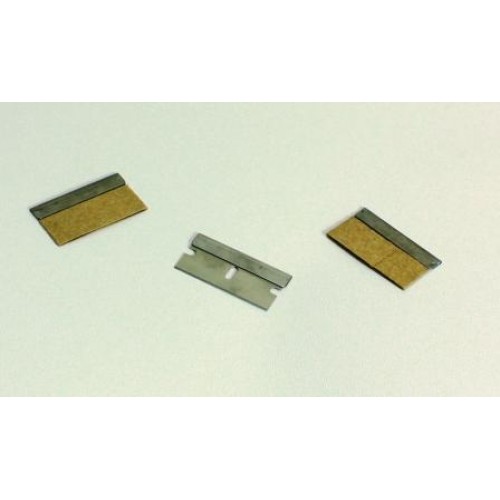
I have many happy memories from my time working for my fees to graduate school in Afdeling Vissen in Blijdorp Zoo in Rotterdam, including cleaning and banking the money from the crocodile pit. My first job every morning was to go round the outside of every aquarium with a bottle of acetic acid, a chamois leather and a bucket. It was a long time before I could put vinegar on my chips - the smell gets up your nose and lingers all day about your person. That was okay in the Netherlands because they eat their chips with mayonnaise there - it's more fattening. Cleanliness (Schoonmaken) is a religion in Holland, so it was not allowed to just clean the outside surface. On a regular basis, I was required to immerse my arm up to the elbow in the Pirhana (Pygocentrus nattereri) tank to clean the inside of the aquarium-glass with a hank of filter-wool. You could use a bohemian blade on a long stick but the filter-wool did a better job. But that had nothing to do with my NDE, those pirhanas were all red belly and bluster and cowered in the far end of the tank while I was invading their personal space.
Another job I really enjoyed was getting out of the tropical heat and humidity of the Rivierahal and going down to the lake to catch water-lice for feeding the fish. They took my bucket and vinegar off me and gave me a long-handled net and a tray of little plastic boxes. If I caught more than were immediately required - and on a nice sunny day I was out there for a long time - I had to take the surplus to the walk-in freezer. This was a separate building 'hidden' in a little copse of shrubs. I nearly dropped my boxes of lice the first time I went in there because the walk-in was primarily used to hold the dead animals until the vet could get round to making an autopsy. Wedged in from corner to corner at the back was the head-and-neck of a giraffe awaiting investigation. The other specimens were mostly in plastic bags so I could only make an informed guess about what part of what animal was inside.
One day, I was asked to clean the inside of a mammoth (maybe 90cm H x 80cm W x 300cm L) free-standing tank because the management needed layers of old paint stripped off. They took my bucket and vinegar off me and gave me a scraper and a gallon of paint stripper. The only way to do this was to stand in the tank, slosh on the chemicals, wait a few minutes and then strip off the century-thick archaeological-dig of paint. At the top it was okay, but towards the bottom, my little arms not being quite long enough, I had to duck into a vat of fumes and work away until I had to broach the surface for air like a desperate whale. I never complained about the lingering smell of vinegar after that. But it didn't kill me.
After a while I got a reputation for being the general handiman and one who wouldn't complain whatever they asked him to do. They asked me to clean up behind the huge display windows in the Rivierahal - the pigeons used to get inside the building and roost above the window, so somebody had to go up there with a shit-shovel. The only way to get there was to climb a 3m ladder and walk along a couple of scaffolding planks which went across the section of the aquarium that contained fish from tropical reefs. I took the shovel (they let me keep my bucket this time) and set off. The next thing I knew I was sitting on the floor in the service area behind the tropical fish tanks, my bucket had come with me but my shovel wasn't in evidence. I never did work out what had started my downward trajectory but I do remember putting out my hand to break my fall so I'd effectively done a somersault before landing.
 When my pal Yvonne came to fetch me (I was missing morning coffee which a misdemeanour in Holland), she noticed that the stone-fish tank was cracked at the top. I'm glad that a) I made contact with the edge of the aquarium rather than plunging my hand into tank b) the glass supported me long enough to turn over and didn't crack and slit my wrist c) the beast didn't slop out on top of me. So the stone-fish didn't kill me either. But I used to have cold sweats about might-have-been years after I was back on the vinegar and sniffing paint-stripper with the best of them behind the students union.
I'm told that the Japanese eat stone-fish as sashimi but I think we should all leave it well alone.
I have many happy memories from my time working for my fees to graduate school in Afdeling Vissen in Blijdorp Zoo in Rotterdam, including cleaning and banking the money from the crocodile pit. My first job every morning was to go round the outside of every aquarium with a bottle of acetic acid, a chamois leather and a bucket. It was a long time before I could put vinegar on my chips - the smell gets up your nose and lingers all day about your person. That was okay in the Netherlands because they eat their chips with mayonnaise there - it's more fattening. Cleanliness (Schoonmaken) is a religion in Holland, so it was not allowed to just clean the outside surface. On a regular basis, I was required to immerse my arm up to the elbow in the Pirhana (Pygocentrus nattereri) tank to clean the inside of the aquarium-glass with a hank of filter-wool. You could use a bohemian blade on a long stick but the filter-wool did a better job. But that had nothing to do with my NDE, those pirhanas were all red belly and bluster and cowered in the far end of the tank while I was invading their personal space.
Another job I really enjoyed was getting out of the tropical heat and humidity of the Rivierahal and going down to the lake to catch water-lice for feeding the fish. They took my bucket and vinegar off me and gave me a long-handled net and a tray of little plastic boxes. If I caught more than were immediately required - and on a nice sunny day I was out there for a long time - I had to take the surplus to the walk-in freezer. This was a separate building 'hidden' in a little copse of shrubs. I nearly dropped my boxes of lice the first time I went in there because the walk-in was primarily used to hold the dead animals until the vet could get round to making an autopsy. Wedged in from corner to corner at the back was the head-and-neck of a giraffe awaiting investigation. The other specimens were mostly in plastic bags so I could only make an informed guess about what part of what animal was inside.
One day, I was asked to clean the inside of a mammoth (maybe 90cm H x 80cm W x 300cm L) free-standing tank because the management needed layers of old paint stripped off. They took my bucket and vinegar off me and gave me a scraper and a gallon of paint stripper. The only way to do this was to stand in the tank, slosh on the chemicals, wait a few minutes and then strip off the century-thick archaeological-dig of paint. At the top it was okay, but towards the bottom, my little arms not being quite long enough, I had to duck into a vat of fumes and work away until I had to broach the surface for air like a desperate whale. I never complained about the lingering smell of vinegar after that. But it didn't kill me.
After a while I got a reputation for being the general handiman and one who wouldn't complain whatever they asked him to do. They asked me to clean up behind the huge display windows in the Rivierahal - the pigeons used to get inside the building and roost above the window, so somebody had to go up there with a shit-shovel. The only way to get there was to climb a 3m ladder and walk along a couple of scaffolding planks which went across the section of the aquarium that contained fish from tropical reefs. I took the shovel (they let me keep my bucket this time) and set off. The next thing I knew I was sitting on the floor in the service area behind the tropical fish tanks, my bucket had come with me but my shovel wasn't in evidence. I never did work out what had started my downward trajectory but I do remember putting out my hand to break my fall so I'd effectively done a somersault before landing.
I'm told that the Japanese eat stone-fish as sashimi but I think we should all leave it well alone.
Saturday, 2 November 2013
The End is the Beginning
No classes in The Institute yesterday because it was Commencements. If you think about it that's an odd word to use for the final ceremony that students experience in their college. Several weeks or months after they know what grade they got in their degree they come back to pick up the certificate from the President's own fair hand. It's an opportunity to put on the razz for everyone - the students, the parents and the staff; the former and the latter dolled up in medieval garb and the folks taking photos of it all. The Chairman of the Board of Governors was dusted off to give a bit of a speech and he talked about looking forward to a technological future and not getting locked into past practice.
To illustrate this he told a parable about the Royal Artillery in Britain in WWII. The top brass felt that the field (mobile) artillery were quite inefficient and called in the time-and-motion people to see where crucial seconds could be shaved off the firing rate. The systems analysts were curious as to the actual role of two men from each team of gunners who stood to attention behind and slightly to the side of each gun; because to their outside eye these two soldiers looked sort of redundant. But when they asked the men themselves, the officer in charge, the regimental sergeant-major, the colonel, none of them had a clue. But a ninety year old retired gunner knew immediately "Why yes sir, those men have been told off to hold the horses." I have a dim memory of hearing that story before, but the punch-line came as a total and agreeable surprise.
So Commencements are not really about The Institute which, for the students, is now in the past; it's about beginning the next phase of life. And this we firmly believe - that getting a cert or diploma or degree will be an asset when they enter the job-market. I thought I was only going to know the handful of Environmental Chemists whom I had taught when Istarted at the IT in January and February but my current EnvCh class were there as well - togged out in gowns - collecting their degree parchments. That's for their Ordinary Degree, they are now back on the books for their Honours Degree. Anyway, I was delighted to see them on the launch-pad even if they aren't really launched yet.
Now I wonder when The Institute, with eagle eyes staring at The Future from its peak in the Midlands, is going to heed the Chairman's parable and stop trying to ape the University of Bologna circa 1158 in the matter of appropriate dress for a ceremonial occasion. Irish judges gave up sitting under a mat of horse-hair a couple of years ago. Time to move into the 21st Century, colleagues.
To illustrate this he told a parable about the Royal Artillery in Britain in WWII. The top brass felt that the field (mobile) artillery were quite inefficient and called in the time-and-motion people to see where crucial seconds could be shaved off the firing rate. The systems analysts were curious as to the actual role of two men from each team of gunners who stood to attention behind and slightly to the side of each gun; because to their outside eye these two soldiers looked sort of redundant. But when they asked the men themselves, the officer in charge, the regimental sergeant-major, the colonel, none of them had a clue. But a ninety year old retired gunner knew immediately "Why yes sir, those men have been told off to hold the horses." I have a dim memory of hearing that story before, but the punch-line came as a total and agreeable surprise.
So Commencements are not really about The Institute which, for the students, is now in the past; it's about beginning the next phase of life. And this we firmly believe - that getting a cert or diploma or degree will be an asset when they enter the job-market. I thought I was only going to know the handful of Environmental Chemists whom I had taught when Istarted at the IT in January and February but my current EnvCh class were there as well - togged out in gowns - collecting their degree parchments. That's for their Ordinary Degree, they are now back on the books for their Honours Degree. Anyway, I was delighted to see them on the launch-pad even if they aren't really launched yet.
Now I wonder when The Institute, with eagle eyes staring at The Future from its peak in the Midlands, is going to heed the Chairman's parable and stop trying to ape the University of Bologna circa 1158 in the matter of appropriate dress for a ceremonial occasion. Irish judges gave up sitting under a mat of horse-hair a couple of years ago. Time to move into the 21st Century, colleagues.
Friday, 1 November 2013
The quality of water is not strained enough
The quality of mercy is not strained.
It droppeth as the gentle rain from heaven,
Upon the place beneath.
It is twice blessed.
It droppeth as the gentle rain from heaven,
Upon the place beneath.
It is twice blessed.
It is one of the ironies of the situation is that Ireland is awash with water: at least a meter of rain falls each year and the landscape is chock full of picturesque lakes and rivers, but Greater Dublin is currently having to restrict water supply. I have just spent the last two weeks talking about drinking water DW supply with my 4th Year Environmental Chemists. I've been saying how fascinating the process of DW processing is and how when Irish Water gets launched as a commercial venture there will be loads of really interesting, scientifically challenging jobs for my boys and girls. Despite my enthusiasm, I only half believed that I was bringing them along with me, because, like everyone else, we take sparkling clean drinkable water coming out of the kitchen tap for granted. We need ad lib drinkable, lightly chlorinated water so that we can wash our cars and flush our toilets with it, as well.
At the start of the week, problems of supply started to impact on the distribution of water to our capital city. Red faces all round because Dublin is hosting 10,000 affluent geeks at the 2013 International Web Summit and restauranteurs are not sure if they will be able to wash dishes and boil pasta for their guests tonight. "Problems of supply" stayed curiously undefined for a couple of days as international experts were being flown in to consult. Paranoid me wondered if a UFO had seeded the reservoir with alien life-forms. Scientific teacher me was all agog to get information to see which of the many and complex processes irequired to treat water had broken down and why. Listening to pundits on the wireless recently has given me this much glimmer.
We had a long dry summer over much of Ireland in 2013. Under these circumstances the peat with covers much of our upland watersheds dies out, gets oxidised and breaks down into very fine unfilterable organic particles. Over the last couple of weeks, we've had the tail end of a couple of hurricanes come across the Atlantic and dump rain on those uplands. That has washed the discoloured water into the reservoirs which service Dublin's water supply. So far, so what you may ask a little colour in the water never did my granny any harm. But the suppliers of water are justifiably worried about microbial contamination of water. Niether they nor we want fecal or other coliforms coming out of anyone's kitchen tap, let alone cholera. So part of the process is to chlorinate the water. This kills all the bacterial pathogens (although it works not so well with Cryptosporidium) BUT it also reacts with unfilterable organic colour to form TriHaloMethanes THMs. Trichloromethane is aka chloroform which is okay in small doses but all chlorine products are contaminated with bromine which has very similar chemical properties and so is difficult to separate out for a finite amount of money. TBM = bromoform is a known animal carcinogen and although, on the scale of things there are worse things to drink, no water supplier wants to have that coming out of the taps of their customers. So they are moving experts and heaven and earth to deal with this problem. That is expensive, but we don't want
Water, water, every where,
And all the boards did shrink;
Water, water, every where,
Nor any drop to drink.
Coleridge The Rime of the Ancient Mariner
Subscribe to:
Posts (Atom)