Saturday, 7 October 2017

Worrying moment

I find it very difficult to be out on the town and buy a cup of tea or coffee. I know that you're paying for the waitron, the warmth and the seat out of the rain, but it just seems a big difference between 3c for a tea-bag and €2.00 for a tea-bag in a cup of hot-water. Cappuccino is somewhat different, that requires kit and skill that are beyond my pay-grade. aNNyway, my office at The Institute has a window! that looks out into . . . The Canteen. Proximity makes it convenient if I want to nip to the boiler and get some hot water to throw onto one of my tea-bags. I bring a handful of these things, as required, from home. I always bring 'lunch' to work, which is usually two slices of home-made sourdough on either side of a slab of cheese, with lettuce or rocket, if we have any in the garden. In my first week, I established that the rule was that hot water was free. Well sometime in the second week of term, a notice appeared above the hot-water boiler:
If you are bringing your
own tea/coffee
milk, spoon, cup
these need to be paid 
for at the till
0.20c
I was there, with my septic mug with one of my tea-bag, the place was super-busy so I went ahead, filled up and slunk back to my desk. There was no way I was going to pay 20c for hot-water. When I got home that evening, I hunted through the kitchen closets and wider through the sheds looking through boxes of stuff for a 'spare' electric kettle . . . to no avail. The next day, I filled a couple of 500ml water bottles and resolved to drink cold water - which I basically never do. But over-night, probably through the medium of a nightmarish dream, I'd had time to reflect on the peculiar syntax, punctuation and fonts of the previous day's announcement. I went to check the wording at a slack time in the during and providentially found one of the caterers trick about with the machine next door. This lady patiently explained that the status quo ante applied, the new sign was to put a stop to the gallop of people who brought a tea-bag, yes, but used a company cup, wasted a disposable company spoon, and took an aliquot of company milk.

It boggles my mind that anyone would think that the cup and the milk etc. were sort of 'free'. Then again, the sugar, bucketfuls in sachets, is 'free'; as are the loathsome one-use plastic tea-spoons. I've reflected on my dubiously flexible ethical code; especially w.r.t. small-small spoons on/from airlines. But it seems wrong and sort of self-destructive to be looting the cutlery from your place of work . . . unless you feel really hard-done-by and exploited there. Cripes, I could walk off with a dinner plate every day, until I had a service-for-twelve and then sell it on Ebay. I think I learned this sketchy moral code from my Reasonably Honest father.

Friday, 6 October 2017

Feet of clay

I've lucked out in my career in science. Richard Wiseman maintains that we make our own luck. That lucky people [like my Mum and The Beloved] are in some sense more open to The Other and that risk-taking sometimes falls out better than the status quo. Louis Pasteur had a slightly different take on the matter "Dans les champs de l'observation le hasard ne favorise que les esprits préparés." = chance favours the prepared mind. In 1989, we resolved to return to Ireland after more than a decade abroad. I went round my small-but-perfectly-formed network of contacts in Dublin looking for work but only one of the fish was the least interested in biting. He encouraged me to apply to EMBO and the EU for research grants. We got the EU money as a retraining fellowship and that placed me in a field of science that was just starting to go ballistic. By 1992, the joke was that, if you could spell bioinformatics, then you could command a salary of $60K from MegaPharma. And indeed one of my lab mates ditched her PhD, went to work for Glaxo, and never looked back: she probably owns a yacht now. Ireland was punching way above its weight in the field, and indeed a case could be made that the word bioinformatics was first used [not by me, but by my boss] in a grant application out of Dublin. I know I'm not stupid but for years in the 1990s I wasn't the smartest boy in the room. All those early adopters are now full €100,000 professors; heck, many of their students are now professors.

Several years later, I met one of those Stars at a conference just after he'd landed a new position in a different country. He'd ridden into that job, as is entirely normal, on the back of his previous successes and was now experiencing imposter syndrome. I felt a rush of empathy because I've often enough been there myself [example]. I braced my pal up, telling him he was a walking genius and when I got back to my desk sent him a copy of The Flying Saucer chapter from Surely, you're Joking Mr Feynman.  The tl;dr version is:
So I got this new attitude. Now that I am burned out and I'll never accomplish anything, I've got this nice position at the university teaching classes which I rather enjoy, and just like I read the Arabian Nights for pleasure, I'm going to play with physics, whenever I want to, without worrying about any importance whatsoever.
Within a week I was in the cafeteria and some guy, fooling around, throws a plate in the air. As the plate went up in the air I saw it wobble, and I noticed the red medallion of Cornell on the plate going around. It was pretty obvious to me that the medallion went around faster than the wobbling.
I had nothing to do, so I start to figure out the motion of the rotating plate. I discover that when the angle is very slight, the medallion rotates twice as fast as the wobble rate--two to one. It came out of a complicated equation! Then I thought, "Is there some way I can see in a more fundamental way, by looking at the forces or the dynamics, why it's two to one?" . . .  The diagrams and the whole business that I got the Nobel Prize for came from that piddling around with the wobbling plate.

I was reminded of all this by a rather wonderful video about Euler's Disc in which two math geeks play with a spinning disc and record various bits of data as the thing wobbles its way to a stand-still. I don't think there is a Fields Medal [prevliers Wiles <not>, GrothendieckVillani],  getting incubated in there but it's a nice mix of trying to make data-gathering reproducible, forming hypotheses and testing them against the real world. That's a succinct definition of what science is about.  Another inviting aspect of the discussion is their embrace of error rather than trying to sweep it under the carpet. I wish we could do more such real experiments at The Institute where there is no Correct answer because nobody in the room knows what the outcome of the test or experiment should be. That's when real science starts.

And was my pal really burned out and ready for the scrap heap? Was he, heck! You can't stop clever people from having ideas and soon after our conversation, he embarked on a couple of new ventures; one a scion from his earlier work and one in a totally different field. Those feet of clay turned into the solid foundation of new work. If I had anything to do with this, it was only that I choked back my Brit repression and more or less told the bloke that I loved and admired him. That might have been so shocking that he woke from his existential nightmare.

Thursday, 5 October 2017

taxonomy of darkness

I remember a profound conversation I had with The Beloved in the Summer of 1975 sous le pont d'Avignon. We had washed up on the banks of the river as we hitched back from a visit to my sister in Aix en Provence. We'd been into town and seen the gob-smacking Palais des Papes, bought something to eat and sat down close to the [remains of the] bridge to eat. I launched into a rather one-sided discussion about what was the most sensible way to classify the living world. You could, I suggested with rhetorical flourish, bin all god's creatures which flew together and keep another mental container for swimmers; another for those that perambulated upon the face of the earth and maybe another box, with a lid, for things that lived beneath the surface.  But that, I suggested, was rather arbitrary: locomotion is only one attribute, and what do you do when adults and young have a different mode of transport? Adult locusts can fly, their earlier instars merely hop shuffle and scurry. Contrariwise, adult barnacles are a lot more sedentary than their free-swimming young. I concluded (would he ever shut up, TB was probably asking, I'm trying to eat my dinner) that it was best to start your taxonomy on certain fundamental similarities: between whales and bats and aardvarks and tigers, for example. They have very different habits and habitat and diet; are very different in size and life-span but nevertheless:
  • all have hair-follicles
    • from which have developed mammary glands
  • all maintain a set core body temperature
    • have a high metabolic rate to service the energy to do so
    • have lost the nucleus of their red blood cells to carry more oxygen
  • all have seven cervical vertebrae
  • many of them have limbs with five digits; at least as embryos
  • all have three teeny bones in the ear to transmit sound
  • all have a clear common pattern of embryological development
That last is key.  You cannot easily tell the difference, among mammals, among a week-old embryos. All 5000+ species are built from the same bauplan, we just have extras on the facade, the roof-line and the windows, but developmental inertia dictates the basic structure. A radical change in the early stages of development and you have a starfish, the nearest relative to vertebrates. You can extend these sorts of arguments out from mammals to embrace a wider taxonomy of other vertebrates; other animals; other eukaryotes and find places of primroses, mushrooms, algae and bacteria. Scientific taxonomy is based on evolution: the things that are hardest to change tend to be deeply embedded in the tree of relationships; 'trivial' differences are out on the terminal branches. We're really close to chimpanzees, less so to whales and much less so to sharks.

This all came to mind as I followed a story about using social media to locate crime scenes. Europol have to look at a lot of deeply distressing pictures in order to break up paedophile porn rings. It is the nature of the beast that, while you can tell that abuse and exploitation have occurred, it is impossible to say where these dreadful things happened. It's a bit like trying to carry out a murder investigation without a body. Some bright spark in Europol had the idea to fuzz out the people and post some pictures of hotel rooms on Twitter to see if anyone recognised the place.  Clearly you don't want to focus on the colour of the carpet or the wall-pictures because these get changed and upgraded in hotels that aren't total flea-pits. But the over all structure of the room, the position of the bed w.r.t the window and the en-suite and the light-fittings, are much more likely to be diagnostic because they embody more structural inertia. Twitter is huge and the number of people who holiday in Mauritius AND use Twitter is considerable and soon enough a match [R: scene-of-crime above (with person blanked out) / promotional material below] popped up in the Marlin Creek Hotel on the island.

Europol didn't appear to know that there was a parallel investigation going on in North America at TrafficCam. If you are nerdy about such things and can blow up the details in the pictures, then you can check out the electrical sockets which are madly and maddening diverse across the world. You couldn't do this location matching with Irish Pubs, they all have the same clutter.

Wednesday, 4 October 2017

In the footsteps of ancestors

As Guardian of the Ringstone [R] I have a duty of care towards the neolithic artwork which we discovered on our property ten years ago. In 2010, after we had recovered all four chunks of the worked face of the rock, we roughly assembled the jigsaw and went for lunch. Over the celebratory meal we talked about what to do with our find. As one of our party was/is an The Man from the State Archaeology Service, there were fewer possibilities available to us (selling it to a passing American, for example). But three sensible options were entertained and each deemed okay by The Man:
  • Move the rocks to a convenient corner of the field and there assemble them face up, looking at the sky. This was the orientation in which the rings had originally been incised. A field corner was going to be avoided by mowers and balers. It meant minimal movement of the mass[es].
  • While we had Niall Deacon and his digger, we could move the relic up to the yard near our house. This would make it easier for visitors to view the wonder. It would also keep them from trudging through our traditional hay-meadow during the Summer Neolithic Art Season.
  • We finally decided to reassemble the ringstone face-vertical in the same gap in the wall where it had originally been hidden and later revealed. This a) honoured the Earth-Mother by showing her map of a sacred landscape; b) honoured the hard-working early 19thC farmers who had split the rock to make the verticals of a gap between fields; c) served us as one side of a wider gateway.
Several people separately suggested that security should be part of our decision making process. There is a cohort of perps who travel round rural Ireland half-inching compressors, chain-saws and ride-on lawn-mowers from barns and out-houses while the legitimate owners are at the mart or at a funeral. I dismissed the idea that someone would come round and take 4 half-tonne lumps of rock to sell at a local car-boot sale. It's just too awkward a proposition; and who would want to buy such a thing?

Then two items popped up on the blogosphere. The first was a fascinating story of a long-distance furniture mover. One of the anecdotes told is that a certain rich fuck celebrity had acquired eight Qing dynasty tombstones and was having them schlepped across the USA. Maybe I should call Aspen Co long-distance and see what price I can get for neolithic Irish original artwork.
The second story by Babis Fassoulas was about the looting of a set of 6 mya footprints from Crete [R]. The really annoying thing about this archaeological vandalism is that much of the value of antient artifacts is their provenance and location. The laws of stratigraphy apply, for example: things under others are usually older. A shoe-buckle or a coin is much more informative if its depth and context is recorded as well as just the site. And a displaced object has lost much of its utility. A paleolithic Venus, for example, is fatuous as well as fat if it finishes up unattributed on a penthouse mantle-piece in Manhattan or Saint Germain-des-Prés.

Then again, then again, Fassoulas points out that leaving sites open to the weather is one way of exposing more layers of our shared history. Mary "Ichthyosaur" Anning went out along the beach from Lyme Regis after storms in the hope that another slab of cliff-face had fallen to reveal fresh bone-scapes. When a softer layer of Cretan mudstone erodes, fresh tracks appear on the landscape as glistening puddles heading into an ancient future.

Tuesday, 3 October 2017

Engage brain before opening mouth

We've had an earful of free speech recently. The problem with free speech is that it costs nothing. But that doesn't mean that there are no consequences to your statements. If you tell lies on the campaign trail, you may be unable to fulfill your promises. But in current political discourse - Brexit in the UK, Trump in the USA, Free Water in Ireland - truth doesn't count and if the numbers don't add up (now or later), then who cares? It's hard enough to get to truth in a complex world without throwing known nonsense into the mill. There was a time when journalists worked hard at their craft: behind every newspaper story, every radio segment, every TV programme, there were hours of research and interviews and a pile of material left on the cutting room floor. It seems sometimes as if journalists are just motor-mouths who rock up five minutes before Air-time ready to gab on about whatever turns up. The combination of a talking head with a fossilised mind embedded in rock-hard certainties is particularly dangerous because it plays to the prejudices of listeners in a similar demographic. There are a lot of old people out there whose sure foundations - in church, school, state - are being rocked by emergent scandal and a roaring tide of new ideas. They deserve a voice on the airwaves who shares their values and will discuss matters that matter to them. Since the quieting of Gay "Uncle Gaybo" Byrne [83], the grey voice seems to have become George Hook [76]. I had a dig at him recently George Hook blaming everyone including the victim, but he has another case to answer; also related to young women.

Five months ago Hook was cleared of treating debate about the HPV vaccine in an 'ill-informed and irresponsible' manner. But the Broadcasting Authority of Ireland found " . . . the programme had satisfied its own Code of Fairness, Objectivity and Impartiality, but “only in a barely minimal fashion”. It added that the presenter “did not appear to be very familiar with the details of the issue that the programme sought to examine”". The back-story is that Hook interviewed the grandmother of a girl who had experienced adverse effects after a dose of HPV, and then used that anecdote and his own opinion to play the Devils' Advocate while interviewing a paediatrician. Devil's Advocate has an important role in public discourse. Back in the day when he (almost always a he) was Advocatus Diaboli, this person would spend weeks researching in the Vatican archives to make the best case why an holy person should not be made a saint. Devil's Advocate is hard work - he is fighting against the tide of certainty by sowing seeds of doubt. Hook's version of this honourable profession is often to be merely contrary and boorish, because he hasn't [been bothered] done his homework. I came across a classic example of lazy-arsed journalism last week where a new revelatory program was made about the disappearance of Amelia Earhart. Amelia Earhart: the lost evidence is on youtube and 84 minutes long. The whole edifice is built on the discovery of a 1937 photograph of two white people on a dock. It took a blogger Kota Yamano 30 minutes to show that the photograph was published in 1935 two years before Earhart's disappearance.

In taking an anti-establishment position on the utility of the HPV vaccine, George Hook was recently and unaccountably joined by the Minister of State for Disability Issues, Finian McGrath [aged 64]. Minister of State, sometimes loosely called a super-junior Minister, is not a cabinet position (that's occupied by the Minister of Health); it is rather a shiny prize given as a reward for supporting the minority government. TDs get paid a basic €90,000, but Ministers of State get an additional €35,000 'allowance' [source]. McGrath is an Independent of a leftist persuasion who has taken several positions of principle in politics. Before he joined the government he had been contacted by concerned parents and called for HPV vaccination to be banned. When this fact was stirred up by The Sunday Times on 3rd September, there was a storm of indignation that one limb of The Man had taken an anti-establishment position. To scotch any suggestion of disagreement in the Ministry of Health, McGrath was publicly put back in his box and made to retract his earlier rebel roar. Seems a little luke-warm to me "On the issue of the HPV vaccine, I did raise concerns about it when in opposition last year. I stand over the fact that I raised it because concerned parents asked me to raise it. Parents have a right to voice any concerns they have relating to vaccines or any form of medication being introduced for their children. Personally and as Minister of State with responsibility for Disabilities, I do accept that such vaccines are a very important part of Government health strategy." Being humiliated like that does nobody any good. The Min O'Health looks like a bully; his Junior's street-cred is undermined; the seeds of doubt about HPV/Gardasil are re-sown.

It's a long, long time since they were in school doing sums but, as public voices, Hook and McGrath, need to reflect on the consequences of their statements. By questioning the utilitarian value of HPV vaccines and/or emphasising the downside while ignoring the benefits, these two old boys are helping to slump the uptake of the (free) vaccine among pubescent girls from 90% [and effective herd immunity] to 50% and a likely toll of 30 excess deaths every year from cervical cancer in the future. Neither Hook nor McGrath is likely to be alive to see the first cases diagnosed when the unvaccinated girls approach middle age. Whether it is worth €million$ now to achieve that distant aim is an entirely other question which nobody is prepared to address.

And now Alphonsus Cullinan [aged 58], Catholic Bishop of Waterford and Lismore, has added his 2c worth of data-free opinion to the debate. Last week he went contra HPV vaccination because he imagined it would lead to promiscuity among girls. Even admitting that teenagers are hormone-driven mad-things incapable of rational thought, I cannot see how vaccination and promiscuity would connect in someone's mind. I can see it for contraception (another issue on which the RCs are strongly contra). Falling pregnant makes school and college life much more difficult and must be a risk put in the balance by any girl with a ha'porth of imagination. But a small increase in the risk of getting one form of cancer in 30 years time?  Would a normal girl really let that weigh significantly in the balance? "If I get vaccinated against HPV, I can reduce risk in future sexual encounters"?; I don't think so. I don't think the Bishop has really thought this one through. It looks more like a bluff oldish chap, who is faith-bound to deplore sex out of wedlock, is just dumping all those sexy-things in the same dark box and determined that HPV vaccination is bad because it's only really relevant in sexual [and cancer] politics.  In fairness to The Bish, yesterday, he uttered a humble apology for being confused and confusing. "I was not fully informed about the vaccination programme and I can see now how HPV vaccines can contribute greatly to lowering the rate of cervical cancer. As I have learnt, possession of full information is paramount on this vital health issue."
Poor Simon Harris (31 although he looks an earnest, and here quite cross, 13), the Minister of Health decisively and rather disrespectfully put the Bish back in his box; denouncing the old boy as ignorant and pathetic. Harris, rather naively but he's only young, is deferring to another sort of authority figure with a stethoscope and black bag to vehemently assert that the matter was simply a medical issue, by which he really meant a mathematical balance-of-probability issue. But it's also an economic issue. I've roughed out the cost at €120,000,000 so far paid to Merck for Gardasil aliquots. That would go a long way to fund research into cervical cancers, not just the proportion of them which are triggered by HPV. I keep it simple here: you can think what €120m would do for a simple, unsexy campiagn in driver education or suicide awareness. It will do nothing for homelessness, so forget that: 8,000 people, incl. 3,000 kids, are living in hotel rooms this week in Ireland; but the Gardasil Discretionary Fund GDF would only build 600 starter homes.

George, Finian, Alphonus, I've done a bit of leg work on the matter:
HPV I - HPV 2 - HPV 3 - Before you make up your mind or open your mouth at least read those pieces - take you ten minutes, boys.

Monday, 2 October 2017

Repealin'

At the end of last week our Taoiseach, Leo Varadkar, and his cabinet decided to push the boat out for seven (7! count 'em) constitutional amendments:
  1. repeal the 8th amendment to the constitution (May 2018)
  2. directly elected mayors (Oct 2018)
  3. abolish blasphemy (Oct 2018)
  4. role of women in the home (Oct 2018)
  5. voting for the diaspora (2019)
  6. easier divorce (2019)
  7. votes for 16s (2019)
That's a helluva lot of tinkering at the edges of our Constitution and you might think it is time to dump De Valera's nit-picking intrusions into the fabric of 1937 society and write a new set of truths which we hold to be self-evident 80 years later. Because Dev had a particular romantic view of ideal family life he gave several hostages to fortune by proscribing alternative, actual, ways of forming households. Divorce and same-sex marriage got tied up in the constitution when they might have been more appropriately regulated by legislation. The unpicking costs money: every referendum costs about €25 million to implement.

Because the detail is important, let's capture the actual 8th Amendment. Article 40.3.3 now states:
The State acknowledges the right to life of the unborn and, with due regard to the equal right to life of the mother, guarantees in its laws to respect, and, as far as practicable, by its laws to defend and vindicate that right.
If the new referendum  is as simple as "Do you wish to excise article 40.3.3. from the Constitution?", we're still a long way from abortion on demand in Tullamore.
ANNyway, Varadkar's announcement went out just before a March for Choice [above] scheduled for the last day of September. I tell ya boys, I've marched more this year than at any time since 1974, when we marched in defense of student grants and a group of Trots rushed off and occupied the Ministry of Education. In April it was March For Science with Dau.I and maybe 800 others people. As a quid pro quo for her support, in June I went out with her, Dau.II and their mother on a Repeal the Eighth rally in Cork. There were about 1,000 people on that go round the town.

The riot march was due to assemble at 1300 and kick off at 2pm to march from the far end of O''Connell Street to the back of Leinster House in Merrion Square. This 3km trek is now the standard route for protest. Dau.II came up from Cork, The Beloved returned from France, I drove up from the boondocks and we met Dau.I in a café in Smithfield D7. I was surprised and delighted to find another 4 family members sitting round a brunch-covered table making revolutionary signage. I was sort of expecting to meet a bunch of other people whom I knew but I was very much an outlier in the demographic: probably in the 1% percentile for age and in the minority sex as well.  The weather was gorgeous, sunny but crisp and autumnal with little risk of melanoma: the biggest weather problem was carrying winter coats.

The march was HUGE. Best signs. Some estimates are putting out 40,000 people on the side of change. There was also a fringe of counter-demonstrators from the pro-life side. And weirdly, as we shambled down Dublin's principal thoroughfare we saw another march - of Muslims apparently anti-ISIS - going up the other side of the street in the opposite direction. Poor them, they will garner zero publicity from their event. This issue is much edgier than free-the-gays or whether Trump is anti-science or even Brexit across the water. Although it is deeply divisive, a case could be made that nobody will die whether the UK goes or stays in the EU.  In the London solidarity for Repeal march this weekend, they tried to chalk 200,000 white crosses on the pavement outside the Irish Embassy.
<math aside> that's a helluva lot of crosses written while bent double. I've just taken 30 seconds to write 50 1cm x 1cm crosses on a sheet of paper. Chalk will take at least as long. That's 33 person hours on your knees. If each cross takes up 10cm^2 of pavement that's a stretch 2m wide and 100m long.</math aside>
If you're from the pro-life side of the debate, 200,000 'babies' is surely worth fighting for. If you're from the other side, that's 200,000 young women who have been able to pay for a solution to a life-changing situation. Whichever side you're on it is invidious to shunt the problem onto the country next door, and politically charged because we're meant to be a republic independent from that same country.

Around about 3pm we trailed into Merrion Square although still at least 100 closely packed metres from the stage and the speakers. One wizard wheeze from the speeches was the idea to take a leaf out of the post Vatican II Liturgy of the Eucharist  "Let us offer each other a sign of peace" when we were invited to shake hands with the strangers about us as a sign of solidarity.  Another high point was to wheel out Bernadette McAliskey who, in my day, as Bernadette Devlin aged 21, the youngest woman elected to the UK parliament in 1969.  That record was handed to Mhairi Black [aged 20] in 2015. McAliskey has been through the wars,
  • she witnessed Bloody Sunday in 1972
  • the next day in the House of Commons, she slapped the Home Secretary  as an act of proletarian protest when he claimed the massacre was an act of self-defense "I'm just sorry I didn't get him by the throat".
  • in 1981 the McAliskey parents shot in front of their two children  by loyalist paramilitaries while a British army unit looked on. A case could be, and has been, made that McAliskey was 'taken out' with the collusion of the British government in an Israeli style realpolitik of assassination.
  • in 2003 she was, still 5 feet nothing in her socks, denied entry to the US because she poses a serious threat to the security of the United States
Those are just the highlights. Along the way, and before she got married, she gave birth to a daughter Róisin. So she's been in the firing line of sexual politics as well. On Saturday she called on Sinn Féin, especially deputy leader MaryLou McDonald, to row in actively on the campaign to Repeal the Eighth. All political parties are adverse to risk; they are unwilling to take a stand on any principle if a substantive number of their traditional supporters are likely to be against it. Sinn Féin is the largest radical party, and popular among those too young to remember The Troubles. They could really show leadership and gain traction on the Repeal campaign. Have they the bottle?

Sunday, 1 October 2017

Odds and ends 011017

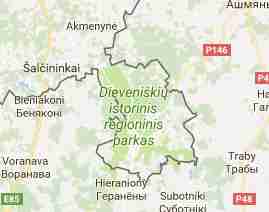
  • I bet you thought that nutty separations and exclaves of towns and villages went West when the Berlin Wall went West. But you should consider the case of Dieveniškės which is in the middle of a weird hernia of Lithuanian territory that blurfs into Belarus [prevhilarious] about 100km due West of Minsk. See map above. When Belarus and Baltica were both part of the CCCP/USSR, folk could cross the border unimpeded. The post-soviet republics are much less huggy as this tale of fences and border patrols explains.
  • I was on a jag a couple of years ago putting stuff in order of magnitude of toxity and there mentioned the tragic story of Russian dissident Alexander Litvinenko Алекса́ндр Ва́льтерович Литвине́нко who was done to death in a London hotel when someone dropped a minute quantity of radioactive Polonium in his tea. I wasn't aware that there was an Irish connexion. The pianist at the same hotel, Derek Conlon, had a cup of tea later the same day and had the misfortune to drink out of the same cup as Litvinenko - after it had been through the dishwasher. Geiger counters were fizzing in the toilet back home and everywhere else he'd been. He's still alive and dining off his near death experience.
  • Dead? What happens if you dump 3 tonnes of dead hawgs in the forest? You get a few vultures and a LOT pf maggots. It's not a million miles from Peter Greenaway's Zed and Two Noughts timelapse - different sequence with Michael Nyman Soundtrack. Happier Michael Nyman soundtrack to Greenaway's Draughtman's Contract.  Jaker's I love Greenaway's films. Almost as much as Jean-Jacques Beineix's Diva . . . "Je n'aime pas les flics"!
  • I've just discovered a young chap, a language geek, called Xidnaf [channel]:
  • Ireland bid to host the 2023 Rugby World Cup last week. Here's the propaganda.
  • A romp through borders in Asia.
  • Tidying up some loose ends today. I wrote last month about two or three sexual predators who have reached senior positions in the scientific community. I'll here flag that the most recent high-profile case is that of computational linguist Florian Jaeger whose employer the University of Rochester had An inexplicable failure to defend the most vulnerable as Metafilter captured it. It's not black and white especially from this distance.
  • Abuse? My roomie at The Institute has just gotten her Garda Vetting [me, prev] certificate. She had simplified everyone's life by omitting an address she had occupied as a 3 y.o. for 6 months. "Nobody wants to know what explorations I might have done when I was a small child". But, for the first time, it occurred to me Not so!.  Given the data that those who were abused as a child are more likely to grow up abusers, there is a probabilistic reason why The Man might be interested in these early data. OTOH my vetting took about three days to come back approved. It is inconceivable that the Vetting bureau would have checked out all 22 of the addresses, in six different countries, in which I have lived since I was born.